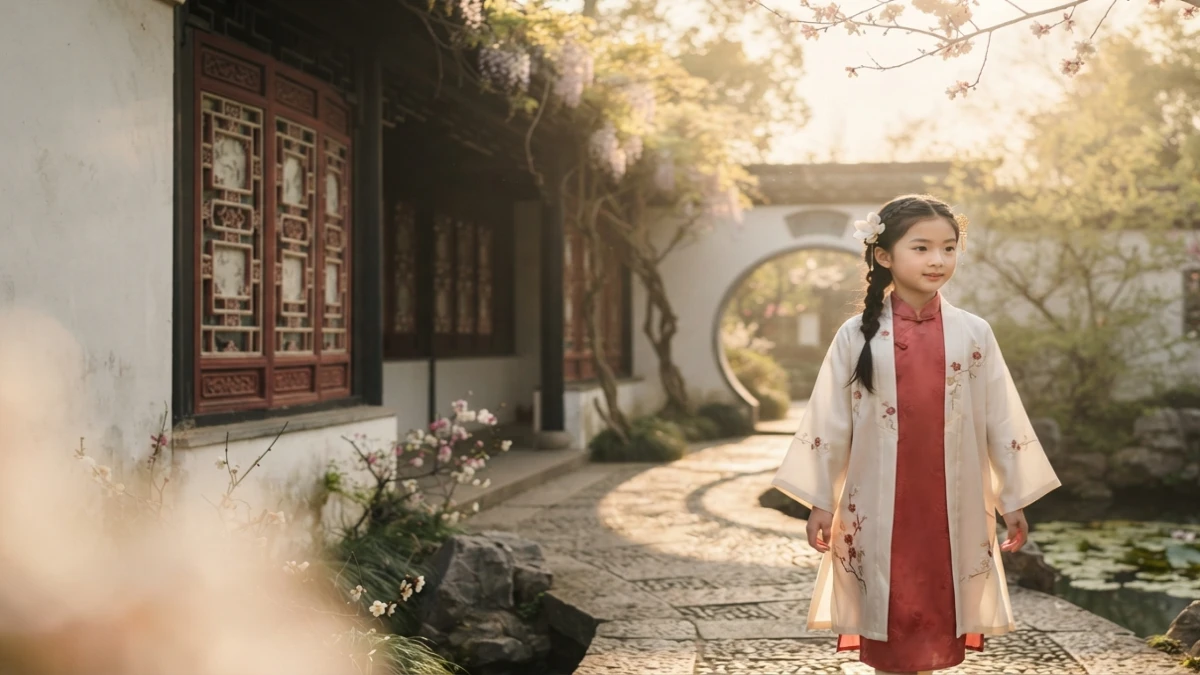
Choosing a Chinese girl name is rarely just about finding a pretty sound. A good name can carry a wish for peace, beauty, intelligence, nature, prosperity, or a particular kind of character and the Chinese characters themselves are an essential part of that meaning.
Search intent: discovery and comparison. Most readers searching “Chinese girl names” want a substantial, usable list with meanings, pronunciation, cultural context, and help narrowing down their favorites.
Emotional intent: finding a name that feels graceful, meaningful, feminine, and culturally authentic rather than simply translating an English name into Chinese.
Audience: parents choosing a baby name, people exploring Chinese heritage, writers naming characters, and readers looking for elegant names for fiction, gaming, or creative projects.
Research note: Chinese names are character specific. The same pinyin spelling can represent different characters and therefore different meanings. The meanings below refer to the specific characters shown, not merely the Romanized spelling.
Quick answer: the best Chinese girl names to explore
Some especially versatile choices are 安 (Ān), 宁 (Níng), 欣怡 (Xīnyí), 佳琪 (Jiāqí), 静怡 (Jìngyí), 雨桐 (Yǔtóng), 芷若 (Zhǐruò), 玉 (Yù), 悦 (Yuè), and 晓玲 (Xiǎolíng). They span peaceful, joyful, elegant, nature inspired, and classic aesthetics.
Chinese given names commonly follow the family name + given name order, with the surname first. Two character given names are especially common, although one character given names also exist.
What makes a Chinese girl name feel beautiful?
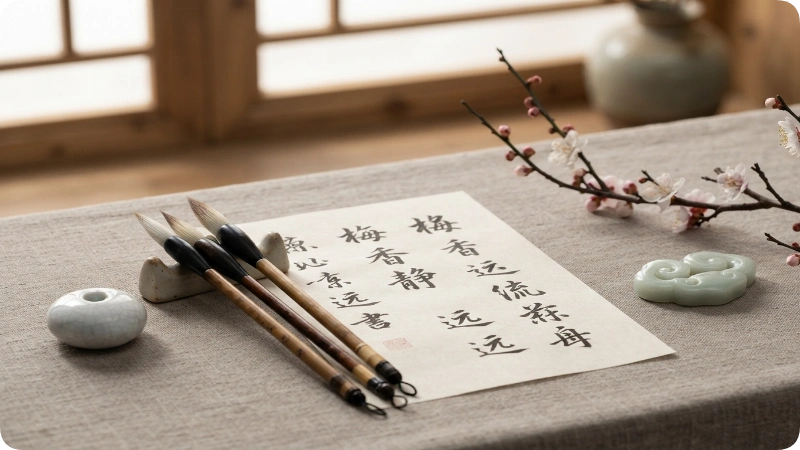
A Chinese name works on several levels at once. There is the literal meaning of each character, its sound and tone, its visual appearance, and the associations it creates.
Traditional feminine names have often drawn from beauty, flowers, fragrance, jade, happiness, and graceful qualities. Contemporary naming also shows strong interest in characters associated with nature, brightness, rain, dawn, and other evocative imagery.
One important distinction: “beautiful” is an aesthetic judgment, not a fixed linguistic category. A name such as Jingyi feels calm because 静 means “quiet/still” and 怡 means “joy/harmony”; the emotional impression comes from those meanings together.
Chinese girl names at a glance
| Name | Chinese | Meaning | Overall vibe |
| An | 安 | Peace, calm | Minimal, serene |
| Ai | 爱 | Love, affection | Warm, romantic |
| Ning | 宁 | Peaceful, calm | Quiet, elegant |
| Yue | 月 / 悦 | Moon / joy | Poetic, luminous |
| Yu | 玉 / 雨 | Jade / rain | Classic, delicate |
| Jingyi | 静怡 | Quiet + harmony | Refined, gentle |
| Kexin | 可欣 | Can/fit + joy | Bright, modern |
| Jiaqi | 佳琪 | Beautiful + fine jade | Polished, graceful |
| Xiaoling | 晓玲 | Dawn + tinkling jade | Delicate, lyrical |
| Yuhan | 雨涵 / 玉菡 | Rain + contain / jade + lotus | Soft, sophisticated |
| Wenting | 文婷 | Culture/literature + graceful | Intellectual, feminine |
| Shujuan | 淑娟 | Virtuous + graceful | Traditional elegance |
| Xiaomei | 晓梅 | Dawn + plum | Classic, literary |
| Xiaoyan | 晓燕 | Dawn + swallow | Fresh, graceful |
| Yuanyuan | 媛媛 | Beautiful woman | Sweet, traditional |
Several romanized names can correspond to multiple character combinations, so always choose the Chinese characters before treating a name’s meaning as settled.
60 Chinese girl names with beautiful meanings
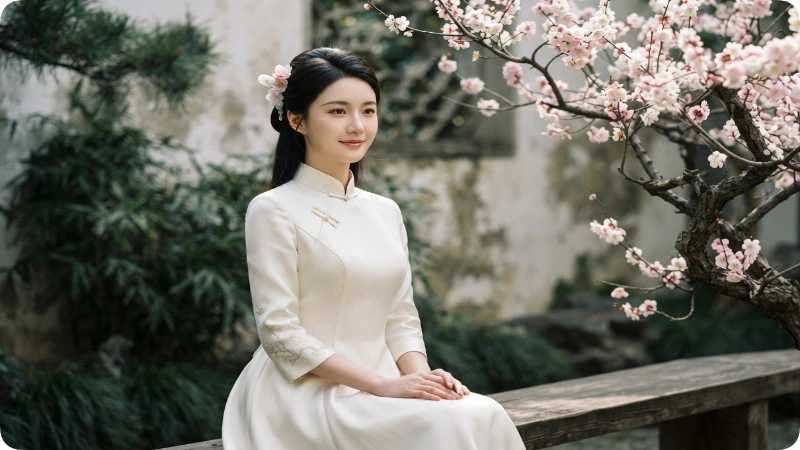
1. Soft, graceful, and feminine names
These names lean toward gentleness, harmony, beauty, and understated elegance. They are particularly appealing if you want a name that sounds feminine without feeling overly elaborate.
| Name | Characters | Meaning | Vibe |
| Ai | 爱 | Love, affection | Warm, romantic |
| An | 安 | Peace, quiet | Serene, timeless |
| Jing | 静 | Quiet, still | Calm, sophisticated |
| Ning | 宁 | Peaceful, serene | Minimal, graceful |
| Ya | 雅 | Elegant, refined | Chic, cultured |
| Li | 丽 | Beautiful, lovely | Classic, feminine |
| Xiu | 秀 | Beautiful, elegant, outstanding | Refined, traditional |
| Mei | 美 | Beauty | Direct, feminine |
| Na | 娜 | Elegant, graceful, delicate | Soft, polished |
| Juan | 娟 | Beautiful, graceful | Traditional, delicate |
The characters above have documented meanings associated with elegance, beauty, calm, or affection; their “vibe” is an editorial interpretation rather than a dictionary definition.
2. Jade, treasure, and luxury inspired names
Jade has an especially enduring place in Chinese cultural symbolism, making jade related characters an appealing source for names with a precious, polished feeling.
| Name | Characters | Literal meaning | Style |
| Yu | 玉 | Jade, precious stone, gem | Classic luxury |
| Bao | 宝 | Treasure, jewel, precious | Affectionate |
| Jiaqi | 佳琪 | Beautiful + fine jade | Elegant modern |
| Jiaying | 嘉莹 | Excellent/good + lustrous jade | Refined |
| Yuhan | 玉菡 | Jade + lotus | Romantic |
| Xiuzhen | 秀珍 | Beautiful/elegant + precious | Vintage |
| Ling | 玲 | Tinkling of jade | Delicate |
| Ying | 莹 | Lustrous, jade like | Luminous |
For example, 佳琪 can use 佳 “good, auspicious, beautiful” with 琪 “fine jade,” while 莹 carries a lustrous/jade association.
3. Nature inspired Chinese girl names
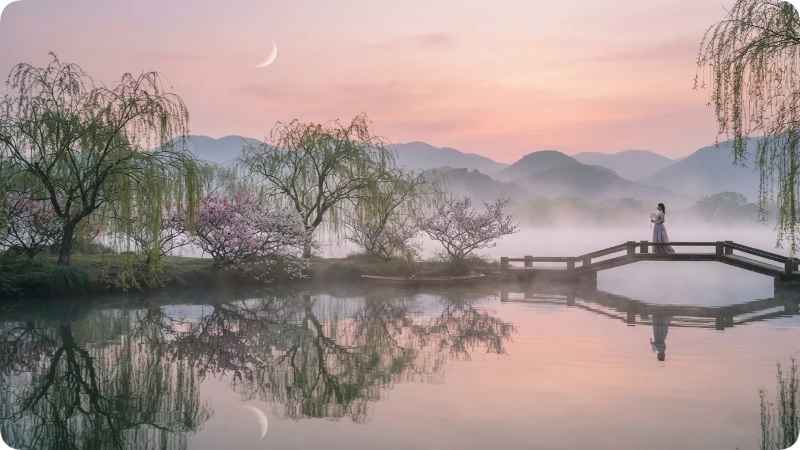
Nature names are particularly useful when you want something evocative rather than explicitly descriptive. Rain, dawn, flowers, trees, seasons, and celestial imagery can make a name feel almost poetic.
| Name | Characters | Meaning | Aesthetic |
| Yue | 月 | Moon | Celestial |
| Yu | 雨 | Rain | Soft, atmospheric |
| Xia | 夏 | Summer | Bright, youthful |
| Xia | 霞 | Rosy clouds | Romantic |
| Mei | 梅 | Plum blossom/tree | Classical |
| Liu | 柳 | Willow | Graceful |
| Chun | 春 | Spring | Fresh, hopeful |
| Xiang | 香 | Fragrant | Floral, feminine |
| Xiaoling | 晓玲 | Dawn + jade like tinkling | Lyrical |
| Xiaomei | 晓梅 | Dawn + plum | Poetic |
Characters such as 梅, 柳, 雨, 月, 夏, and 霞 have direct lexical meanings rather than being invented “name meanings.”
4. Names associated with intelligence, culture, and character
If you want a girl name that feels thoughtful rather than purely decorative, characters connected with intelligence, learning, virtue, or cultural refinement offer another direction.
Wenting (文婷) is particularly interesting: 文 can evoke literature, culture, and writing, while 婷 means pretty or graceful.
Other possibilities include:
- Hui (慧) intelligent, wise
- Min (敏) nimble, clever
- Wen (文) literature, culture, writing
- Ling (灵) spirit, soul; also associated with cleverness
- Zhi (智) wisdom, intellect
- Jia (佳) good, beautiful, auspicious
- Shuhui (淑慧) virtuous/pure + intelligent
- Jiayi (佳怡) beautiful + joy/harmony
The latter combinations illustrate why Chinese names should be evaluated character by character: Jiayi can have different meanings when different characters are selected for the same pinyin.
The most poetic Chinese girl names
Some names feel less like labels and more like little pieces of imagery.
Yue 月
Meaning: moon
Pronunciation: Yuè
Mood: luminous, quiet, romantic
月 literally means “moon.” As a name, its brevity gives it a striking, minimalist quality. It also pairs naturally with imagery of night, reflection, and softness.
Xia 霞
Meaning: rosy clouds
Pronunciation: Xiá
Mood: dreamy, painterly, feminine
霞 has a particularly visual quality. It evokes colored clouds around sunrise or sunset, making the name feel romantic without requiring an elaborate combination.
Xiaomei 晓梅
Meaning: dawn + plum
Pronunciation: Xiǎoméi
Mood: classical, delicate, literary
This combination joins 晓, “dawn/morning,” with 梅, associated with the plum. It has an old world poetic quality while remaining straightforward to pronounce in Mandarin.
Yuhan 雨涵
Meaning: rain + contain/include
Pronunciation: Yǔhán
Mood: soft, contemplative, modern
雨 gives the name its atmospheric quality, while 涵 contributes a sense of containing or encompassing. The result feels more subtle than a literal “rain” name.
Modern Chinese girl names and naming trends

Chinese naming is not frozen in the past. Contemporary names frequently combine attractive sounds with characters carrying positive or visually appealing associations.
A useful recent example comes from Chongqing’s 2024 newborn registration data. The Chongqing Public Security Bureau reported 汐玥, 诗涵, 沐妍, 沐瑶, 昕玥, 汐瑶, 钰涵, 亦可, 语汐, and 伊一 among the top ten registered girl names in that locality. The report also identified 玥, 汐, and 瑶 as especially favored characters for girls. This is local Chongqing data, not a nationwide ranking.
That distinction matters when reading online “most popular Chinese girl names” lists: a regional ranking should not automatically be presented as a ranking for all of China.
Earlier national data also shows how quickly naming preferences evolve. The Ministry of Public Security’s 2021 national report listed 若汐, 一诺, 艺涵, 依诺, 梓涵, 苡沫, 雨桐, 欣怡, 语桐, and 语汐 as the ten most used names among registered female newborns in that dataset.
What feels modern right now?
Rather than assuming every “modern” name must be rare, look for combinations that feel:
- concise
- easy to pronounce
- visually balanced in Chinese characters
- connected to nature or positive qualities
- contemporary without being dependent on a passing trend
Names built around characters such as 玥, 汐, 瑶, 涵, 妍, 语, 沐, and 昕 appear in recent regional or national naming data, but popularity varies by year and location.
Classic vs modern Chinese girl names
| If you want… | Consider | Why |
| Timeless simplicity | 安, 玉, 月 | One character names are concise and memorable |
| Traditional femininity | 秀, 丽, 娟, 梅 | Strong associations with older naming traditions |
| Modern softness | 欣怡, 可欣, 雨涵 | Bright, gentle combinations |
| Literary atmosphere | 晓梅, 芷若, 望舒 | Poetic and image rich |
| Elegant sophistication | 雅, 静怡, 佳琪 | Refined semantic associations |
| Nature inspired beauty | 雨, 月, 霞, 柳 | Strong visual imagery |
| Precious/luxurious feel | 玉, 琪, 莹, 宝 | Jade and treasure associations |
| Minimalist style | 安, 宁, 月, 玉 | Short, clean forms |
The distinction between classic and modern here is stylistic, not a claim that a name belongs exclusively to one historical period.
Chinese girl names from literature and mythology
Chinese naming has a deep literary tradition, so some names carry associations beyond their dictionary definitions.
Wangshu (望舒) is one example often encountered in discussions of poetic Chinese names. Nüwa (女娲) is an unmistakably mythological name: Nüwa is the creator goddess of Chinese mythology.
For an everyday baby name, however, a mythological or literary reference does not automatically make a name culturally appropriate. A character name for historical fiction, xianxia fantasy, anime inspired storytelling, or gaming can tolerate much stronger literary or mythological associations than a real world child’s name.
That is why context matters: beautiful does not necessarily mean practical.
Names with the strongest “luxury” feel
If your aesthetic is polished, understated, and expensive looking rather than cute, these are worth considering:
Yu (玉) jade gives the name an immediately precious association.
Jiaqi (佳琪) “beautiful/good” paired with “fine jade” creates an elegant, polished impression.
Jiaying (嘉莹) an auspicious/positive first character paired with 莹, associated with lustrous jade.
Yuhan (玉菡) jade combined with 菡, associated with the lotus.
Ya (雅) a single character associated with elegance and refinement.
These are aesthetic interpretations; “luxury” is not the literal dictionary meaning of these names.
Names that feel soft but not childish
For a name that can suit both a little girl and an adult woman, consider:
- Jingyi (静怡) quiet + harmony
- Wenting (文婷) culture/literature + graceful
- Jiaqi (佳琪) beautiful + fine jade
- Yuhan (雨涵) rain + contain/include
- Ning (宁) peaceful
- Ya (雅) elegant
- Xia (霞) rosy clouds
- Yue (月) moon
This is one place where meaning and usability intersect: a name can be delicate without being tied to a diminutive childhood image.
Chinese girl names and nicknames
Nicknames in Chinese do not necessarily work like English nicknames.
A common affectionate strategy is to repeat a character or use a diminutive construction. For example, Yuanyuan (媛媛) can derive from repeated 媛, meaning “beautiful woman,” although other character combinations are possible.
A name can therefore have two layers:
Formal name: 静怡
Affectionate use: repeated character or family nickname chosen naturally by relatives
This flexibility is one reason it is better to select the formal characters first and let the nickname develop afterward rather than forcing an English style nickname onto the name.
Chinese girl names with different personality vibes
| Desired impression | Names to explore |
| 🌙 Mysterious | Yue, Xia, Wangshu |
| 🌸 Romantic | Xia, Yuhan, Xiaomei |
| 🕊 Peaceful | An, Ning, Jing |
| 💎 Luxurious | Yu, Jiaqi, Jiaying |
| 📚 Intellectual | Wen, Wenting, Shuhui |
| 🌿 Natural | Liu, Mei, Yu, Chun |
| ✨ Bright | Kexin, Ying, Xiaoling |
| 👑 Elegant | Ya, Jingyi, Xiu |
| 💗 Warm | Ai, Kexin, Yiyi |
| 🌸 Traditional | Shujuan, Xiaomei, Yuanyuan |
These “personality vibes” are editorial interpretations based on the imagery and semantic associations of the characters. They should not be treated as predictions of a person’s personality.
How to choose the right Chinese girl name
The strongest name is not necessarily the rarest one. It is the one whose characters, sound, cultural context, and practical use work together.
1. Choose the characters before the Romanization
“Yu,” “Xia,” “Li,” and “Ying” can represent multiple Chinese characters. Those characters can have completely different meanings.
2. Say the complete name with the surname
Chinese names are tonal. A beautiful given name may sound less natural with a particular surname, so say the full name aloud several times.
3. Check character readability
A rare character can look beautiful but create practical problems. Some Chinese public security services now provide rare character and duplicate name checks, illustrating how practical these considerations can be when registering a child’s name.
4. Check the meaning of the full combination
Do not assume:
character meaning + character meaning = perfect name meaning.
Chinese compounds can have cultural and lexical relationships that are subtler than a word for word English translation.
5. Consider the child’s environment
If the child will live internationally, think about:
- Mandarin pronunciation
- how the pinyin will be read in English
- If the characters are easy to type
- If the name will be repeatedly mispronounced
- If the chosen romanization matches the family’s preferred system
6. Check sibling names for style rather than rhyme
Sibling names do not need to rhyme. Shared imagery such as nature, virtue, or classical literature can create a stronger family naming style without making the children sound like a matched set.
Numerology, lucky colors, gemstones, and zodiac associations
Many naming websites attach a “lucky number,” color, gemstone, day, or zodiac sign to names. These can be fun modern naming aesthetics, but they should not be presented as inherent properties of a Chinese name.
There is no single universal Chinese system in which, for example, Jingyi automatically has one lucky number or one gemstone. Traditional Chinese naming can involve much more context, including character choice, family conventions, generation names, linguistic considerations, and in some families astrological or Five Elements practices.
So for a trustworthy naming guide, it is better to separate verified linguistic information from optional numerology.
| Attribute | How to interpret it responsibly |
| Meaning | Based on the selected Chinese characters |
| Origin | Chinese language naming usage where documented |
| Gender | Traditional/current usage can vary |
| Pronunciation | Mandarin pinyin with tones |
| Lucky number | Optional numerology, not an inherent fact |
| Lucky color | Modern symbolic association, not fixed |
| Gemstone | Modern aesthetic association, not etymology |
| Lucky day | Optional naming tradition/modern interpretation |
| Zodiac | Depends on birth year and cultural system |
| Personality | Aesthetic impression, not a prediction |
| Trend status | Requires dated and geographically relevant data |
This distinction keeps the article culturally useful without turning modern superstition into historical fact.
A practical shortlist: 12 names to compare
| Name | Meaning | Softness | Distinctiveness | Classic/Modern |
| 安 An | Peace | ★★★★★ | ★★★★☆ | Classic |
| 宁 Ning | Peaceful | ★★★★★ | ★★★★☆ | Classic modern |
| 月 Yue | Moon | ★★★★★ | ★★★★★ | Timeless |
| 玉 Yu | Jade | ★★★★☆ | ★★★★☆ | Classic |
| 雅 Ya | Elegant | ★★★★☆ | ★★★☆☆ | Classic |
| 佳琪 Jiaqi | Beautiful + fine jade | ★★★★☆ | ★★★☆☆ | Modern |
| 静怡 Jingyi | Quiet + harmony | ★★★★★ | ★★★☆☆ | Classic modern |
| 可欣 Kexin | Can/fit + joyful | ★★★★☆ | ★★★☆☆ | Modern |
| 雨涵 Yuhan | Rain + contain/include | ★★★★★ | ★★★★☆ | Modern |
| 晓梅 Xiaomei | Dawn + plum | ★★★★☆ | ★★★★☆ | Literary classic |
| 文婷 Wenting | Culture + graceful | ★★★★☆ | ★★★☆☆ | Refined |
| 芷若 Zhiruo | Herbal/plant imagery | ★★★★★ | ★★★★★ | Literary |
The star ratings are editorial aesthetic comparisons, not popularity statistics.
FAQs about Chinese girl names
What are some beautiful Chinese girl names?
Popular choices to explore include An (安), Ning (宁), Yue (月), Yu (玉), Ya (雅), Jingyi (静怡), Jiaqi (佳琪), Kexin (可欣), Yuhan (雨涵), and Wenting (文婷). Their meanings range from peace and moon imagery to elegance, harmony, jade, and rain.
What is a good Chinese girl name meaning “beautiful”?
Li (丽) directly means “beautiful/lovely,” while Ya (雅) means “elegant” and Xiu (秀) can mean beautiful, elegant, or outstanding. Jiaqi (佳琪) combines 佳, “good/beautiful,” with 琪, “fine jade.”
What Chinese girl name means love?
Ai (爱) means “love” or “affection.” It is a straightforward one character option with a warm emotional meaning.
What Chinese girl name means peace?
An (安) means peace or quiet, while Ning (宁) carries meanings including peaceful, calm, and serene. Both can work as short given names.
What Chinese girl names are inspired by nature?
Good options include Yue (月) “moon,” Yu (雨) “rain,” Mei (梅) “plum,” Liu (柳) “willow,” Chun (春) “spring,” and Xia (霞) “rosy clouds.”
Are Chinese girl names usually one or two characters?
Chinese given names may contain one, two, or occasionally three characters, but two character given names are especially common. Since the family name generally comes first, a typical full name often contains three Chinese characters: one surname plus a two character given name.
Are Chinese girl names gender specific?
Some characters and combinations have strong feminine associations, while others are unisex. For example, 安, 晨, 春, 柳, 明, and 宝 can appear in gender neutral naming, while names such as 娜 and 娟 have stronger feminine associations.
Is it better to choose a rare Chinese name?
Not necessarily. A rare name can feel distinctive, but an overly obscure character may be difficult to read, type, register, or explain. Practical Chinese naming guidance increasingly includes checking for rare characters and duplicate names.
Final thoughts
The most memorable Chinese girl names often balance meaning and atmosphere.
A name like 安 feels peaceful. 月 feels luminous. 玉 feels precious. 梅 carries classical nature imagery. 静怡 creates a gentle impression through the pairing of quietness and harmony. 佳琪 feels polished through its combination of beauty and fine jade.
But the most important step is always the same: choose the actual Chinese characters first. Pinyin alone cannot tell you what a Chinese name means, and a trustworthy naming choice should consider the characters, pronunciation, surname, cultural context, and everyday usability together.
For parents, that makes the final choice less about finding the “perfect” name on a list and more about finding the two or three characters whose meaning feels like the wish you want to give your daughter.

Amara uncovers the hidden history, origins, and meanings behind names. She curates Namestylo’s historical, cultural, and baby naming guides to ensure every suggestion carries deep significance. In her free time, she devours historical fiction and mythology.