Have you ever received a message containing three unfamiliar letters and wondered what the person was trying to say? Internet conversations move quickly, and abbreviations can make even a simple message feel confusing.
One abbreviation you might encounter is TTS. You may see it in a text conversation, beneath a TikTok video, in a Discord community, or while discussing voice technology.
So, what does TTS mean in text?
The most common meaning is Text to Speech, a technology that converts written words into spoken audio using a computer generated voice. However, the exact meaning can depend on the conversation and the platform where you encounter it.
Understanding TTS is easier when you look beyond its three letters. From funny robotic narrations to accessibility features, this abbreviation has become part of everyday digital communication.
What Does TTS Mean in Text?
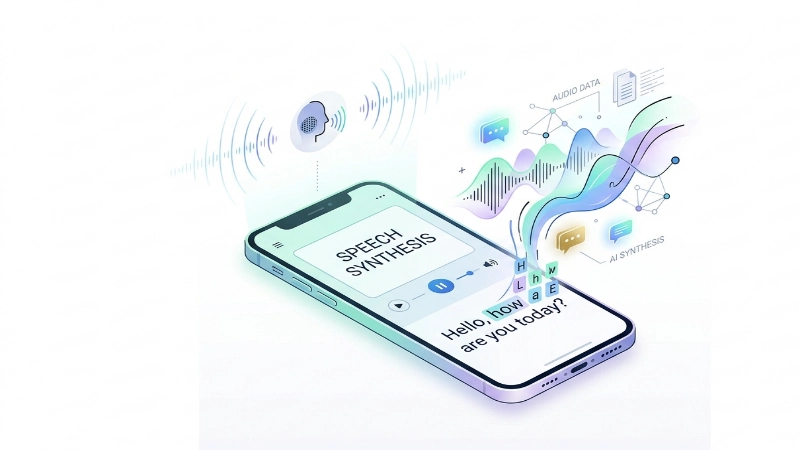
TTS most commonly stands for Text to Speech in digital communication.
It describes a technology that reads written words aloud using a synthetic or computer generated voice. Instead of recording someone speaking, a user enters text, and software turns those words into audio.
According to the Cambridge Business English Dictionary, TTS is the abbreviation for text to speech.
English meaning Cambridge Dictionary+1
In everyday online conversations, people might use TTS when talking about:
- Automated voices in TikTok videos.
- AI generated voiceovers.
- Apps that read messages aloud.
- Accessibility tools for reading digital content.
- Discord features that speak written messages.
- Voice narration in videos and presentations.
Featured Snippet: What does TTS mean in texting?
TTS usually means Text to Speech. It refers to technology that converts written messages or other digital text into spoken words using a computer generated voice. It is commonly discussed on TikTok, Discord, Instagram, and in conversations about AI voices and accessibility.
TTS Meaning at a Glance
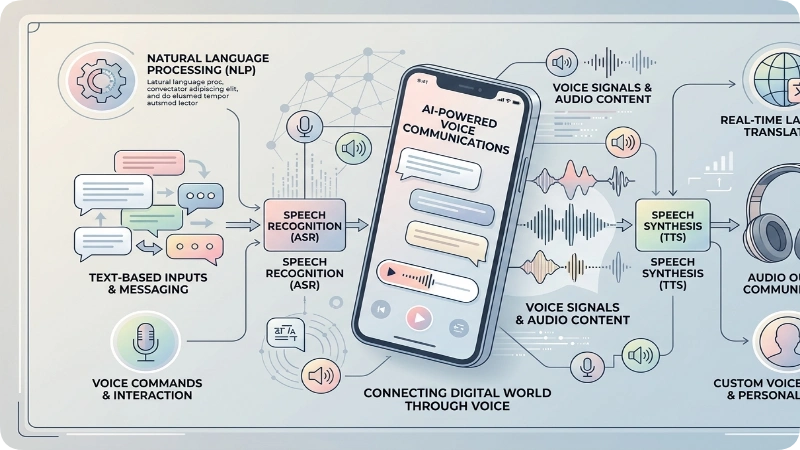
Understanding the abbreviation becomes easier when you compare its meaning, purpose, and everyday usage.
| Feature | Explanation |
| Abbreviation | TTS |
| Full form | Text to Speech |
| Category | Technology and digital communication |
| Main purpose | Converts written text into spoken audio |
| Common platforms | TikTok, Discord, Instagram |
| Tone | Usually neutral and conversational |
| Related terms | AI voice, voiceover, speech synthesis |
| Typical use | Reading messages or narrating videos |
TTS is not traditionally an emotional expression like LOL, OMG, or BRB. It describes a technology or feature rather than a particular feeling.
That distinction is important because the abbreviation can appear in casual conversations without necessarily being slang.
How Is TTS Used in Text Messages?

TTS usually appears when someone discusses listening to written content instead of reading it.
For example, someone might ask If a phone can read incoming messages aloud or If a video creator used an automated voice.
Here are some realistic examples.
Example 1: Talking About a Video
Person A: How did you make your video talk without recording your voice?
Person B: I used TTS.
Meaning: The person used text to speech software to turn written words into spoken narration.
Example 2: Asking About an AI Voice
Person A: Which TTS voice did you use?
Person B: The default voice in my editing app.
Meaning: The person wants to know which computer generated voice narrated the content.
Example 3: Talking About Accessibility
Person A: Can my phone read this article to me?
Person B: Yes, you can use TTS.
Meaning: The person is suggesting a feature that reads digital text aloud.
Example 4: Commenting on a Robotic Voice
Person A: This sounds like TTS 😂
Person B: It is! I didn’t record anything.
Meaning: The speaker recognizes that the voice was computer generated.
These examples show that TTS generally relates to spoken versions of written content rather than a hidden emotional message.
What Does TTS Mean on Different Social Media Platforms?

The abbreviation generally keeps the same meaning across social platforms, although its practical use can change depending on the app.
TTS Meaning on TikTok
On TikTok, TTS usually refers to the automated voice that reads text displayed in a video.
Creators use this feature to narrate jokes, stories, reactions, educational content, and entertaining captions.
For example:
- “I love this TTS voice.”
- “How do you add TTS to videos?”
- “The TTS makes this story even funnier.”
- “Which TTS voice is everyone using?”
The generated voice can become part of a video’s personality. Some creators prefer natural sounding narration, while others deliberately choose exaggerated or robotic voices for comedic effect.
TTS Meaning on Instagram
On Instagram, TTS can refer to automated narration in Reels and other video content.
A creator may use text to speech instead of recording their own voice. This is especially useful for tutorials, storytelling, product explanations, and short informational videos.
When someone asks, “What TTS is that?” they are generally asking about the voice or software used to create the narration.
TTS Meaning on Snapchat
On Snapchat, the meaning depends on the feature or conversation being discussed.
Someone might mention TTS while discussing voice generated content, reading digital messages aloud, or using a device’s accessibility features.
It is best not to assume that every appearance of TTS represents a separate Snapchat slang expression.
TTS Meaning on Discord
Discord provides another familiar example of text to speech technology.
Its /tts command can make a written message be read aloud through supported text to speech functionality, subject to server and user settings.
For example:
User: /tts Welcome everyone to the server!
Meaning: The message is intended to be spoken aloud by a generated voice rather than simply displayed as text.
This makes TTS useful for announcements, accessibility, and playful interactions in online communities.
How Does Text to Speech Work?
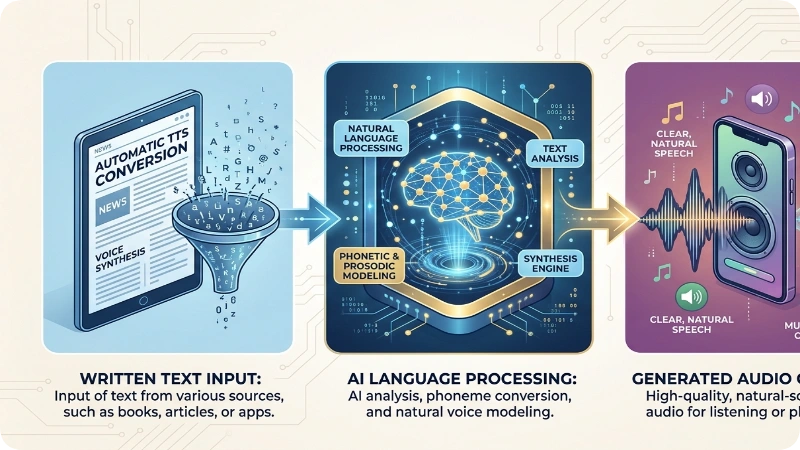
Text to speech technology works by analyzing written language and converting it into an audio signal that sounds like spoken communication.
Modern systems can produce surprisingly natural voices, complete with pauses, different speaking speeds, and varied vocal styles.
The process generally involves three stages:
- Text input: A person enters or selects written content.
- Language processing: The software analyzes words, sentence structure, and pronunciation.
- Voice generation: The system creates spoken audio from the processed text.
Some advanced systems use neural networks to create more realistic speech rather than relying on older, mechanical sounding voices.
NVIDIA Glossary+1
This explains why the TTS voices heard online can sound very different from one another.
Some are expressive and conversational, while others have a deliberately synthetic sound.
Why Do People Use TTS?
Text to speech is more than an entertaining social media feature. It serves practical purposes in education, communication, accessibility, and content creation.
1. Accessibility
TTS helps people access written information by listening instead of reading.
It can be particularly useful for people with visual impairments, reading difficulties, or situations where looking at a screen is inconvenient.
The technology also makes digital information easier to consume in different environments.
Mada Accessibility & AT Glossary+1
2. Content Creation
Video creators use TTS to narrate stories, explain ideas, and produce videos without recording their own voices.
This can save editing time and help creators maintain a consistent narration style.
3. Education and Learning
Students can listen to articles, study materials, and digital documents.
Hearing information alongside reading it can also support different learning preferences.
4. Everyday Convenience
TTS can read notifications, messages, articles, and other digital content aloud.
For example, someone driving or performing household tasks may prefer listening to written information rather than looking at a screen.
5. Entertainment and Online Humor
Some computer generated voices have become recognizable elements of internet humor.
Creators use them for memes, funny stories, gaming videos, dramatic narration, and unexpected punchlines.
The voice itself can become part of the entertainment.
Is TTS Slang or a Technical Abbreviation?
TTS is primarily a technical abbreviation, although people frequently use it in casual online conversations.
This difference matters when interpreting messages.
Consider these examples:
| Expression | What it communicates |
| “I used TTS.” | The person used text to speech technology. |
| “That voice sounds like TTS.” | The voice sounds computer generated. |
| “Can you enable TTS?” | The person wants spoken output. |
| “Which TTS app is best?” | The person is asking about voice generation software. |
Unlike expressions such as LOL (Laughing Out Loud), TTS does not normally communicate a particular emotional reaction.
Its meaning comes from the technology being discussed.
Does TTS Have Other Meanings in Texting?
Although Text to Speech is the most established meaning in technology related online conversations, abbreviations can have different interpretations in specialized communities.
It is important not to assume that every three letter combination has one universal meaning.
When you encounter TTS, consider these clues:
- Technology discussion: It almost certainly refers to text to speech.
- TikTok or video comments: It usually describes an automated narration voice.
- Discord conversations: It may refer to the platform’s text to speech functionality.
- Accessibility discussions: It generally means software that reads written content aloud.
- Unrelated personal conversation: Ask for clarification if the surrounding message does not establish the meaning.
Some websites suggest alternative expansions such as “time to sleep” or “talk to someone.” However, these should not be presented as universally recognized texting meanings without reliable context.
The safest interpretation is to use the surrounding conversation rather than inventing an expansion.
TTS vs. STT: What Is the Difference?
TTS and STT are closely related technologies, but they perform opposite functions.
| Feature | TTS | STT |
| Full form | Text to Speech | Speech to Text |
| Input | Written text | Spoken audio |
| Output | Spoken audio | Written text |
| Main purpose | Read text aloud | Transcribe speech |
| Example | A phone reading a message | A phone typing spoken words |
Think of it this way:
- TTS: Your device speaks the words you type.
- STT: Your device types the words you speak.
Both technologies make digital communication more flexible, but they solve different problems.
Is TTS the Same as an AI Voice?
Not exactly.
TTS is the broader technology used to convert written words into spoken audio. AI generated voices are one way modern text to speech systems produce that audio.
Traditional TTS systems often sound mechanical, while newer neural systems can generate more natural sounding speech.
For example, a basic navigation voice and a sophisticated AI audiobook narrator may both use text to speech technology, even though their voices sound very different.
The important distinction is that TTS describes the conversion process, while an AI voice describes a type of generated voice or voice technology.
How Should You Reply When Someone Says TTS?
Your response depends on what the other person is discussing.
Here are some natural replies:
| If someone says… | You could reply… |
| “I used TTS for this video.” | “Nice! Which voice did you choose?” |
| “This sounds like TTS.” | “Yes, it’s an AI generated voice.” |
| “Can you use TTS?” | “Sure, I’ll convert the text into audio.” |
| “Which TTS tool do you recommend?” | “It depends on the voice and features you need.” |
| “I need TTS for this article.” | “You can use a read aloud tool.” |
If you are unsure what someone means, a simple question works perfectly:
“Do you mean text to speech?”
There is no need to overthink a short abbreviation when context can clear things up.
Frequently Asked Questions About TTS
What does TTS stand for in texting?
TTS most commonly stands for Text to Speech. It refers to software that converts written words into spoken audio through a computer generated voice.
What does TTS mean on TikTok?
On TikTok, TTS refers to the automated voice used to read text aloud in videos. Creators commonly use it for storytelling, jokes, tutorials, and narration.
What does TTS mean on Snapchat?
TTS generally refers to text to speech technology when discussing voice generated content or features that read written messages aloud. The surrounding conversation helps establish the intended meaning.
What does TTS mean on Discord?
On Discord, TTS can refer to the text to speech feature, including the /tts command, which allows eligible messages to be spoken aloud.
Is TTS the same as an AI voice?
They are related but not identical. TTS converts written text into speech, while an AI voice is a generated voice that may be used by a modern TTS system.
Is TTS a positive or negative expression?
TTS is generally neutral. It describes a technology rather than expressing happiness, sadness, anger, or another emotion. Its tone can become playful or humorous when people discuss robotic sounding voices.
Does TTS mean someone wants to talk?
Not necessarily. The established technology meaning is Text to Speech. If someone uses the abbreviation in a personal conversation without mentioning technology, ask what they mean rather than assuming.
What is the difference between TTS and voice to text?
TTS converts written words into spoken audio. Voice to text converts spoken words into written text. They perform opposite functions.
Why do people use TTS instead of recording their voices?
People use TTS because it can save recording time, provide consistent narration, protect their privacy, and make content accessible to listeners who prefer audio.
Can TTS sound like a real person?
Yes. Modern neural text to speech systems can produce natural sounding speech with realistic pronunciation, pacing, and vocal expression. However, the quality depends on the software and voice being used.
Final Thoughts: Understanding TTS in Everyday Conversations
Understanding internet abbreviations makes digital communication easier, especially when new expressions appear across social media platforms.
The most common meaning of TTS is Text to Speech. It describes technology that transforms written words into spoken audio, making messages, articles, and videos easier to listen to.
If you encounter TTS in a TikTok comment, a Discord conversation, an Instagram Reel, or a discussion about AI voices, the surrounding context usually reveals its meaning.
The key is to remember that TTS is primarily a technology related abbreviation, not an emotional slang expression. Once you understand that distinction, recognizing and responding to it becomes much simpler.

Amara uncovers the hidden history, origins, and meanings behind names. She curates Namestylo’s historical, cultural, and baby naming guides to ensure every suggestion carries deep significance. In her free time, she devours historical fiction and mythology.