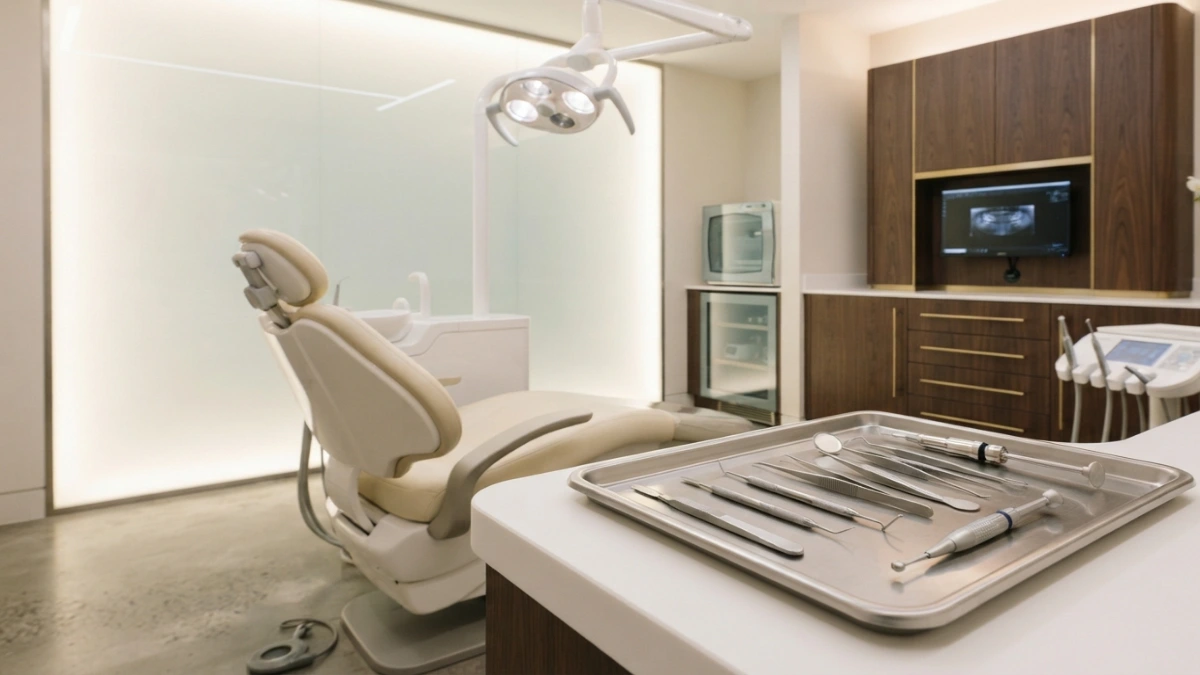
Dental instruments may look intimidating at first glance, but each one plays a precise role in keeping smiles healthy, functional, and beautiful. From tiny mirrors and explorers to powerful surgical tools and polishing devices, these instruments combine science, craftsmanship, precision, and patient care in fascinating ways.
Some dental tools feel highly clinical and modern.
Others sound surprisingly elegant, vintage, or even futuristic.
If you’re a dental student, clinic owner, healthcare writer, curious patient, medical creator, or naming enthusiast exploring professional terminology, this guide breaks down the most important dental instruments names with meanings, uses, categories, emotional impressions, and modern dental aesthetics.
Featured Snippet
Common dental instruments names include mouth mirror, explorer, scaler, forceps, excavator, probe, curette, handpiece, suction tip, and dental syringe. These tools help dentists diagnose problems, clean teeth, perform surgeries, remove decay, and complete restorative procedures with precision and patient comfort.
Why Dental Instrument Names Matter
Dental instruments are more than technical tools.
Their names communicate:
- precision
- trust
- cleanliness
- expertise
- surgical control
- patient safety
For dental students and professionals, instrument recognition is essential for communication and efficiency.
For patients, learning instrument names often reduces anxiety because unfamiliar tools become easier to understand.
Modern dental culture also emphasizes:
- aesthetic clinics
- advanced technology
- minimally invasive care
- comfort focused experiences
- luxury dental branding
That’s why dental terminology today feels increasingly refined, modern, and approachable compared to older clinical language.
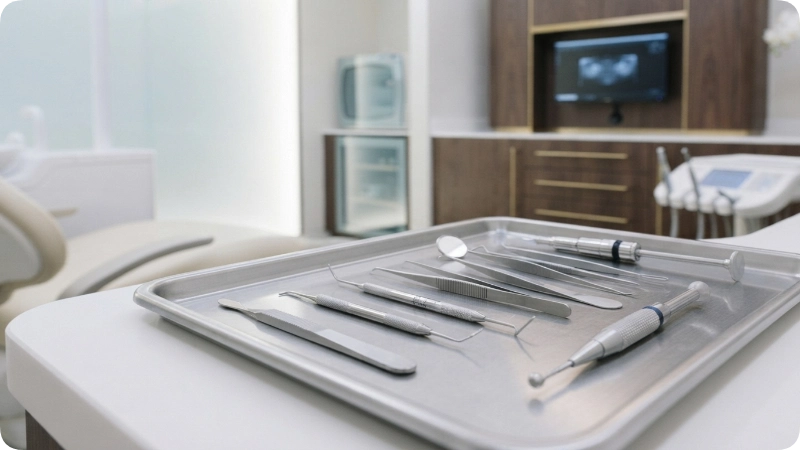
Overview Table: Essential Dental Instruments Names
| Instrument Name | Main Use | Vibe | Dental Specialty |
| Mouth Mirror | Viewing inside mouth | Clean & precise | General dentistry |
| Explorer | Detecting cavities | Sharp & technical | Diagnostics |
| Scaler | Removing plaque | Clinical & hygienic | Preventive care |
| Curette | Deep gum cleaning | Surgical & refined | Periodontics |
| Forceps | Tooth extraction | Strong & intimidating | Oral surgery |
| Handpiece Drill | Cutting/polishing | Modern & mechanical | Restorative dentistry |
| Dental Syringe | Local anesthesia | Functional & clinical | General procedures |
| Suction Tip | Removing saliva | Clean & efficient | Universal |
| Excavator | Removing decay | Delicate & precise | Restorative care |
| Orthodontic Pliers | Adjusting braces | Technical & structured | Orthodontics |
Diagnostic Dental Instruments
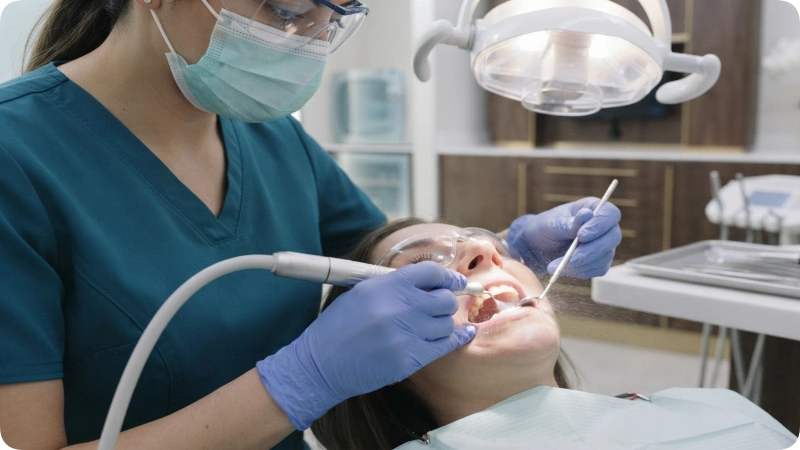
Diagnostic tools help dentists examine oral health before treatment begins.
These are often the first instruments patients notice during appointments.
Mouth Mirror
The mouth mirror is one of the most recognizable dental tools.
It helps dentists:
- view hard to see areas
- reflect light
- retract cheeks and tongue
- improve visibility
Emotional vibe: Clean, calm, professional.
Unlike more intimidating tools, mirrors usually feel reassuring and familiar to patients.
Dental Explorer
Often called a “probe,” the explorer features a sharp hooked tip used to detect:
- cavities
- plaque
- enamel irregularities
- calculus deposits
Aesthetic energy: Precision focused and highly technical.
Its sleek metallic appearance gives it a modern medical feel.
Periodontal Probe
This instrument measures gum pocket depth to evaluate gum disease.
It contains tiny measurement markings for accuracy.
Quick Insight
Periodontal probes help dentists diagnose gingivitis and periodontitis by measuring spaces between teeth and gums with precise millimeter markings.
Cleaning & Preventive Dental Instruments
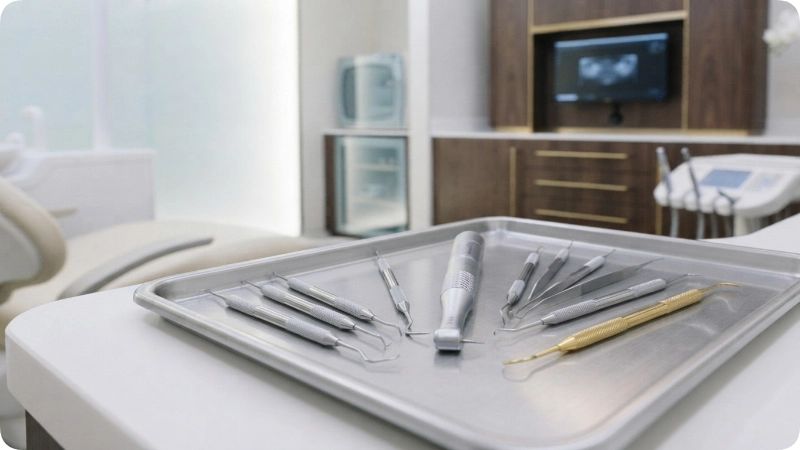
Preventive dentistry focuses on hygiene, plaque removal, and long term oral health.
These tools are strongly associated with clean smile aesthetics and wellness culture.
Scaler
Scalers remove hardened plaque and tartar from teeth surfaces.
Two common types include:
- sickle scalers
- ultrasonic scalers
Vibe: Sharp, hygienic, efficient.
Ultrasonic versions especially feel modern and high tech because they use vibration and water spray technology.
Curette
Curettes clean beneath the gumline during deep cleanings.
Unlike scalers, they feature rounded tips for safer subgingival use.
Emotional energy: Surgical precision with gentle intent.
Polishing Cup
Attached to a handpiece, this rubber cup polishes teeth after cleaning.
Patients often associate this step with:
- freshness
- smooth teeth
- cosmetic improvement
- spa like finishing care
Restorative Dental Instruments
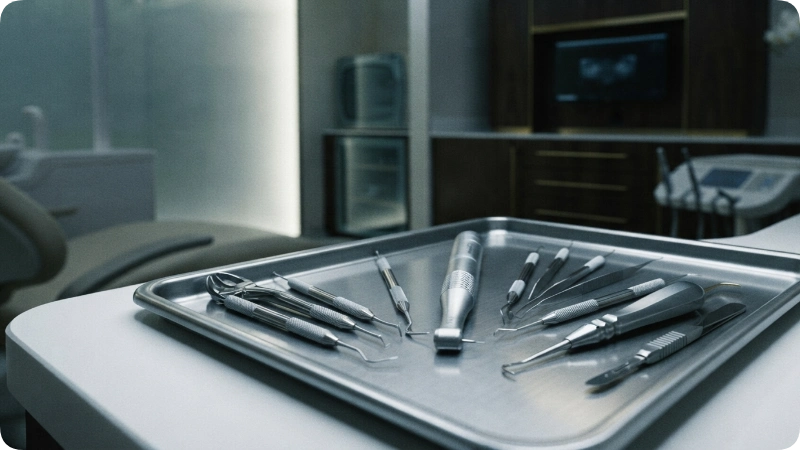
These instruments repair damaged teeth and restore function.
They’re essential in fillings, crowns, bonding, and cosmetic dentistry.
Excavator
An excavator removes softened tooth decay before filling placement.
It often resembles a tiny spoon.
Personality vibe: Careful, detailed, artisan like.
Composite Placement Instrument
Used for shaping tooth colored fillings and resin materials.
Modern cosmetic dentistry relies heavily on these tools for aesthetic precision.
Why Patients Love Composite Dentistry
Composite instruments support natural looking restorations that blend seamlessly with surrounding teeth, making modern dental work feel more aesthetic and less noticeable.
Dental Handpiece Drill
One of the most iconic dental tools.
High speed handpieces help:
- remove decay
- shape teeth
- polish restorations
- prepare crowns
Modern handpieces now emphasize:
- quieter operation
- patient comfort
- reduced vibration
- sleek ergonomic design
Surgical Dental Instruments
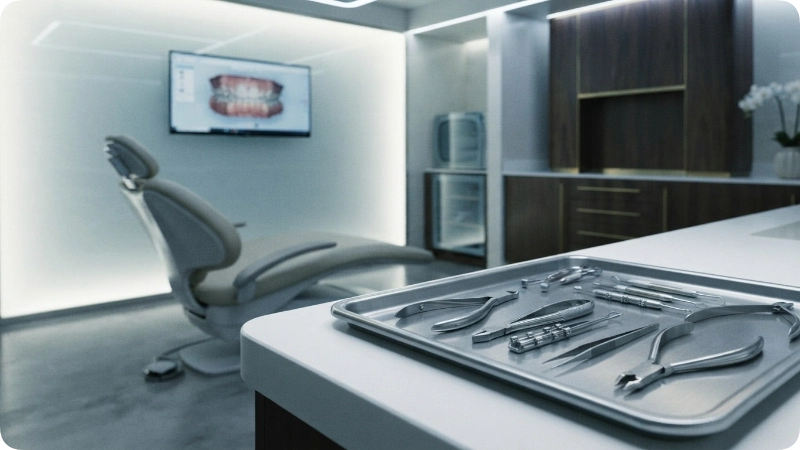
Surgical tools tend to feel more intense emotionally because they’re associated with extractions and oral surgery.
Still, modern dentistry increasingly softens that experience through comfort centered technology.
Dental Forceps
Forceps grip and remove teeth during extractions.
Different forceps are designed for:
- molars
- premolars
- roots
- upper or lower teeth
Social impression: Powerful and intimidating, yet essential.
Elevators
Elevators loosen teeth before extraction.
They reduce trauma and improve surgical control.
Bone Rongeur
This specialized surgical instrument trims and reshapes bone tissue.
Its appearance feels highly technical and advanced.
Orthodontic Dental Instruments
Orthodontics uses highly specialized tools for braces and alignment systems.
These instruments often feel futuristic and engineered.
Orthodontic Pliers
Orthodontists use pliers to:
- bend wires
- place brackets
- cut ligatures
- adjust appliances
Different styles include:
- bird beak pliers
- distal end cutters
- utility pliers
Bracket Positioning Gauge
This tool ensures bracket placement accuracy.
Tiny adjustments dramatically affect smile symmetry.
Ligature Director
Used for positioning elastic ties and orthodontic wires.
Aesthetic vibe: Precision engineering with minimalist design.
Dental Instruments That Sound Surprisingly Elegant
Some dental instrument names feel almost luxurious or artistic despite their medical purpose.
| Instrument | Why It Sounds Elegant |
| Curette | French inspired softness |
| Excavator | Vintage craftsmanship energy |
| Explorer | Adventurous and sleek |
| Burnisher | Smooth, polished aesthetic |
| Condenser | Structured and powerful |
| Spatula | Familiar culinary crossover |
| Scaler | Minimalist modern tone |
Modern dental branding often leans into these softer, more refined terms to reduce patient anxiety.
Most Important Dental Instruments for Students
Dental students must quickly memorize dozens of instruments during clinical training.
The most essential beginner tools include:
| Instrument | Why Students Learn It Early |
| Mouth Mirror | Universal visibility tool |
| Explorer | Core diagnostic instrument |
| Probe | Periodontal measurements |
| Scaler | Hygiene fundamentals |
| Forceps | Extraction basics |
| Excavator | Decay removal |
| Handpiece | Core restorative technique |
Student Learning Trend
Many dental students now use:
- TikTok tutorials
- 3D anatomy apps
- instrument flashcards
- simulation labs
- Pinterest study boards
Visual learning culture has transformed how dental terminology is memorized and understood.
Dental Instrument Names by Emotional Vibe
Modern & Futuristic
- Ultrasonic scaler
- Laser handpiece
- Air abrasion unit
- Intraoral scanner
Surgical & Powerful
- Forceps
- Elevator
- Rongeur
- Retractor
Clean & Minimal
- Mirror
- Probe
- Curette
- Scaler
Vintage & Technical
- Excavator
- Burnisher
- Condenser
- Carver
Instrument Comparison Table
| Instrument | Feels Gentle or Intense | Precision Level | Patient Familiarity |
| Mouth Mirror | Gentle | Moderate | Very high |
| Explorer | Moderate | Very high | High |
| Scaler | Moderate | High | Very high |
| Forceps | Intense | High | High |
| Handpiece Drill | Intense | Very high | Extremely high |
| Curette | Gentle | High | Moderate |
Dental Instruments in Modern Cosmetic Dentistry
Cosmetic dentistry has changed how instruments are perceived emotionally.
Today’s dental tools are associated with:
- smile transformations
- confidence
- luxury aesthetics
- wellness culture
- self care routines
Especially in social media culture, aesthetic dentistry now overlaps with:
- beauty trends
- influencer culture
- smile design
- facial harmony
- luxury clinic branding
That shift makes dental instruments feel less frightening and more aspirational than they once did.
FAQs
What are the most common dental instruments?
The most common dental instruments include mouth mirrors, explorers, scalers, probes, forceps, handpieces, and suction devices used in routine examinations and treatments.
What is the dental hook tool called?
The hooked dental tool is usually called an explorer. Dentists use it to detect cavities, plaque buildup, and tooth surface irregularities.
Which dental instrument removes plaque?
Scalers and curettes remove plaque and hardened tartar from teeth and beneath the gumline during cleanings.
Why do dental instruments have different shapes?
Different shapes improve access, precision, visibility, safety, and comfort depending on tooth position and procedure type.
What is the most recognizable dental instrument?
The mouth mirror is probably the most recognizable dental instrument because nearly every dental appointment uses it.
Final Thoughts
Dental instruments names may sound highly technical at first, but behind every mirror, scaler, curette, and handpiece is a carefully designed tool built around precision, comfort, and patient care.
Some instruments feel sleek and futuristic.
Others carry vintage surgical charm.
Some sound intimidating.
Others feel surprisingly elegant.
But together, they form the language of modern dentistry a world where science, aesthetics, craftsmanship, and human care work side by side to create healthier smiles and greater confidence.
And once you understand their names, these tools start feeling far less mysterious and far more fascinating.

Amara uncovers the hidden history, origins, and meanings behind names. She curates Namestylo’s historical, cultural, and baby naming guides to ensure every suggestion carries deep significance. In her free time, she devours historical fiction and mythology.