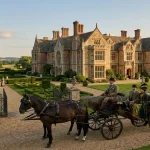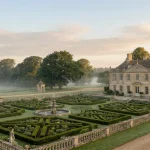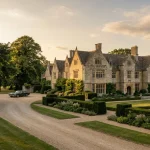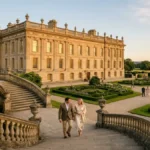
Some surnames seem to carry centuries of history in just a few syllables.
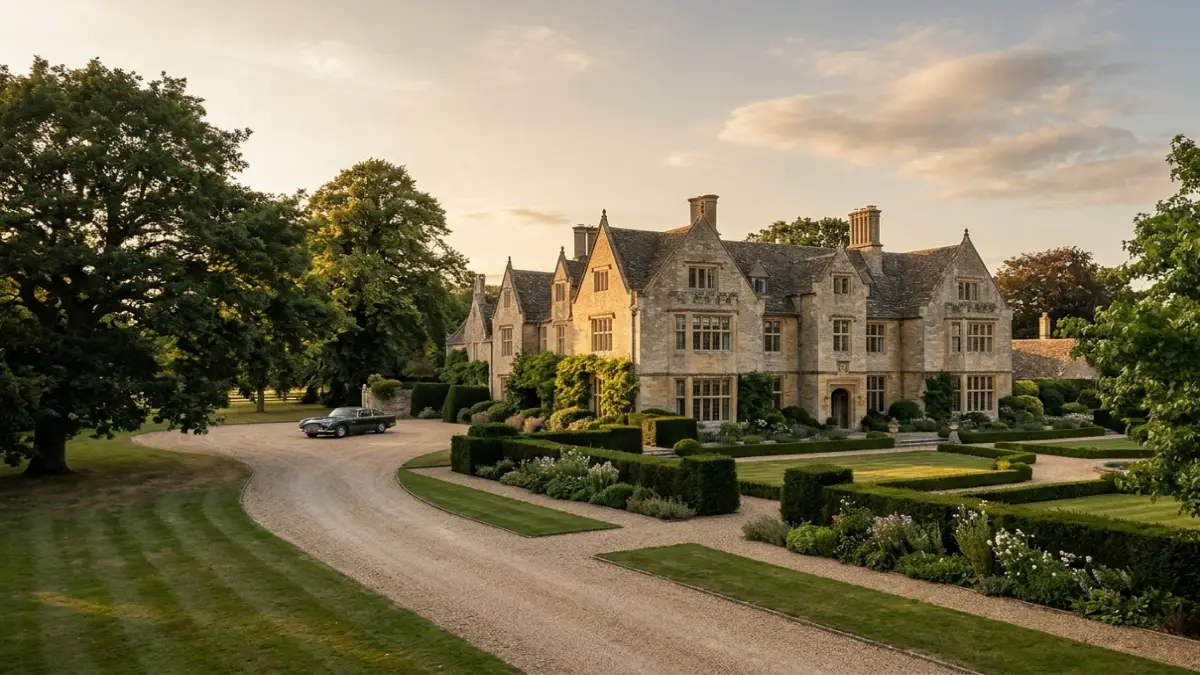
They evoke grand country estates, ancestral portraits, private libraries, ancient universities, and families whose names have appeared in British history for generations.
Names like Cavendish, Grosvenor, Fitzroy, Percy, and Wentworth have an unmistakably aristocratic quality. Others, such as Fairfax, Ashcombe, and Pemberton, feel quietly sophisticated without sounding excessively grand.
That is the appeal of old money British surnames.
They suggest heritage rather than novelty, understated elegance rather than obvious luxury, and a sense of belonging to a much older world.
If you’re naming a fictional aristocratic family, developing a historical novel, searching for elegant character names, or simply exploring traditional British surnames, this guide brings together 100 distinguished options with historical connections, meanings, aesthetic impressions, and practical naming advice.
What Are Old Money British Surnames?
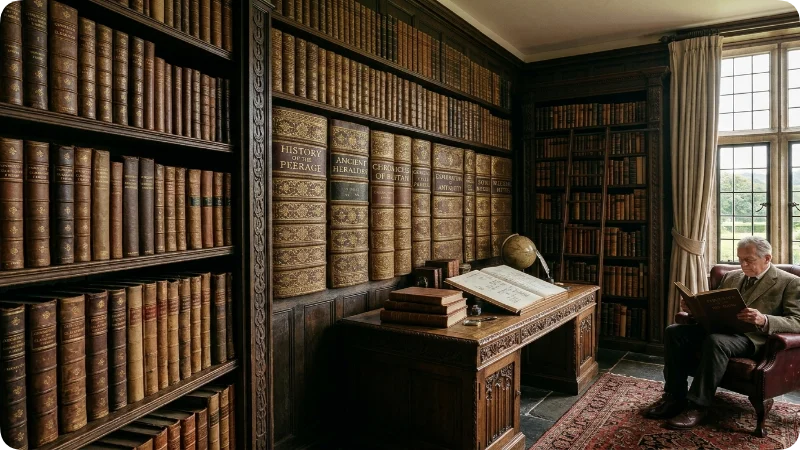
Old money British surnames are family names associated with inherited wealth, established landownership, aristocratic ancestry, and long standing social influence in Britain. Famous examples include Cavendish, Grosvenor, Percy, Howard, Spencer, and Fitzroy. However, a surname alone does not establish someone’s wealth, noble status, or family background.
The expression old money describes wealth and social position accumulated or inherited across generations, rather than recently acquired fortunes.
In Britain, the aesthetic is particularly connected with landed estates, hereditary titles, historic family houses, and generations of public or social prominence.
What Makes a British Surname Sound Aristocratic?
Several characteristics contribute to that impression:
- Historical continuity: A surname connected with centuries of documented family history.
- Estate associations: Names linked to ancestral houses, villages, or landed properties.
- Noble connections: Families associated with dukedoms, earldoms, or other hereditary titles.
- Traditional pronunciation: Established British names with distinctive rhythms and spellings.
- Cultural familiarity: Names appearing in historical records, literature, and British high society.
A name can sound aristocratic without belonging exclusively to aristocrats. Likewise, some historically noble surnames are relatively ordinary in modern Britain.
Overview: Best Old Money British Surnames
| Surname | Historical or stylistic association | Aesthetic impression |
| Cavendish | Dukes of Devonshire | Grand aristocratic |
| Grosvenor | Dukes of Westminster | Established wealth |
| Spencer | Spencer family, earls and nobility | Refined and familiar |
| Percy | Earls and dukes of Northumberland | Medieval nobility |
| Howard | Dukes of Norfolk | Royal court heritage |
| Fitzroy | Royal descended families | Regal and distinctive |
| Wentworth | Historic landed and political families | Scholarly elegance |
| Fairfax | English gentry and parliamentary history | Understated luxury |
| Montagu | Historic aristocratic families | French Norman elegance |
| Russell | Dukes of Bedford | Classical prestige |
| Seymour | Tudor era noble family | Romantic and historical |
| Villiers | Dukes of Buckingham and related families | Courtly sophistication |
| Cholmondeley | Marquesses of Cholmondeley | Traditional upper class |
| Berkeley | Ancient landed family | Soft and polished |
| Talbot | Earls of Shrewsbury | Medieval heritage |
The aesthetic descriptions are editorial interpretations, not measurements of wealth or social standing.
Classic British Aristocratic Surnames
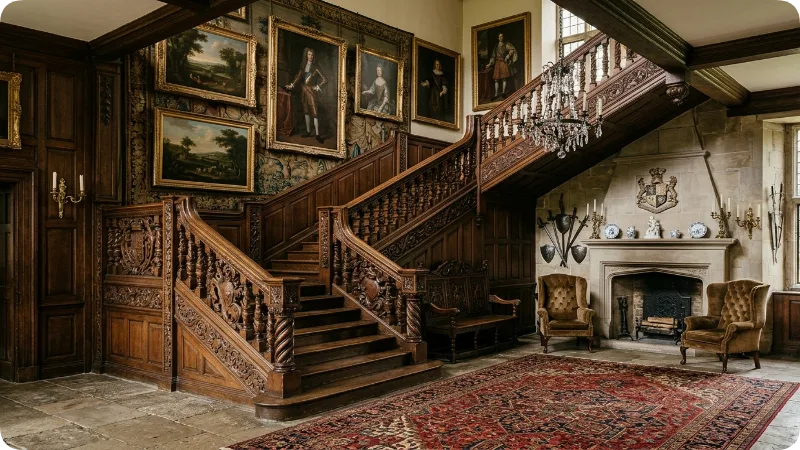
These are among the most recognizable surnames associated with Britain’s hereditary aristocracy.
1. Cavendish
Origin: English, from a Suffolk place name.
Historical association: The Cavendish family is closely connected with the Dukes of Devonshire and Chatsworth House.
Personality vibe: Sophisticated, commanding, and unmistakably aristocratic.
Cavendish has a polished sound that works especially well for fictional families with centuries of inherited wealth.
2. Grosvenor
Origin: Anglo Norman, traditionally associated with the expression grand veneur, meaning chief huntsman.
Historical association: The Grosvenor family holds the dukedom of Westminster and has longstanding connections with London property ownership.
Personality vibe: Powerful, discreet, and financially established.
Grosvenor feels particularly appropriate for a family whose influence is rooted in land, property, and generations of social standing.
3. Spencer
Origin: Occupational surname derived from a medieval term for a steward or dispenser of provisions.
Historical association: The Spencer family includes the Earls Spencer and Diana, Princess of Wales.
Personality vibe: Graceful, traditional, and approachable.
Spencer balances aristocratic heritage with a relatively modern, wearable sound.
4. Percy
Origin: Norman, associated with the place name Percy in Normandy.
Historical association: The Percy family has held major influence in northern England, particularly through the earldom and dukedom of Northumberland.
Personality vibe: Medieval, romantic, and distinguished.
Percy is especially appealing for historical fiction and characters from ancient landed families.
5. Howard
Origin: English surname with debated historical derivations.
Historical association: The Howard family is associated with the Dukes of Norfolk, one of England’s most prominent noble lineages.
Personality vibe: Reserved, authoritative, and traditional.
Howard sounds less ornate than some aristocratic surnames, which makes its historical prestige feel understated.
6. Fitzroy
Origin: Anglo Norman, meaning “son of the king.”
Historical association: Used by descendants of English royalty, including royal illegitimate children and their family lines.
Personality vibe: Regal, dramatic, and memorable.
Fitzroy is one of the most immediately royal sounding surnames in British naming history.
7. Russell
Origin: Norman French, commonly connected with a nickname meaning reddish haired.
Historical association: The Russell family is associated with the Dukes of Bedford and Woburn Abbey.
Personality vibe: Intellectual, polished, and quietly influential.
8. Seymour
Origin: Norman locational surname associated with Saint Maur.
Historical association: The Seymour family rose to prominence during the Tudor period, particularly through Jane Seymour, the third wife of Henry VIII.
Personality vibe: Romantic, elegant, and historically rich.
9. Montagu
Origin: Norman French locational surname.
Historical association: Several aristocratic Montagu families held significant English peerages.
Personality vibe: Cultured, graceful, and cosmopolitan.
10. Villiers
Origin: French locational surname.
Historical association: Connected with the Dukes of Buckingham and other prominent aristocratic branches.
Personality vibe: Fashionable, courtly, and distinctive.
Elegant Old Money British Surnames
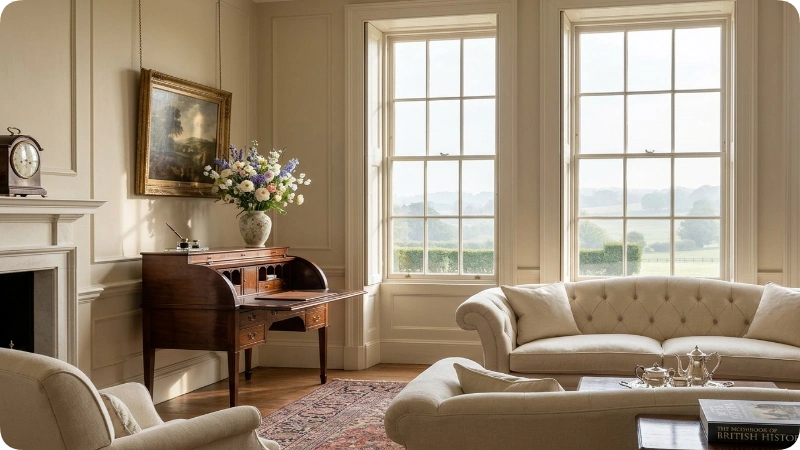
Not every refined surname needs a dukedom behind it. Some names create an old money impression through their sound, spelling, literary associations, or connection with historic English places.
| Surname | Style | Best fictional use |
| Ashcombe | Countryside elegance | Country house family |
| Pemberton | Refined and traditional | Established professional family |
| Fairfax | Historic gentry | Reserved aristocratic character |
| Wentworth | Scholarly and distinguished | Heritage rich family |
| Wycliffe | Gothic and intellectual | Academic dynasty |
| Harrington | Polished and formal | Society family |
| Ellington | Artistic and graceful | Cultured household |
| Langford | Rural and traditional | Estate owning family |
| Whitmore | Quietly luxurious | Contemporary upper class fiction |
| Ashford | Soft and classic | Romantic protagonist |
| Radcliffe | Literary and historic | Gothic or period fiction |
| Pembroke | Noble and architectural | Historical drama |
| Kingsley | Regal sounding | Modern fictional dynasty |
| Everleigh | Romantic and delicate | Aesthetic fiction |
| Blackwood | Dark and distinguished | Mystery or gothic fiction |
These names vary in their real historical associations. Their inclusion here reflects naming style rather than proof that every bearer belongs to a wealthy lineage.
Rare Old Money British Surnames With Noble Heritage
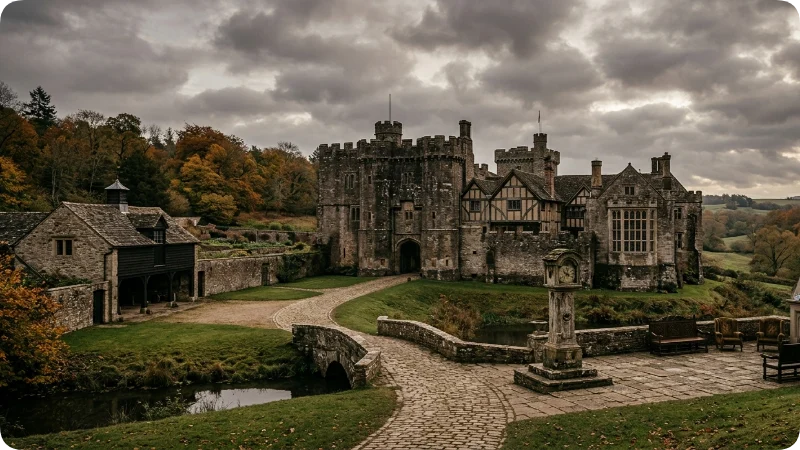
Some British surnames stand out because of their unusual spellings, Norman roots, or connections with historic peerages.
These names are especially useful for period dramas, historical fiction, and aristocratic family trees.
| Surname | Historical connection | Emotional vibe |
| Cholmondeley | Marquesses of Cholmondeley | Traditional, exclusive |
| St. John | Historic noble and gentry families | Elegant, mysterious |
| Beaufort | Royal and ducal associations | Regal, commanding |
| Devereux | Earls of Essex | Romantic, courtly |
| Courtenay | Earls of Devon | Ancient, prestigious |
| Wriothesley | Earls of Southampton | Rare, scholarly |
| Bentinck | Dukes of Portland | Established, refined |
| Pelham | Dukes of Newcastle | Political, historic |
| Egerton | Dukes of Bridgewater | Landed, distinguished |
| Manners | Dukes of Rutland | Polished, aristocratic |
| Sackville | Earls and dukes of Dorset | Literary, grand |
| Arundell | Historic Cornish nobility | Medieval, romantic |
| Lascelles | Earls of Harewood | Traditional, luxurious |
| Somerset | Dukes of Beaufort | Stately, timeless |
| Paget | Marquesses of Anglesey | Military, dignified |
The Charm of Cholmondeley
Cholmondeley is a particularly distinctive British aristocratic surname.
Pronunciation: Commonly “CHUM lee.”
Its spelling and pronunciation reflect the unusual development of certain traditional English family and place names.
For fictional storytelling, Cholmondeley immediately suggests a family with an established history and a strong attachment to tradition.
Why Devereux Feels So Elegant
Devereux has Norman French roots and a strong association with Tudor and Elizabethan aristocratic history.
Pronunciation: Often “DEV uh roo,” although pronunciation can vary.
The name has a romantic, slightly mysterious sound. It suits a fictional noble family whose history involves royal courts, political intrigue, and inherited estates.
The Royal Appeal of Beaufort
Beaufort is closely associated with English royal history and the descendants of John of Gaunt.
The surname also has a distinguished French derived sound.
Its modern aesthetic feels powerful, polished, and unmistakably aristocratic.
Old Money English Surnames With Country Estate Energy
Some surnames feel inseparable from the English countryside.
They suggest limestone manor houses, rolling green fields, ancient oak trees, and ancestral homes passed down through generations.
Here are 20 names with that atmosphere:
- Ashbury
- Ainsworth
- Bramwell
- Chiswick
- Davenport
- Ellsworth
- Featherstone
- Grafton
- Hargreaves
- Ketteringham
- Langley
- Mandeville
- Northcott
- Oakley
- Ravenscroft
- Stanhope
- Trelawney
- Wetherby
- Winthrop
- Worthington
Best choices for understated luxury: Ainsworth, Langley, Stanhope, and Ravenscroft.
Best choices for grand historical fiction: Mandeville, Grafton, Trelawney, and Ketteringham.
These are aesthetic recommendations. Not all the surnames necessarily indicate noble or wealthy ancestry.
Scottish Old Money Surnames
Scottish aristocratic naming has its own distinctive character, shaped by clans, historic landholding, Highland and Lowland traditions, and hereditary titles.
| Surname | Historical association | Style |
| Campbell | Dukes of Argyll | Powerful, traditional |
| Douglas | Earls of Douglas and related noble lines | Ancient, commanding |
| Gordon | Dukes of Gordon | Noble, Highland inspired |
| Hamilton | Dukes of Hamilton | Regal, prestigious |
| Murray | Dukes of Atholl | Established, dignified |
| Stewart | Scottish royal dynasty | Royal, timeless |
| Drummond | Historic Scottish noble family | Romantic, refined |
| Sinclair | Earls of Caithness and other noble lines | Mysterious, elegant |
| Fraser | Clan and noble associations | Strong, recognizable |
| MacDonald | Major Highland clan lineages | Historic, proud |
Hamilton: A Name With Historic Prestige
Hamilton is one of Scotland’s most recognizable aristocratic surnames.
Its association with the Dukes of Hamilton gives it a strong historical foundation, while its clean pronunciation makes it easy to use in contemporary fiction.
Aesthetic: Formal, elegant, and authoritative.
Sinclair: Soft but Distinguished
Sinclair has an appealing balance of mystery and sophistication.
It is particularly effective for fictional characters who are intellectual, reserved, or connected with old Scottish estates.
Aesthetic: Gothic romance meets historic refinement.
Old Money Welsh and British Border Surnames
Welsh naming traditions differ from English aristocratic naming, particularly because many Welsh surnames developed from patronymics.
Nevertheless, several names have prominent historical or landed associations.
| Surname | Association or origin | Naming impression |
| Mostyn | Historic Welsh landed family | Distinguished |
| Wynn | Welsh surname associated with gwyn, meaning white or blessed | Soft, classic |
| Herbert | Earls of Pembroke and other noble branches | Traditional |
| Morgan | Welsh patronymic heritage | Familiar, timeless |
| Vaughan | Welsh surname associated with fychan, meaning younger or small | Elegant |
| Trevelyan | Cornish landed family, relevant to wider British naming | Scholarly |
A surname such as Mostyn has a different cultural identity from Cavendish or Grosvenor. Preserving these distinctions makes historical characters and fictional family backgrounds more convincing.
Dark Academia and Gothic British Surnames
For readers drawn to dark academia, Victorian mystery, and gothic romance, certain British surnames have an especially atmospheric quality.
| Surname | Aesthetic energy | Character inspiration |
| Blackwood | Gothic, mysterious | Secretive heir |
| Ravenscroft | Dark, intellectual | University professor |
| Wycliffe | Scholarly, medieval | Historian |
| Radcliffe | Romantic, literary | Gothic heroine |
| Ashcombe | Quiet, enigmatic | Country house owner |
| Devereux | Aristocratic, dramatic | Noble antagonist |
| Fairfax | Restrained, dignified | Reserved protagonist |
| Wentworth | Academic, traditional | Oxford educated character |
| Sinclair | Romantic, mysterious | Scottish aristocrat |
| Trelawney | Historic, atmospheric | Eccentric family patriarch |
Best Combinations for Fictional Characters
- Alexander Wentworth — intellectual and reserved.
- Eleanor Cavendish — elegant and socially prominent.
- Sebastian Devereux — mysterious and romantic.
- Florence Ashcombe — understated and graceful.
- Theodore Blackwood — gothic and commanding.
- Arabella Sinclair — aristocratic and delicate.
- Frederick Ravenscroft — scholarly and enigmatic.
- Beatrice Fairfax — traditional and quietly confident.
These combinations are creative suggestions rather than names of particular historical individuals.
British Surnames That Sound Expensive
A surname can sound luxurious without having a direct connection to a wealthy family.
The impression often comes from rhythm, spelling, historical familiarity, and cultural associations.
Compare old money surname aesthetics
Luxury feelHeritage feelModern use
Cavendish
5/5
Grosvenor
5/5
Spencer
4/5
Wentworth
4/5
Fairfax
4/5
Fitzroy
5/5
Subjective editorial style ratings, not historical rankings or measures of actual wealth.
For a traditional aristocratic atmosphere, Cavendish and Grosvenor stand out.
For a surname that feels equally suitable for a contemporary professional or a historical character, Spencer and Fairfax offer more flexibility.
Old Money British Surnames for Female Characters
Although most British surnames are not gender specific, certain combinations create especially graceful or romantic impressions.
| Full name | Personality vibe | Aesthetic |
| Charlotte Cavendish | Confident, refined | Classic aristocracy |
| Amelia Wentworth | Gentle, intelligent | Romantic heritage |
| Eleanor Spencer | Timeless, elegant | Understated luxury |
| Arabella Montagu | Artistic, sophisticated | Regency inspired |
| Victoria Fairfax | Reserved, dignified | Country house elegance |
| Florence Seymour | Soft, historical | Vintage romance |
| Isabella Devereux | Dramatic, glamorous | Noble gothic |
| Cecilia Pembroke | Cultured, traditional | Academic elegance |
| Genevieve Sinclair | Mysterious, graceful | Scottish romance |
| Beatrice Harrington | Intelligent, poised | Classic English |
The most versatile options are Eleanor Spencer, Amelia Wentworth, and Victoria Fairfax.
They sound refined without requiring an elaborate fictional backstory.
Old Money British Surnames for Male Characters
| Full name | Personality vibe | Aesthetic |
| Alexander Cavendish | Commanding, polished | Aristocratic |
| Henry Grosvenor | Reserved, influential | Established wealth |
| Edward Percy | Traditional, noble | Medieval heritage |
| Sebastian Fitzroy | Charismatic, regal | Royal drama |
| William Fairfax | Dependable, refined | English gentry |
| Theodore Wentworth | Intellectual, thoughtful | Dark academia |
| Frederick Montagu | Formal, sophisticated | Historic society |
| Oliver Ashcombe | Gentle, cultured | Quiet luxury |
| Arthur Blackwood | Mysterious, serious | Gothic heritage |
| Charles Harrington | Confident, classic | Traditional upper class |
for historical fiction: Edward Percy and Frederick Montagu.
Best for contemporary fiction: Oliver Ashcombe and William Fairfax.
dramatic aristocratic characters: Sebastian Fitzroy and Alexander Cavendish.
How to Choose the Perfect Old Money British Surname
The right surname depends on If historical authenticity, sound, or emotional atmosphere matters most.
Find your ideal surname style
Choose a use and an aesthetic to narrow your options.
What are you using it for?
Historical research or authenticity
Novel, game, or fictional family
Modern character or name inspiration
Which atmosphere do you prefer?
Quiet and understated
Grand and aristocratic
Dark and mysterious
Your best matches
Spencer
Russell
Fairfax
Explore similar surnames
Practical Naming Advice
historically accurate stories, check If the family name existed during the period in question and If its geographical associations make sense.
For contemporary fiction, choose a name readers can pronounce and remember.
fantasy or gothic storytelling, unusual surnames can be effective, but too many elaborate names may distract from the characters.
It is also worth remembering that inherited surnames and hereditary titles are not interchangeable. A duke’s title may refer to a place rather than match the family surname.
Frequently Asked Questions
What are the most famous old money British surnames?
Cavendish, Grosvenor, Spencer, Howard, Percy, Russell, and Fitzroy are among the best known surnames associated with historic British aristocratic or royal families.
What is the poshest British surname?
There is no official ranking of the poshest surname. Grosvenor, Cavendish, Cholmondeley, and Fitzroy are strong examples because of their prominent historical connections and distinctive aristocratic associations.
What British surnames are associated with royalty?
Fitzroy, Stewart, Tudor, Stuart, and Beaufort have important royal connections. However, these names have different histories, and possessing one does not establish royal descent.
What are rare aristocratic British surnames?
Cholmondeley, Wriothesley, Devereux, Courtenay, Bentinck, and Lascelles are distinctive surnames associated with historical aristocratic families. Their rarity varies by place and period.
What are elegant English surnames for fictional characters?
Wentworth, Fairfax, Pemberton, Ashcombe, Langford, Radcliffe, and Harrington are attractive options. They offer traditional British atmosphere without necessarily making a character sound overtly royal.
Are all old money British families aristocratic?
No. Old money can include inherited business fortunes, banking families, longstanding professional wealth, and substantial property ownership. Hereditary aristocracy is one particular form of established social position.
What is the difference between an aristocratic surname and an old money surname?
An aristocratic surname is associated with a family belonging to the hereditary nobility. An old money surname may belong to a family with inherited wealth but no noble title. The categories overlap, but they are not identical.
Final Thoughts
Old money British surnames are fascinating because they combine language, history, family identity, and cultural imagination.
Cavendish and Grosvenor suggest grand aristocratic heritage. Spencer and Fairfax feel polished and understated. Devereux and Sinclair bring romance and mystery, while Blackwood and Ravenscroft lend themselves beautifully to gothic fiction.
The strongest choice is not necessarily the grandest or rarest.
It is the surname that feels believable for the person, family, historical period, and story you want to create.
And that is what gives a great British surname its lasting appeal: not simply the suggestion of wealth, but the feeling that generations of history exist behind it.

Amara uncovers the hidden history, origins, and meanings behind names. She curates Namestylo’s historical, cultural, and baby naming guides to ensure every suggestion carries deep significance. In her free time, she devours historical fiction and mythology.