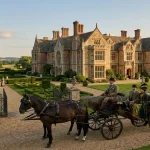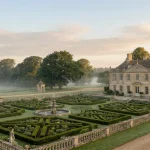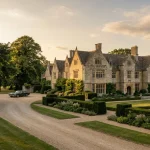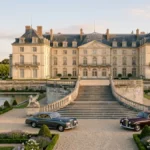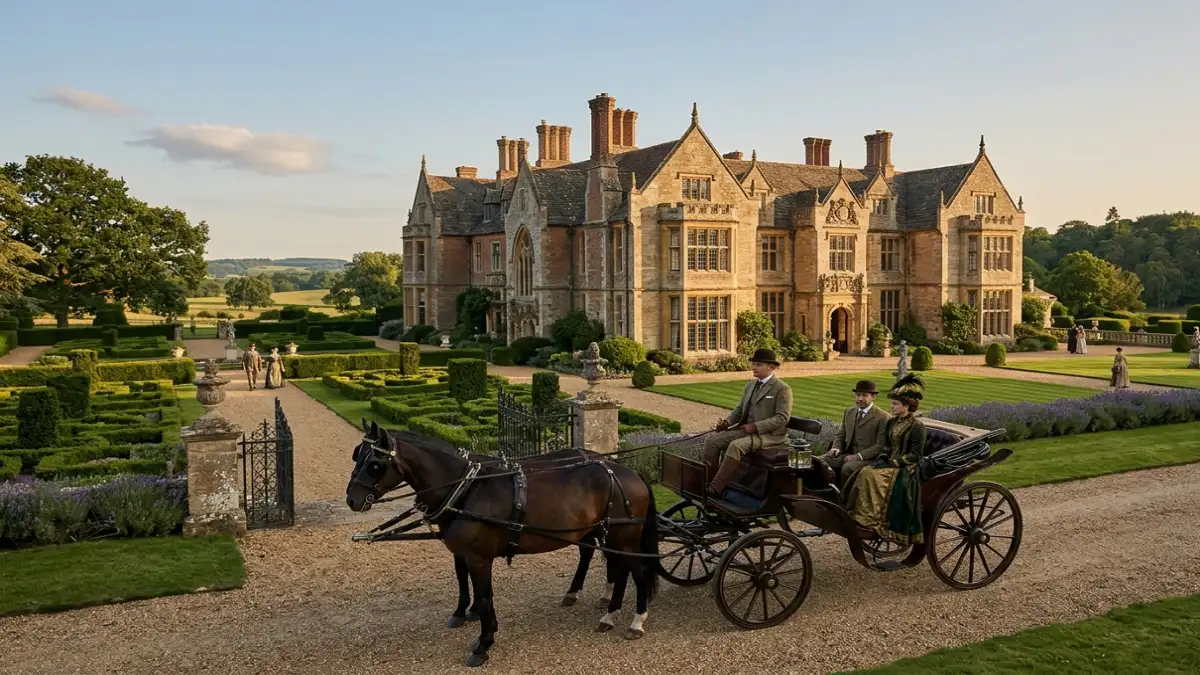
There’s something unmistakably elegant about Victorian upper class surnames.
Some evoke grand country estates, inherited fortunes, and centuries old family traditions. Others feel romantic, mysterious, or wonderfully literary like names belonging to characters in a classic English novel.
From Cavendish and Montagu to Wyndham, Fitzroy, and Ashcombe, these surnames capture the atmosphere of nineteenth century British high society.
If you’re naming a fictional aristocrat, creating a Victorian era character, researching historical family names, or looking for sophisticated old money inspiration, this guide explores beautiful Victorian upper class surnames, their historical associations, and the distinctive impressions they create.
Featured Snippet
Victorian upper class surnames include Cavendish, Spencer, Percy, Howard, Russell, Grosvenor, Montagu, Fitzroy, Seymour, and Villiers. These family names were associated with British aristocracy, landed estates, noble titles, and influential social circles during the Victorian era (1837–1901). Other elegant Victorian style surnames include Ashcombe, Fairchild, Blackwood, and Ravenscroft.
Why Victorian Upper Class Surnames Sound So Elegant
In Victorian Britain, surnames could carry enormous social significance.
A recognizable family name might suggest inherited land, political influence, distinguished ancestry, or connections to the royal court.
However, not every wealthy Victorian family belonged to the hereditary aristocracy. The upper class also included wealthy landowners, established professional families, and prominent industrial fortunes.
The surnames that feel particularly aristocratic today often share certain qualities:
- Historical connections to noble families
- Associations with country houses and inherited estates
- Norman French or traditional English linguistic roots
- Recognition through literature, politics, and royal history
- Distinctive spelling and a refined, memorable sound
A surname like Cavendish suggests established aristocratic heritage. Wyndham feels understated and sophisticated, while Ravenscroft has a darker, Gothic literary atmosphere.
Overview Table: Victorian Upper Class Surnames
| Surname | Style | Historical or Creative Association |
| Cavendish | Grand aristocratic | Dukes of Devonshire |
| Spencer | Classic old money | Earls Spencer |
| Grosvenor | Prestigious | Dukes of Westminster |
| Howard | Royal and historic | Dukes of Norfolk |
| Percy | Medieval nobility | Dukes of Northumberland |
| Montagu | Refined and traditional | Aristocratic family branches |
| Fitzroy | Regal | Royal ancestry |
| Seymour | Distinguished | Dukes of Somerset |
| Russell | Political aristocracy | Dukes of Bedford |
| Villiers | Anglo French elegance | Earls of Jersey |
| Wyndham | Country house elegance | Landed family heritage |
| Blackwood | Dark and literary | Gothic character inspiration |
| Ravenscroft | Romantic Gothic | Fictional estate families |
| Ashcombe | Pastoral and refined | Victorian style fictional naming |
| Fairchild | Gentle and polished | Literary upper class aesthetic |
The historically documented aristocratic surnames and the Victorian style creative suggestions are not interchangeable: an elegant sound alone does not establish noble ancestry.
Famous Victorian Aristocratic Surnames
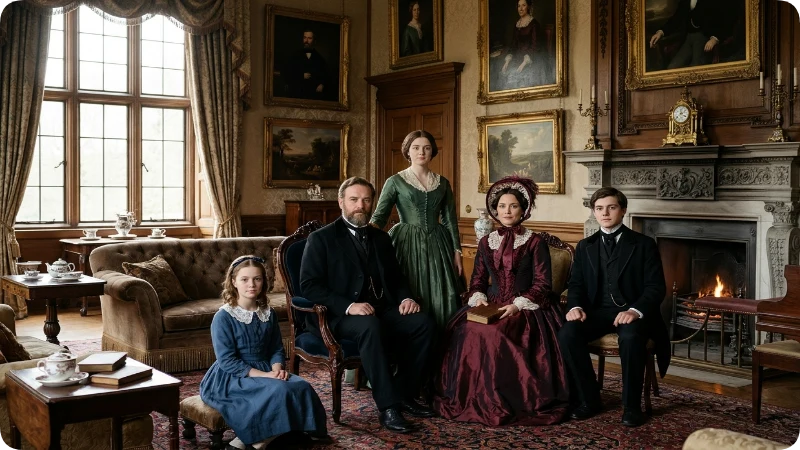
These names are especially useful when historical authenticity matters. They belonged to established noble families whose influence extended into Victorian society.
Cavendish
Origin: English surname with a place name association in Suffolk.
Cavendish is one of the most recognizable names in British aristocratic history, particularly through the Dukes of Devonshire and their association with Chatsworth House.
- Personality vibe: Cultured, confident, traditional
- Aesthetic: Grand country estates and Georgian architecture
- Social impression: Established wealth and inherited prestige
- Best for: Dukes, heiresses, political families, historical fiction
Cavendish has a stately rhythm that makes it memorable without sounding excessively theatrical.
Spencer
Origin: Occupational surname related to the medieval office of dispenser or steward.
The Spencer family held the earldom of Spencer during the Victorian period and had long standing connections to the British aristocracy.
Spencer feels more approachable than many aristocratic surnames, making it particularly useful for modern fictional characters.
Style: Timeless, polished, quietly prestigious.
Grosvenor
Origin: Norman French surname traditionally interpreted in relation to the term grand veneur, or chief huntsman.
The Grosvenor family became closely associated with extensive London property holdings and the Dukes of Westminster.
Its unusual spelling gives it a distinctive old money identity.
Pronunciation: Commonly GROVE nuh in British English.
Best for: Extremely wealthy families, estate owners, or characters whose social position is immediately recognizable.
Howard
Howard is a historic English aristocratic surname associated with the Dukes of Norfolk.
Unlike more elaborate noble family names, Howard feels familiar and restrained.
That simplicity makes it especially convincing for a Victorian character whose wealth is established rather than newly acquired.
Percy
The Percy family has centuries of aristocratic history, particularly through the earls and dukes of Northumberland.
Percy feels romantic, literary, and slightly medieval.
It works beautifully for characters connected to ancient castles, northern English estates, or complicated family inheritances.
Montagu
Montagu is an established aristocratic surname with Norman French roots and several historically prominent British family branches.
It has a particularly graceful sound, making it suitable for a character who is refined, intellectual, or socially influential.
Pronunciation: Commonly MON tuh gyoo.
Fitzroy
Fitzroy comes from Anglo Norman elements meaning “son of the king.”
Historically, it has been used in connection with royal descent, including families descended from acknowledged illegitimate children of monarchs.
Its meaning gives it immediate royal associations, although the surname alone does not prove royal ancestry.
Vibe: Regal, dramatic, and distinguished.
Seymour
Seymour is associated with the Dukes of Somerset and a family whose prominence reaches back to Tudor England.
Its relatively soft sound gives it a different character from stronger sounding names such as Grosvenor or Fitzroy.
Best for: Elegant heroines, reserved gentlemen, and romantic period fiction.
Russell
The Russell family is associated with the Dukes of Bedford and generations of British political influence.
Russell is particularly useful for portraying an aristocratic family that is politically active, intellectually engaged, or socially progressive.
Its familiarity also makes it versatile in contemporary fiction.
Villiers
Villiers is a surname of Norman French origin associated with several prominent aristocratic lines, including the Earls of Jersey.
It has a graceful, continental quality that feels appropriate for Victorian drawing rooms, diplomatic circles, and fashionable London society.
Elegant Victorian Upper Class Surnames for Fiction
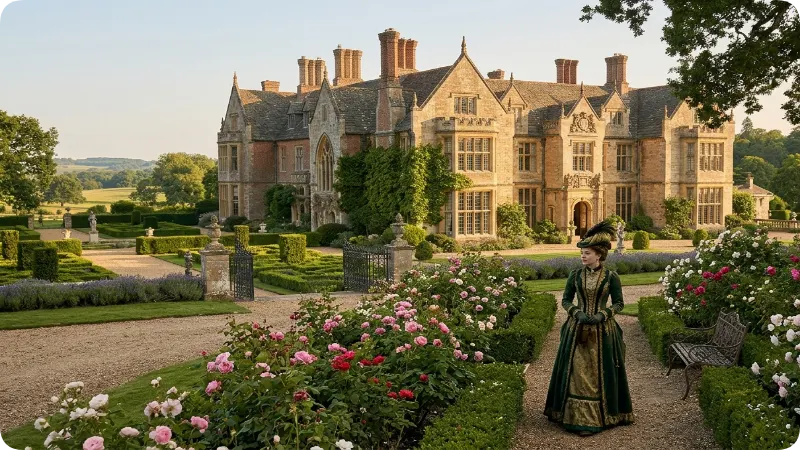
Not every character needs the surname of a famous noble family.
Sometimes, a name that feels historically plausible is more useful than one that readers immediately associate with a real dynasty.
The following suggestions blend established English surnames with literary style names suited to Victorian inspired fiction.
| Surname | Emotional Tone | Best Character Fit |
| Ashcombe | Gentle, pastoral | Country estate heiress |
| Ravenscroft | Gothic, mysterious | Secretive noble family |
| Blackwood | Dark, sophisticated | Brooding aristocrat |
| Fairchild | Soft, romantic | Victorian heroine |
| Whitmore | Restrained, elegant | Wealthy London family |
| Wycliffe | Scholarly, traditional | Intellectual gentleman |
| Langford | Classic, composed | Landed gentry |
| Pembroke | Stately, historic | Noble household |
| Harrington | Polished, ambitious | Society family |
| Westbrook | Understated, pastoral | Rural estate owners |
| Kingsley | Confident, literary | Influential gentleman |
| Wentworth | Romantic, established | Period drama protagonist |
| Ellsworth | Gentle, distinguished | Wealthy merchant family |
| Hawthorne | Literary, atmospheric | Gothic romantic lead |
| Ainsworth | Traditional, scholarly | Old family with secrets |
These are creative recommendations, not a verified register of Victorian upper class families. In particular, invented fictional characters can carry real surnames without sharing the historical standing of actual families.
Old Money Victorian Surnames With Quiet Luxury
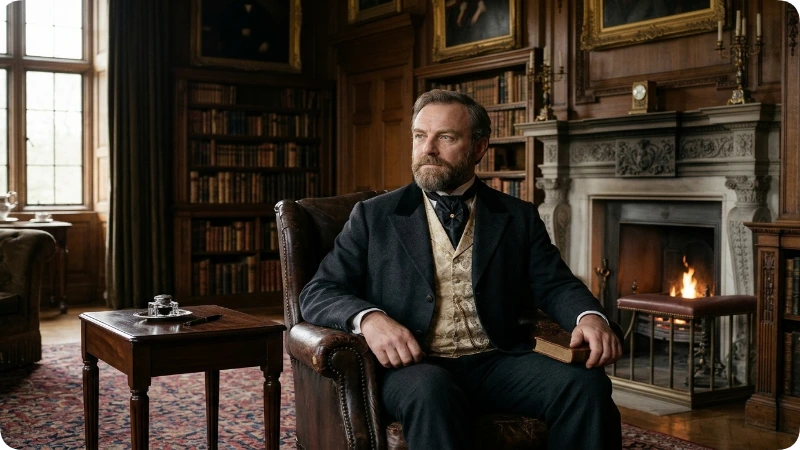
Old money surnames often feel most convincing when they are understated.
Rather than advertising wealth through dramatic language, they suggest continuity, inherited property, and a family accustomed to its social position.
Best Quiet Luxury Surnames
- Wyndham refined and associated with landed English families.
- Talbot historic, aristocratic, and quietly authoritative.
- Stanhope elegant, restrained, and traditionally noble.
- Beresford distinguished, with Irish and British aristocratic associations.
- Somerset regal, geographic, and connected with historic noble titles.
- Grenville political, traditional, and sophisticated.
- Lyttelton unmistakably British and historically aristocratic.
- Sackville literary, unusual, and estate associated.
- Herbert established and connected with several noble lines.
- Manners associated with the Dukes of Rutland.
For a character whose wealth is inherited but rarely discussed, Wyndham, Stanhope, and Talbot are particularly effective.
Dark and Gothic Victorian Upper Class Surnames
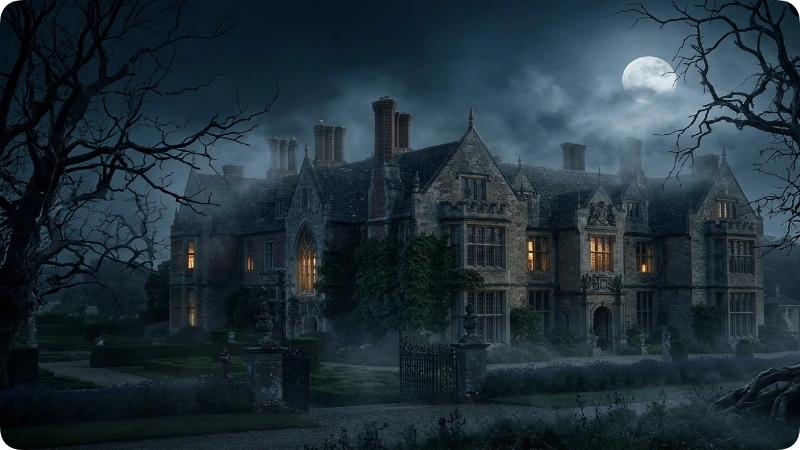
Victorian Gothic fiction often relies on names that evoke isolation, ancient buildings, family secrets, and unsettling beauty.
These suggestions are chosen primarily for their literary atmosphere rather than any proven aristocratic rank.
| Surname | Gothic Impression | Ideal Story |
| Ravenscroft | Ancient, secretive | Haunted family estate |
| Blackwood | Brooding, powerful | Gothic mystery |
| Thornfield | Romantic, isolated | Dark period romance |
| Ashdown | Melancholic, quiet | Inheritance drama |
| Grimshaw | Severe, atmospheric | Family tragedy |
| Winterbourne | Cold, romantic | Victorian mystery |
| Nightingale | Delicate, haunting | Literary romance |
| Lockwood | Reserved, enigmatic | Suspense novel |
| Thornbury | Historic, shadowy | Estate centered drama |
| Mordaunt | Severe, aristocratic | Gothic historical fiction |
Literary note: Thornfield is especially recognizable as the name of Mr. Rochester’s estate in Charlotte Brontë’s Jane Eyre, rather than as a signature Victorian noble family surname.
Romantic Victorian Surnames for Elegant Characters
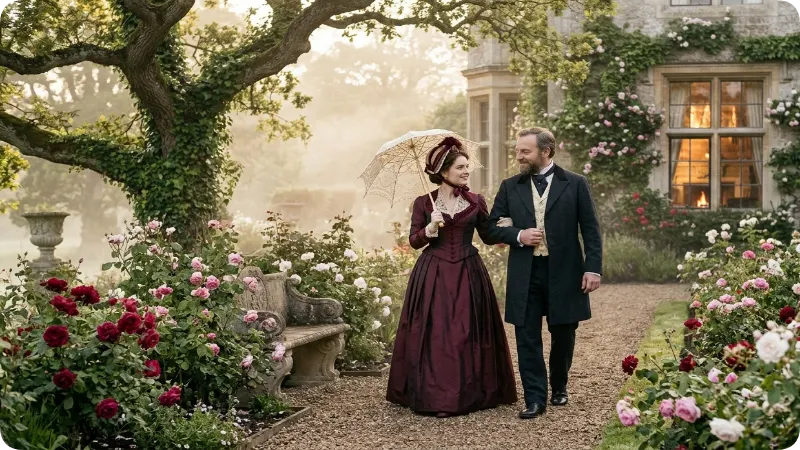
For a softer, more emotionally expressive atmosphere, look for surnames with flowing syllables, gentle consonants, and literary associations.
Beautiful Romantic Choices
- Wentworth composed, romantic, and associated with Jane Austen’s Persuasion.
- Fairfax distinguished, gentle, and historically established.
- Beaumont elegant French derived surname associated with the idea of a beautiful hill.
- Sinclair graceful, historic, and Anglo Norman in character.
- Rosebery aristocratic and romantic, particularly through the Earls of Rosebery.
- Devereux sophisticated and historically associated with English nobility.
- Cholmondeley strikingly aristocratic, with the traditional pronunciation CHUM lee.
- Featherstone lyrical, pastoral, and distinctly English.
- Everard dignified, gentle, and traditional.
- Waverley romantic and literary, with strong Walter Scott associations.
For Victorian romance, Wentworth and Fairfax are especially effective because they feel believable, memorable, and emotionally restrained.
Victorian Upper Class Surnames by Character Type
Choosing the right surname becomes easier when you consider the character’s background rather than elegance alone.
| Character Type | Recommended Surnames |
| Powerful duke | Cavendish, Howard, Percy |
| Wealthy heiress | Grosvenor, Seymour, Spencer |
| Reserved gentleman | Wyndham, Talbot, Stanhope |
| Romantic heroine | Fairfax, Wentworth, Beaumont |
| Mysterious aristocrat | Blackwood, Mordaunt, Ravenscroft |
| Political nobleman | Russell, Grenville, Herbert |
| Country estate family | Langford, Westbrook, Ashcombe |
| Ambitious society newcomer | Harrington, Whitmore, Ellsworth |
| Royal connected character | Fitzroy, Stuart, Seymour |
| Literary Gothic family | Grimshaw, Lockwood, Winterbourne |
How Victorian Surnames Reflected Social Class
A Victorian surname could suggest a family’s background, but class was not determined by the name alone.
The distinctions mattered.
| Social Group | Typical Position | Naming Consideration |
| Royal family | Monarch and royal relatives | Dynastic identity and titles |
| Peerage | Dukes, marquesses, earls, viscounts, barons | Hereditary titles and family names |
| Landed gentry | Landowning families outside the peerage | Estate associations and local influence |
| Wealthy industrialists | Business and manufacturing fortunes | Wealth did not automatically confer nobility |
| Professional upper middle class | Lawyers, physicians, senior officials | Respectability, education, and social networks |
In historical fiction, an aristocrat’s title may be more socially important than their surname.
For example, a duke could be known publicly by a territorial title rather than being addressed simply by the family surname. Getting this distinction right makes Victorian dialogue considerably more authentic.
How to Choose the Perfect Victorian Upper Class Surname
A convincing Victorian surname should match the character’s family history, social standing, personality, and setting.
Consider these five factors:
- Historical authenticity: Choose a documented aristocratic surname for a character connected to a real noble family.
- Emotional tone: Use softer names such as Fairfax for romance, or stronger names such as Mordaunt for mystery.
- Social position: Distinguish inherited aristocratic status from wealth acquired through commerce.
- Pronunciation: Names such as Cholmondeley and Grosvenor offer authenticity but may challenge unfamiliar readers.
- Originality: For fictional families, combine historically plausible naming patterns with a distinctive identity.
Victorian Surname Style Comparison
| Name | Elegance | Mystery | Historic Aristocratic Association |
| Cavendish | Very high | Moderate | Strong |
| Spencer | High | Low | Strong |
| Fitzroy | Very high | High | Strong |
| Wyndham | Very high | Moderate | Strong |
| Ravenscroft | High | Very high | Not established here |
| Fairfax | High | Moderate | Historic family associations |
| Blackwood | High | Very high | Context dependent |
| Wentworth | Very high | Moderate | Historic family associations |
These style assessments are editorial interpretations, not measured historical rankings.
Frequently Asked Questions
What are the most aristocratic Victorian surnames?
Cavendish, Howard, Spencer, Percy, Grosvenor, Russell, Seymour, and Montagu are prominent examples. These surnames were associated with established noble families and inherited titles during the Victorian era.
What Victorian surnames sound wealthy?
Wyndham, Stanhope, Grosvenor, Cavendish, Sackville, and Lyttelton have strong old money associations. For fictional characters, Harrington, Whitmore, and Langford can also create an understated upper class impression.
What are rare Victorian aristocratic surnames?
Cholmondeley, Lyttelton, Villiers, Beresford, and Sackville are distinctive options with historical aristocratic associations. Rarity depends on the period and population being examined, so they should not automatically be considered statistically rare today.
What are beautiful Victorian surnames for female characters?
Seymour, Fairfax, Wentworth, Beaumont, Sinclair, and Rosebery are elegant choices. Surnames themselves are not gender specific, but their sound and literary associations can complement different character personalities.
What is the difference between an aristocratic surname and a Victorian style surname?
An aristocratic surname has a documented association with noble families or hereditary titles. A Victorian style surname is chosen because its sound, structure, or imagery evokes nineteenth century Britain, even if no noble connection is established.
Can anyone use an aristocratic surname?
Yes. Sharing a surname with an aristocratic family does not necessarily indicate noble descent. Historical family connections must be established through genealogical evidence rather than a surname alone.
Final Thoughts
The most memorable Victorian upper class surnames carry more than an elegant sound.
They suggest family history, social expectations, inherited traditions, and sometimes the quiet pressure of maintaining a prestigious name.
Cavendish feels grand and established. Wyndham offers restrained sophistication. Fitzroy carries royal associations, while Ravenscroft creates the atmosphere of a mysterious fictional estate.
For historically grounded characters, documented family names offer authenticity. For Victorian inspired fiction, carefully chosen literary surnames provide greater creative freedom.
Ultimately, the best surname is one that feels natural in the world you’re creating and tells readers something about the person carrying it.

Amara uncovers the hidden history, origins, and meanings behind names. She curates Namestylo’s historical, cultural, and baby naming guides to ensure every suggestion carries deep significance. In her free time, she devours historical fiction and mythology.