If you love anime, you already know that a great name can feel like a character before the character even speaks.
A name can sound gentle and luminous, sharp and dangerous, mysterious and otherworldly, or warm enough to belong to a childhood friend. That is part of what makes anime naming so memorable: writers often use sound, kanji, cultural references, wordplay, seasons, nature, mythology, and character themes together.
But there is an important distinction worth making. “Anime name” does not automatically mean “Japanese name.” Many anime characters have ordinary Japanese names, while others have invented, foreign, mythological, literary, or deliberately stylized names. And even when a name is Japanese, its meaning can change substantially depending on the kanji used.
So If you need a name for an original character, username, gamer tag, pet, story, role play persona, baby name inspiration, or simply a name that feels unmistakably anime, this guide focuses on the part that matters most: finding a name that actually fits.
Featured snippet: Anime names are names associated with anime characters or names that evoke an anime inspired aesthetic. Many come from Japanese given names, but anime also uses invented names, mythology, literature, Western names, wordplay, and fictional naming systems. For real Japanese names, always check the exact kanji and reading rather than relying on an English translation alone.
What Makes an Anime Name Feel Right?
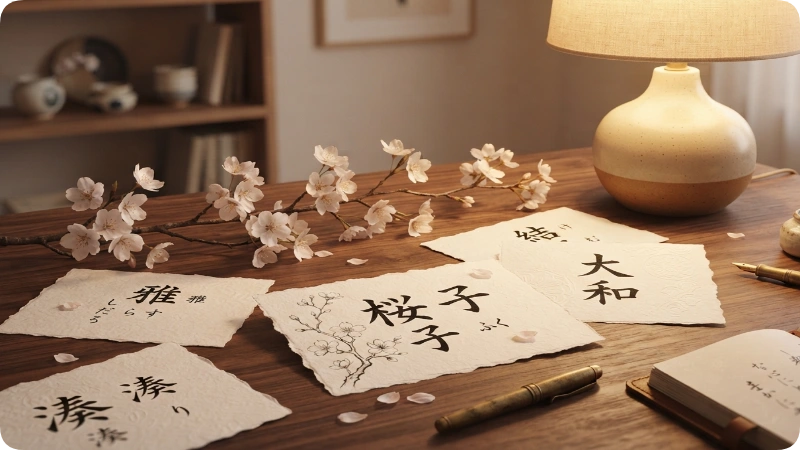
The best anime inspired names usually have two layers: they sound appealing immediately, but they also suggest something about the person carrying them.
Japanese names are particularly flexible because kanji can communicate meaning while the spoken reading supplies the sound. The same pronunciation may therefore correspond to different meanings depending on the characters used.
Japanese naming also follows conventions that differ from English naming. Japanese names are conventionally written family name first, given name second in Japanese contexts.
Anime creators can then push those conventions creatively. A character might receive a realistic everyday name, an unusual reading, a literary reference, a pun, or a name that quietly foreshadows their role.
The five qualities to look for
| Quality | What it gives a name |
| Sound | Memorability and immediate emotional impression |
| Meaning | Symbolic depth |
| Character association | Fandom recognition |
| Usability | Ease of spelling, saying and remembering |
| Visual style | The “anime” feeling on a page or screen |
The strongest choice depends on what you are naming. A fantasy protagonist can carry something dramatic like Kaguya, while a username may benefit from the clean simplicity of Ren or Sora.
Best Anime Names at a Glance
Here is a carefully selected starting point, combining recognizable anime associations with names that can work beyond a single fandom.
| Name | Meaning / association | Vibe | Gender feel | Best use |
| Sakura | Cherry blossom | Graceful, bright | Feminine | Character, baby inspiration |
| Sora | Sky; depends on kanji | Free, airy | Unisex | OC, username |
| Ren | Multiple possible kanji meanings | Cool, elegant | Often unisex | Character, username |
| Hikaru | Can express light/radiance | Luminous, intelligent | Unisex | OC, character |
| Akira | Multiple possible kanji meanings | Sharp, confident | Unisex | OC, username |
| Yuki | Can represent snow, happiness and other meanings depending on kanji | Soft, serene | Unisex | Character, pet |
| Hana | Flower | Sweet, timeless | Feminine | Character, baby inspiration |
| Haruka | Multiple possible kanji meanings | Refined, distant | Unisex | Character |
| Rin | Multiple possible kanji meanings | Elegant, concise | Unisex | Username, OC |
| Nagi | Calm / lull, depending on writing | Quiet, atmospheric | Unisex | Fantasy OC |
| Kaguya | Classical literary name | Moonlit, regal | Feminine | Fantasy character |
| Rei | Multiple possible kanji meanings | Cool, mysterious | Unisex | Character |
| Hinata | Often associated with a sunny place | Warm, optimistic | Unisex | Character |
| Kaori | Fragrance/aroma with relevant kanji | Romantic, delicate | Feminine | Character |
| Aoi | Can represent blue/holly and other meanings | Fresh, modern | Unisex | Character |
| Makoto | Sincerity/truth with common kanji | Noble, grounded | Unisex | Character |
| Kaito | Meaning depends on kanji | Adventurous, energetic | Masculine | Hero/OC |
| Haruto | Multiple kanji possibilities | Bright, contemporary | Masculine | Character |
| Itsuki | Multiple kanji possibilities | Calm, natural | Often masculine/unisex | OC |
| Yato | Strong anime association | Mysterious, supernatural | Masculine | Fan character |
Important: meanings above describe common or plausible name associations, not one universal definition. Japanese given names cannot always be translated reliably without knowing the exact kanji.
Anime Girl Names
Anime inspired girl names often draw their appeal from flowers, seasons, celestial imagery, elegance, or short melodic sounds.
Sakura
Meaning: Cherry blossom
Language: Japanese
Gender: Feminine
Anime association: Sakura Haruno in Naruto and the Cardcaptor Sakura franchise
Sakura is one of the clearest examples of a real Japanese word/name becoming inseparable from anime culture. The cherry blossom gives it a natural emotional vocabulary: spring, beauty, impermanence, renewal and delicacy.
Its popularity as an anime name comes partly from its simplicity. It feels unmistakably Japanese without being difficult for an international audience to pronounce.
Vibe: graceful, feminine, optimistic
Aesthetic: pink, spring, floral
Nicknames: Saku
Style: classic with strong anime recognition
The name is also genuinely tied to major anime characters rather than being a name invented for this article; Sakura Haruno is documented as a central Naruto character.
Hinata
Meaning: Often associated with a sunny place or facing the sun, depending on writing
Vibe: warm, shy, gentle, quietly determined
Hinata has an unusually comforting sound. It feels softer than many action oriented anime names, making it particularly effective for kind, observant or emotionally resilient characters.
Aoi
Aoi has a modern, clean sound and can be written with different kanji, so its exact meaning depends on the chosen form.
Vibe: fresh, artistic, cool
Aesthetic: blue, botanical, minimalist
Best for: modern OCs and gender flexible characters
Rin
Short names have an advantage online: they are memorable, easy to type and visually clean.
Rin feels polished rather than cute. It can suit a serious heroine, elegant rival, magical character or quiet protagonist.
Vibe: refined, intelligent, mysterious
Aesthetic: winter, silver, minimalism
Kaguya
Kaguya carries considerably more literary weight than the average anime name. It is associated with The Tale of the Bamboo Cutter, the classical Japanese story of Princess Kaguya, a moon associated figure.
That literary connection has made Kaguya particularly effective in later fictional works because the name already carries an atmosphere of moonlight, beauty, distance and otherworldliness.
Vibe: regal, ethereal, enigmatic
Aesthetic: moon, ivory, silver, celestial
Best for: fantasy royalty, magical characters, immortal beings
Anime Boy Names
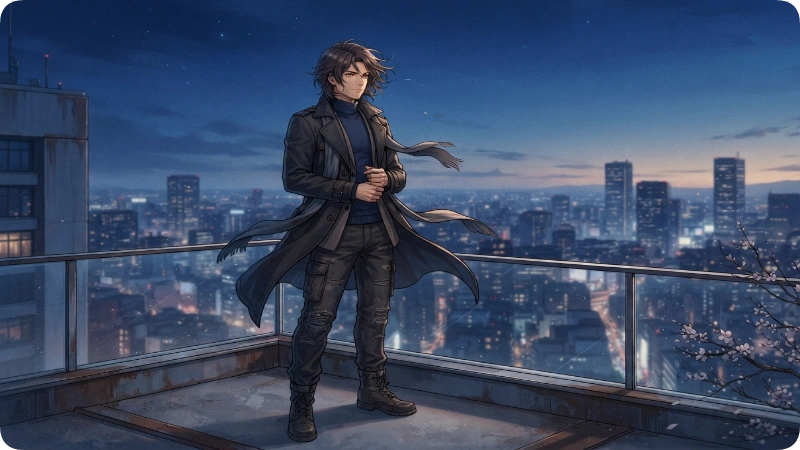
Ren
Ren is perhaps one of the most versatile short anime style names.
The important caveat is that Ren does not have one universal meaning. Its meaning depends on the kanji. That flexibility is exactly what makes it useful for character creation: you can select a written form that fits the character rather than forcing the character to fit a translation.
Vibe: cool, understated, elegant
Best for: protagonist, rival, gamer tag, quiet hero
Kaito
Kaito has an adventurous sound without being excessively dramatic.
It works especially well for characters who are energetic, independent or curious. The exact meaning should be checked against the kanji chosen for the specific character.
Vibe: adventurous, youthful, confident
Aesthetic: ocean, blue, wind
Best for: shōnen protagonist or adventurous OC
Haruto
Haruto has a contemporary Japanese name feel and works better for a realistic character than a deliberately fantastical one.
Vibe: bright, friendly, dependable
Style: modern and natural
Best for: school anime, sports anime, contemporary OC
Akira
Akira is particularly interesting because it is genuinely usable across different fictional personalities.
It can feel intellectual and sophisticated in one context, dangerous and intense in another, or futuristic in a cyberpunk setting.
Vibe: intelligent, independent, striking
Gender: commonly used across genders depending on the name and context
Best for: cyberpunk, action, contemporary or mysterious characters
Hikaru
Hikaru is strongly associated with the idea of light or radiance in some kanji forms.
That gives it a naturally luminous emotional quality.
Vibe: bright, charismatic, hopeful
Aesthetic: sunlight, gold, stars
Best for: protagonist, healer, magical character
Gender Neutral Anime Names
Some anime names work especially well when you do not want the name to announce a character’s gender immediately.
| Name | Emotional impression | Why it works |
| Ren | Cool, elegant | Very short and adaptable |
| Akira | Intelligent, strong | Established across genders |
| Hikaru | Bright, artistic | Luminous sound |
| Sora | Free, expansive | Sky imagery |
| Yuki | Soft, calm | Multiple possible meanings |
| Rin | Refined, sharp | Compact and memorable |
| Aoi | Fresh, modern | Flexible cultural associations |
| Haruka | Graceful, distant | Soft but sophisticated |
| Hinata | Warm, sunny | Gentle emotional energy |
| Makoto | Honest, serious | Strong virtue association |
For real world naming, however, do not assume that “unisex” means every Japanese speaker will perceive a name identically. Gender associations can vary by generation, kanji and context.
Cute Anime Names
If the goal is kawaii rather than powerful, choose names with softer sounds, nature imagery or affectionate associations.
Short cute choices
- Hana
- Momo
- Yui
- Mei
- Nao
- Hina
- Yuki
- Saki
- Koko
- Rumi
- Chika
- Miki
- Airi
- Nene
- Mimi
The emotional difference
Hana feels floral and timeless.
Momo feels playful and youthful.
Yui feels gentle and friendly.
Mei feels bright and compact.
Hina feels especially soft and youthful.
The key is not simply “cute syllables.” A name becomes cute through the combination of sound, character design, context and association.
Cool Anime Names
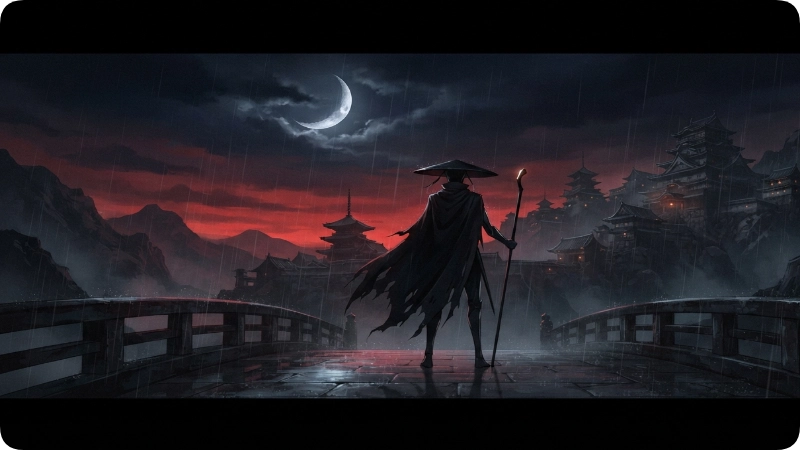
Cool names tend to rely on restraint.
Rather than choosing the longest or most complicated name, consider names that are short, visually distinctive and emotionally controlled.
| Name | Coolness style | Character archetype |
| Rei | Minimalist | Quiet genius |
| Ren | Elegant | Calm protagonist |
| Akira | Sharp | Rebel/intellectual |
| Rin | Refined | Skilled rival |
| Kuro | Dark aesthetic | Shadow character |
| Yato | Supernatural | Rogue deity |
| Kaito | Adventurous | Explorer |
| Shin | Serious | Disciplined hero |
| Hiei | Fierce | Antihero |
| Raiden | Thunderous | Powerful warrior |
One caution: some of these are fictional character associations or vocabulary words rather than ordinary given names. That distinction matters if the name is intended for a real person.
Dark Anime Names
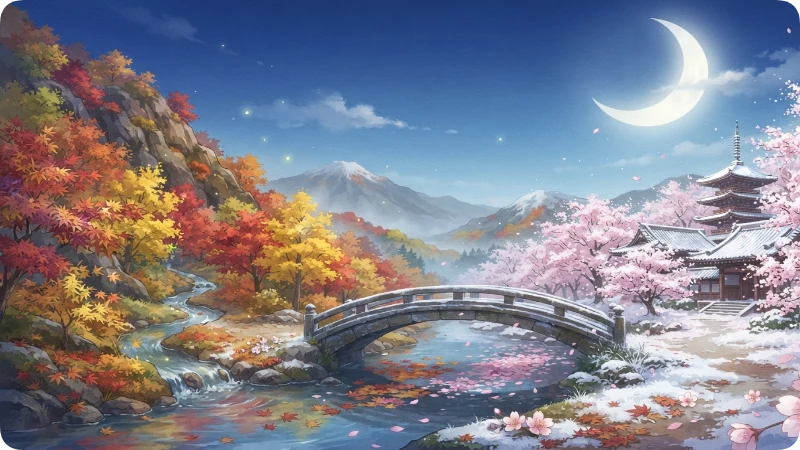
Dark naming is less about literally choosing a word meaning “evil” and more about controlling atmosphere.
Names such as Rei, Kuro, Yami, Yoru, Akira, Kage or Raven can create different shades of darkness, but they are not interchangeable as traditional Japanese personal names.
For a fictional character, you have much more freedom.
Dark and mysterious
- Rei minimalist, enigmatic
- Yoru night imagery
- Kuro black/dark imagery
- Kage shadow imagery
- Homura flame imagery
- Kaguya moonlit mystery
- Yato supernatural association
- Hiei fierce, compact sound
- Raiden thunderous energy
- Akira sharp and ambiguous
Best rule: if you’re writing a Japanese character, verify If the word is actually used as a personal name. If you’re naming a fantasy character, you can deliberately bend that boundary.
Anime Names Inspired by Nature
Nature is one of the richest naming sources in Japanese culture and Japanese fiction.
| Name | Nature association | Emotional energy |
| Sakura | Cherry blossom | Delicate, hopeful |
| Sora | Sky | Free, expansive |
| Yuki | Snow in one common writing | Quiet, pure |
| Hana | Flower | Gentle, warm |
| Natsu | Summer in one common writing | Bright, energetic |
| Aki | Autumn in one common writing | Mature, reflective |
| Haru | Spring in one common writing | Fresh, hopeful |
| Umi | Sea in one common writing | Calm, expansive |
| Tsuki | Moon as a vocabulary word | Dreamlike |
| Hotaru | Firefly | Delicate, luminous |
The most important detail is that a vocabulary meaning does not automatically prove that every written form is a conventional personal name. For character naming, this distinction can be intentionally creative; for real life naming, research the specific name form.
Anime Names Inspired by Mythology and Literature
Anime frequently draws on cultural material far beyond modern Japanese naming.
Kaguya
Kaguya’s strongest literary connection is the classical Tale of the Bamboo Cutter, making it particularly powerful for moon themed or otherworldly characters.
Amaterasu
Amaterasu is the name of the major Shinto sun deity, so it carries substantial religious and mythological significance. It is not simply a generic “pretty anime girl name.”
Use it when the mythological association is genuinely appropriate.
Susanoo
Susanoo is another major figure in Japanese mythology, traditionally associated with storms and the sea.
For fictional naming, it immediately communicates something much larger than an ordinary personal name.
Goku
Son Goku is famously connected to Sun Wukong, the Monkey King from Journey to the West. This is an example of anime naming drawing from Chinese literary tradition rather than Japanese naming alone.
That distinction is important: anime is a medium, not a single naming culture.
Anime Names With Strong Character Associations
Sometimes you do not want an abstract meaning. You want a name that immediately brings a character to mind.
| Name | Strong association | Immediate impression |
| Naruto | Naruto | Energetic, determined |
| Sakura | Naruto, Cardcaptor Sakura | Floral, feminine |
| Hinata | Naruto, Haikyuu!! | Warm, determined |
| Kaguya | Multiple anime uses + classical literature | Celestial, regal |
| Rei | Evangelion, Sailor Moon | Mysterious, cool |
| Usagi | Sailor Moon | Playful, lunar |
| Yato | Noragami | Supernatural, mischievous |
| Nezuko | Demon Slayer | Distinctive, strongly fandom linked |
| Maki | Jujutsu Kaisen and other works | Strong, contemporary |
| Ichigo | Bleach | Energetic, memorable |
The association itself can be a strength or a limitation.
If you want an original character to feel independent, Ren may give you more creative room than Naruto. If you want instant fandom recognition, the opposite may be true.
Real Japanese Name vs Anime Style Name
This is one of the most important distinctions in the entire subject.
A name appearing in anime does not automatically make it an ordinary Japanese personal name.
Anime may use:
- real Japanese names
- unusual but legitimate name readings
- surnames as given name inspiration
- ordinary Japanese vocabulary
- mythology
- historical references
- foreign names
- invented names
- puns
- deliberately symbolic names
Japanese names are also strongly connected to written characters. Japan’s Ministry of Justice publishes the kanji that may be used in children’s names, including characters from the jōyō kanji and jinmeiyō kanji lists.
So if your purpose is real life naming, investigate the actual kanji, reading and usage.
If your purpose is fiction, you have considerably more artistic freedom.
Anime Names for Original Characters
For an OC, start with the personality rather than the name.
The quiet protagonist
Try:
Ren, Rei, Nagi, Yuki, Sora, Haruka
These names leave space for characterization rather than announcing “hero” immediately.
The fierce heroine
Try:
Rin, Akane, Maki, Akira, Homura
These have sharper or more energetic emotional profiles.
The elegant princess
Try:
Kaguya, Sayuri, Kaori, Ayaka, Shiori
These lean toward refinement and softness.
The mysterious supernatural character
Try:
Yato, Rei, Yoru, Kaguya, Tsuki, Nagi
Some are ordinary names, while others are better treated as stylized fictional choices.
The cheerful friend
Try:
Hana, Yui, Hina, Saki, Hinata, Haru
They tend to sound approachable and warm.
How to Choose an Anime Name That Does Not Feel Forced
A name can be beautiful and still be wrong for the character.
Use this five question test:
1. Does it fit the character’s world?
A contemporary Tokyo school character and an immortal moon princess probably need different naming strategies.
2. Does it fit the character’s emotional temperature?
A gentle healer does not necessarily need a name associated with violence simply because the word sounds cool.
3. Can people pronounce it?
For usernames and international audiences, simplicity matters.
4. Is the fandom association too strong?
Calling an OC “Naruto” will create an immediate association with one specific franchise.
5. Does the written form actually mean what you think it means?
This is especially important with Japanese names.
Anime Name Comparison: Which Style Fits You?
| If you want… | Consider | Why |
| Soft and beautiful | Hana, Sakura, Yui | Gentle sound |
| Cool and minimal | Ren, Rei, Rin | Short and memorable |
| Powerful | Raiden, Akira, Kaito | Strong phonetic presence |
| Mysterious | Yoru, Rei, Kaguya | Dark/celestial atmosphere |
| Natural | Sora, Haru, Aki, Yuki | Nature and seasons |
| Royal | Kaguya, Sayuri, Ayaka | Refined impression |
| Cute | Hina, Momo, Mei, Yui | Playful softness |
| Gender flexible | Ren, Akira, Hikaru, Sora | Adaptable across characters |
| Internationally easy | Ren, Hana, Rei, Kai, Sora | Short and pronounceable |
| Strongly anime coded | Naruto, Nezuko, Yato, Usagi | Immediate fandom associations |
Name Attributes: What Can and Cannot Be Verified
Naming websites often add attributes such as lucky number, lucky color, lucky gemstone, lucky day, zodiac sign and personality traits.
These can be fun, but they should not be presented as objective properties of a Japanese name.
For example, there is no linguistic fact that says “Ren has lucky number 7” or “Sakura’s lucky color is pink.” Those are modern numerological or aesthetic interpretations, not etymology.
For an editorially responsible naming guide:
- Meaning: verify from the exact written form.
- Origin: identify the actual language/culture.
- Pronunciation: give the relevant reading.
- Gender: describe usage cautiously.
- Anime association: identify the actual work.
- Personality vibe: label it as interpretation.
- Lucky attributes: label them as numerology/fun symbolism.
- Popularity: only claim it when supported by reliable statistics.
This distinction matters because the same spoken Japanese name can have different written meanings.
Aesthetic Anime Name Categories
🌸 Soft Anime Names
Sakura · Hana · Yui · Hina · Mei · Kaori · Saki
🌙 Moonlit Anime Names
Kaguya · Rei · Yoru · Tsuki · Hotaru · Nagi
⚔️ Strong Anime Names
Akira · Rin · Kaito · Raiden · Makoto · Hiei
☁️ Dreamy Anime Names
Sora · Yuki · Hikaru · Haruka · Aoi · Nagi
🖤 Dark Anime Names
Yoru · Kage · Kuro · Rei · Hiei · Homura
✨ Magical Anime Names
Kaguya · Sakura · Hotaru · Usagi · Aoi · Hikaru
Nicknames and Usability
A beautiful name becomes more useful when it can naturally transform.
| Full name | Possible nickname |
| Sakura | Saku |
| Haruka | Haru |
| Hikaru | Hik |
| Kaito | Kai |
| Kaori | Kao |
| Akira | Aki |
| Hinata | Hina |
| Makoto | Mako |
| Aoi | Ao |
| Yuki | Yuki |
Not every nickname is equally conventional in Japanese, so these should be understood as creative possibilities, especially for fictional characters.
For real world naming, ask a Japanese speaker familiar with names before assuming a shortened form sounds natural.
Sibling Compatibility
If you are using anime inspired names for siblings, matching the aesthetic is usually better than matching an anime franchise.
For example:
Sakura + Haru + Sora
Feels botanical, seasonal and airy.
Ren + Rei + Rin
Feels extremely coordinated perhaps too coordinated for real siblings, but excellent for a fictional trio.
Hana + Aoi + Yuki
Soft, natural and visually cohesive.
Kaito + Haruto + Akira
Modern and energetic without sounding like a themed naming set.
Avoid making every sibling name sound like it belongs to the same fictional universe unless that is intentional.
What About Lucky Numbers, Colors and Gemstones?
If you enjoy numerology, you can absolutely use it as a creative naming layer.
But treat it as entertainment rather than linguistic fact.
For example:
| Name | Optional aesthetic association | Status |
| Sakura | Pink / rose quartz | Modern aesthetic |
| Sora | Sky blue / aquamarine | Modern aesthetic |
| Yuki | White / moonstone | Modern aesthetic |
| Kaguya | Silver / pearl | Literary aesthetic association |
| Akira | Red / garnet | Creative interpretation |
| Ren | Blue / sapphire | Creative interpretation |
These associations are not intrinsic meanings of the names. They are editorial mood boards designed to help visualize a character.
Why Anime Names Feel So Emotionally Powerful
Anime naming often works because a name does more than identify someone.
It creates a tiny promise.
Sakura promises spring.
Sora opens the sky.
Yuki can evoke snow or other meanings depending on its written form.
Hikaru can suggest light.
Kaguya brings the moon and classical literature into the room.
And Ren, Rei, Rin, and Aoi demonstrate another principle: sometimes the emotional power comes from restraint.
The best fictional names do not explain everything.
They leave something for the character to reveal.
Frequently Asked Questions
What are the best anime names?
The best anime name depends on the intended use. For broadly usable inspiration, Sakura, Sora, Ren, Rei, Akira, Hikaru, Yuki, Rin, Aoi, and Kaguya offer distinct styles ranging from soft and natural to mysterious and celestial.
Are anime names Japanese names?
Not always. Anime uses Japanese names alongside Chinese literary references, mythology, Western names, invented names, puns and stylized fictional names. “Anime name” describes a connection to the medium, not a single linguistic category.
What are good anime names for a boy?
Consider Ren, Kaito, Haruto, Akira, Hikaru, Makoto, Itsuki, Shin, Yato and Raiden, depending on If you want a realistic Japanese feel or a more dramatic fictional style.
What are good anime names for a girl?
Popular choices include Sakura, Hinata, Hana, Aoi, Rin, Kaori, Kaguya, Hina, Yui and Akane. The exact meaning of several Japanese names depends on their kanji.
What are good gender neutral anime names?
Ren, Akira, Hikaru, Sora, Yuki, Rin, Aoi, Haruka, Hinata and Makoto can work particularly well for gender flexible fictional characters, although real world gender associations vary.
What is a good anime name for an OC?
Start with the character’s personality and setting. For a quiet character, try Ren, Rei or Nagi; for an adventurous character, Kaito or Sora; for an elegant fantasy character, Kaguya; and for a fierce character, Rin or Akira.
Can I use an anime name for a baby?
Some anime associated names are also ordinary Japanese personal names, but the anime association should not be your only research. Check the exact kanji, reading, cultural context and real world usage before choosing a name for a child. Japan’s Ministry of Justice maintains the official lists of kanji permitted in children’s names.
Why do anime names have different meanings with the same pronunciation?
Because Japanese names can be written with different kanji. Each kanji contributes meaning, so two names with the same pronunciation can communicate different ideas. This is one reason it is risky to assign a single English translation to a Japanese name without specifying its written form.
Do anime creators choose names based on personality?
Often, yes, but the technique varies by creator and series. Character names can involve kanji meaning, puns, symbolism, literary references, mythology, visual motifs or simple sound appeal. These layers are particularly visible when the original Japanese writing is available.
Final Thoughts
The most memorable anime names are not necessarily the strangest ones.
Sometimes the name that stays with you is only two syllables long.
Ren. Sora. Rei. Rin.
Other times, the magic comes from a name carrying an entire image with it.
Sakura brings spring.
Kaguya brings moonlight.
Hikaru brings radiance.
That is the real appeal of anime naming: the name can become part of the storytelling.
If you’re naming an original character, don’t ask only, “Does this sound cool?”
Ask:
“What should someone feel the first time they hear it?”
That question will usually lead you much closer to the right name.

Amara uncovers the hidden history, origins, and meanings behind names. She curates Namestylo’s historical, cultural, and baby naming guides to ensure every suggestion carries deep significance. In her free time, she devours historical fiction and mythology.