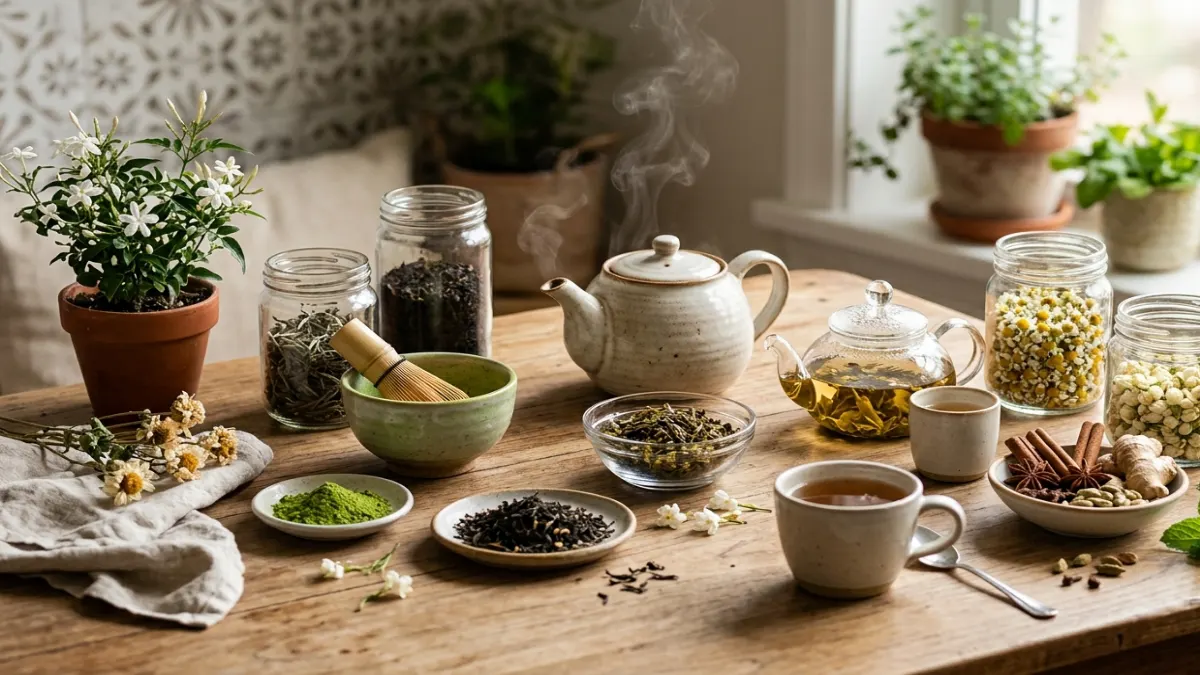
Tea has a language of its own: floral, earthy, delicate, bold, warm, mysterious, and quietly luxurious. If you’re looking for types of tea names, you may be searching for more than a list of beverages you may want names that evoke a particular mood, aesthetic, character, brand, pet, story, or creative identity.
Featured Snippet:
The main traditional types of tea are black, green, white, oolong, and dark tea, all made from Camellia sinensis. Herbal teas such as chamomile, peppermint, rooibos, and hibiscus are technically herbal infusions rather than true teas. Tea names can therefore range from traditional varieties to ingredients, blends, regions, and poetic tea inspired names.
Types of Tea at a Glance
| Tea type | Typical character | Naming vibe | Best for |
| Black tea | Rich, robust, malty | Strong, classic, sophisticated | Bold names |
| Green tea | Fresh, grassy, vegetal | Natural, serene, modern | Soft nature names |
| White tea | Delicate, subtle | Pure, elegant, ethereal | Luxury names |
| Oolong | Complex, nuanced | Exotic, refined, distinctive | Unusual names |
| Dark tea | Deep, earthy, aged | Mysterious, grounded | Dramatic names |
| Matcha | Vibrant, concentrated | Modern, energetic | Trendy names |
| Chai | Spiced, warm, aromatic | Cozy, welcoming | Warm names |
| Earl Grey | Citrus forward, aromatic | Literary, polished | Elegant names |
| Jasmine tea | Floral, fragrant | Romantic, graceful | Feminine names |
| Chamomile | Gentle, floral | Peaceful, comforting | Soft names |
| Peppermint | Cool, refreshing | Crisp, playful | Fresh names |
| Hibiscus | Tart, floral, vivid | Colorful, exotic | Striking names |
Note: herbal infusions are included because people commonly use “tea” in the everyday sense, even though they are not technically true teas.
1. Traditional Tea Names
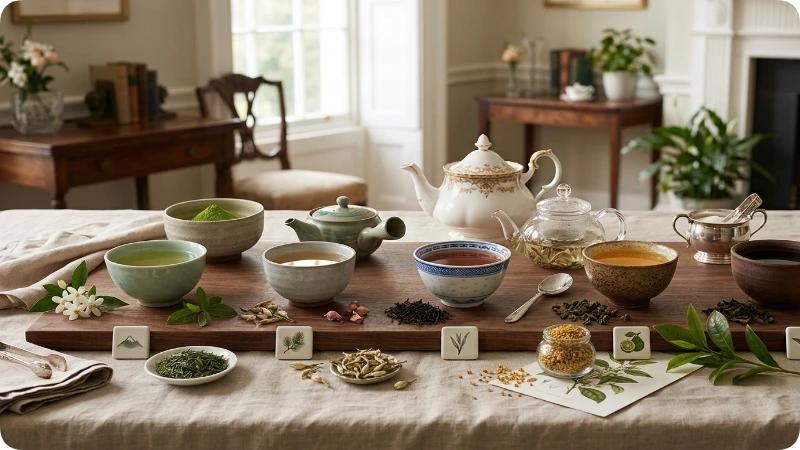
Traditional tea names tend to work beautifully when you want something recognizable without feeling ordinary.
Black Tea Names
Assam, Darjeeling, Ceylon, Keemun, Yunnan, Nilgiri, Lapsang, Earl Grey, English Breakfast
These names carry a particularly sophisticated energy. Darjeeling feels refined and worldly, while Assam feels grounded and strong. Earl Grey has an unmistakably literary, old world personality.
For a character, pet, café, product, or creative project, these names can suggest intelligence, confidence, tradition, and cultivated taste.
Green Tea Names
Sencha, Matcha, Gyokuro, Hojicha, Genmaicha, Longjing, Gunpowder
Green tea names often feel cleaner and more contemporary. Sencha sounds sleek and graceful, while Matcha has become strongly associated with modern wellness, cafés, and visual lifestyle culture.
Best aesthetic: minimalist, natural, Japanese inspired, fresh, contemporary.
White Tea Names
Silver Needle, White Peony, Shou Mei
White tea terminology has an especially delicate quality. Silver Needle immediately suggests something precious, slender, luminous, and rare.
For naming purposes, this category works particularly well when you want an ethereal, elegant, quiet luxury feeling.
2. Floral and Romantic Tea Names
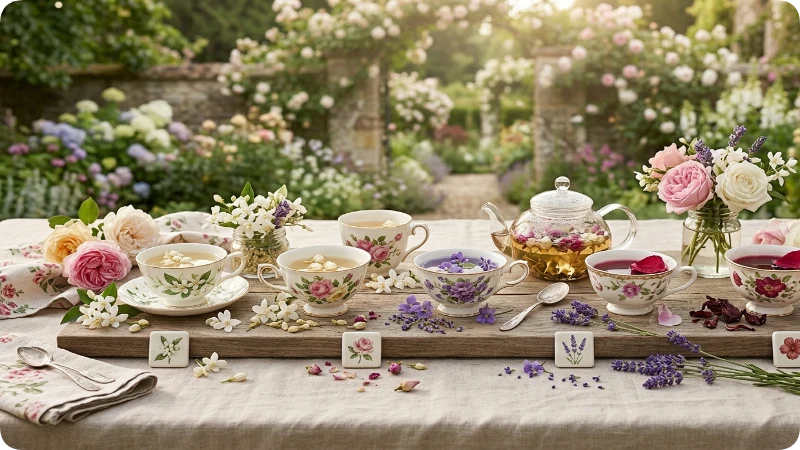
If your naming goal is softness, beauty, romance, or a dreamy aesthetic, floral teas offer some of the richest inspiration.
Jasmine, Rose, Lavender, Hibiscus, Chrysanthemum, Osmanthus, Violet
| Name | Emotional energy | Aesthetic |
| Jasmine | Romantic, graceful | Floral classic |
| Rose | Timeless, passionate | Vintage romantic |
| Lavender | Calm, dreamy | Soft botanical |
| Hibiscus | Vivid, confident | Tropical romantic |
| Chrysanthemum | Traditional, dignified | East Asian floral |
| Osmanthus | Delicate, refined | Poetic botanical |
| Violet | Mysterious, gentle | Vintage floral |
Jasmine and Violet work especially well as personal names because they already have established naming histories beyond tea.
By contrast, Osmanthus feels more unusual and literary a strong choice for a fictional character, boutique, collection, or fantasy setting.
3. Cozy Tea Names
Some tea names feel like a warm blanket, a rainy afternoon, or a favorite book.
Chai, Cinnamon, Ginger, Vanilla, Honey, Cocoa, Cardamom, Nutmeg, Caramel
These names are less formal and more sensory. They can be excellent for pets, cafés, food brands, fictional characters, usernames, or cozy lifestyle projects.
The warmest choices
- Chai welcoming and contemporary
- Honey affectionate and sweet
- Ginger spirited and energetic
- Cinnamon warm and playful
- Cardamom exotic and sophisticated
- Vanilla soft and familiar
Chai has a particularly strong modern identity because of its connection with South Asian spiced tea culture and its widespread use in contemporary café culture.
4. Elegant Tea Names
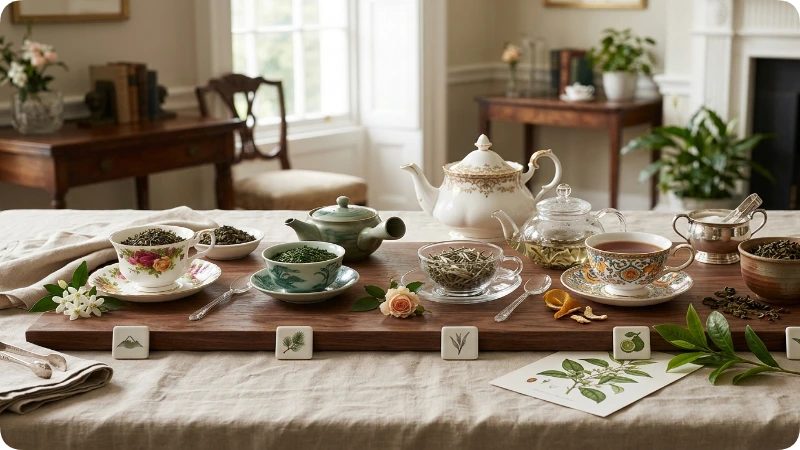
For a sophisticated, luxurious, or editorial aesthetic, consider names associated with refined tea traditions.
Darjeeling, Sencha, Oolong, Jasmine, Silver Needle, Earl Grey, Assam, Gyokuro
Among these, Earl Grey has perhaps the strongest literary and aristocratic impression. Darjeeling feels cultured and geographic, while Gyokuro feels rare and specialized.
Best luxury feeling tea names
- Silver Needle
- Earl Grey
- Gyokuro
- Darjeeling
- Osmanthus
- Oolong
- Jasmine
These aren’t equally suitable as human names. That distinction matters: a name can be aesthetically beautiful while being better suited to a brand, character, pet, collection, or fictional world than to a child.
5. Unique Tea Names
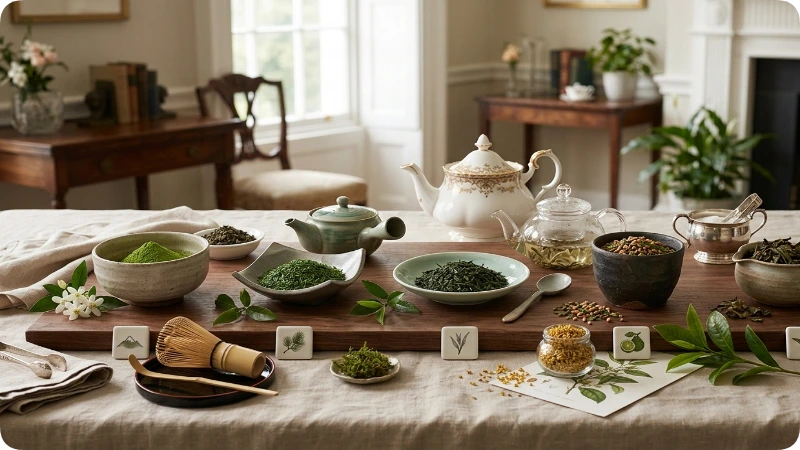
If uniqueness is your priority, look beyond familiar names such as Jasmine and Rose.
Consider:
Gyokuro, Sencha, Oolong, Osmanthus, Rooibos, Lapsang, Nilgiri, Genmaicha, Longjing, Shou Mei
These names stand out because of their unusual sounds, cultural associations, or specialized tea references.
Oolong, for example, has a distinctive rhythm and strong tea identity. It makes a memorable fictional or brand name but would be much more unconventional as a personal name.
Genmaicha has a playful, memorable quality and can work beautifully in anime inspired, gaming, café, or whimsical naming contexts.
6. Cute Tea Names
Cute tea inspired names tend to come from ingredients, textures, colors, or cozy associations rather than formal tea classifications.
Mochi, Honey, Chai, Matcha, Peach, Berry, Minty, Coco, Ginger, Boba
These names fit particularly well for pets, fictional characters, avatars, cafés, social handles, and creative projects.
Cute favorites
- Matcha trendy and playful
- Chai warm and compact
- Honey affectionate
- Mochi soft and whimsical
- Boba bubbly and instantly recognizable
- Ginger lively and charming
The modern appeal of names such as Matcha and Boba also reflects the visual culture surrounding cafés, food photography, Pinterest aesthetics, and short form social media.
7. Nature Inspired Tea Names
Tea naturally overlaps with botanical naming.
Jasmine, Willow, Sage, Mint, Rose, Lavender, Clover, Fern, Juniper, Hazel
Some are directly associated with tea or herbal infusions; others are inspired by plants commonly connected with tea culture.
This category is especially useful if you want a name that feels organic rather than explicitly beverage themed.
For example:
- Sage feels intelligent and earthy.
- Willow feels graceful and poetic.
- Hazel has a vintage botanical quality.
- Jasmine feels floral and romantic.
- Mint feels crisp and modern.
8. Japanese Tea Names
Japanese tea culture offers some of the most distinctive naming inspiration.
Matcha, Sencha, Gyokuro, Hojicha, Genmaicha, Kukicha
What makes them appealing?
Japanese tea names often have a clean, specialized sound that fits contemporary aesthetics. They can evoke minimalism, craftsmanship, tranquility, ritual, and refinement.
However, cultural context matters. These are names of real Japanese teas, not invented aesthetic labels. Using them respectfully is preferable to assigning made up meanings or symbolism.
Matcha is the most accessible internationally, while Gyokuro and Genmaicha feel more distinctive and niche.
9. Tea Names for Girls
If you’re specifically looking for tea inspired names that could work for girls, the strongest choices are generally names that already function naturally as personal names.
Beautiful options
Jasmine
Rose
Violet
Hazel
Ginger
Ivy
Sage
Camellia
Lavender
Jasmine is the clearest tea connection while also being an established given name. Camellia is particularly interesting because Camellia sinensis is the botanical species from which true tea is produced.
Most elegant
Camellia, Jasmine, Violet
Most modern
Sage, Ginger, Matcha
Most romantic
Rose, Jasmine, Violet
10. Tea Names for Boys
Tea inspired masculine naming is usually more indirect, drawing from plants, places, tea traditions, or strong sensory associations.
Sage, Assam, Earl, Basil, Sencha, Chai, Ginger
Some are much more unconventional than others.
Sage is the most naturally usable personal name in this group. Basil has established historical use as a given name and botanical associations. Earl works as a traditional personal name, although its connection to Earl Grey is a secondary association rather than its original meaning.
11. Gender Neutral Tea Names
For a modern, flexible naming style, consider:
Sage, Chai, Ginger, Mint, Matcha, Basil, Sencha, Juniper
| Name | Softness | Uniqueness | Modern feel |
| Sage | High | Medium | High |
| Chai | Medium | High | High |
| Ginger | Medium | Medium | Medium |
| Mint | Medium | High | High |
| Matcha | High | High | Very high |
| Basil | Medium | Medium | Medium |
| Juniper | High | Medium | High |
These ratings are editorial naming impressions, not objective measurements or popularity statistics.
12. Tea Names for Characters, Pets, and Brands
Not every beautiful tea name needs to work as a human first name. In fact, tea terminology becomes much more creatively useful when the naming context is open.
For a cat
Chai, Matcha, Oolong, Mochi, Jasmine, Ginger
For a dog
Ginger, Earl, Chai, Honey, Basil, Assam
For a fantasy character
Gyokuro, Sencha, Osmanthus, Lapsang, Silver Needle
For a café or tea brand
Silver Needle, Jasmine House, Chai & Sage, Oolong Atelier, The Darjeeling Room
For a fictional world
Tea terminology can provide an elegant naming system for kingdoms, characters, houses, spells, guilds, or magical ingredients especially when the story already has botanical, East Asian, Victorian, or cozy fantasy influences.
13. Tea Names by Personality
Sometimes the best way to choose a name is to start with the personality you want it to communicate.
| Personality | Names to consider |
| Gentle | Jasmine, Chamomile, Violet |
| Mysterious | Oolong, Lapsang, Violet |
| Elegant | Darjeeling, Gyokuro, Silver Needle |
| Playful | Boba, Matcha, Mochi |
| Strong | Assam, Ginger, Chai |
| Calm | Sencha, Lavender, Sage |
| Romantic | Rose, Jasmine, Osmanthus |
| Modern | Matcha, Mint, Chai |
| Vintage | Earl, Rose, Violet |
| Exotic | Oolong, Osmanthus, Genmaicha |
This is where naming becomes more than dictionary research. The sound and cultural associations of a name can influence the impression it creates, even when those impressions are subjective rather than etymological facts.
14. Tea Names With the Best Aesthetic Appeal
If you’re choosing primarily for visual and emotional beauty, these stand out:
Jasmine
Soft, floral, feminine, familiar, and effortlessly elegant.
Matcha
Fresh, contemporary, playful, and strongly connected with modern café culture.
Darjeeling
Worldly, sophisticated, geographical, and slightly aristocratic.
Sencha
Clean, understated, and modern.
Oolong
Unusual, mysterious, and memorable.
Camellia
Botanical, romantic, and much more naturally suited to a personal name context.
Silver Needle
Luxurious and poetic, particularly effective as a brand or fictional name.
15. How to Choose the Right Tea Inspired Name
The best choice depends on what the name needs to do.
If you want a realistic personal name, prioritize established names such as Jasmine, Rose, Violet, Hazel, Sage, Basil, or Camellia.
want a distinctive creative name, consider Sencha, Oolong, Gyokuro, Matcha, or Osmanthus.
If you want a cozy name, look toward Chai, Honey, Ginger, Cinnamon, or Vanilla.
you want luxury, Silver Needle, Darjeeling, Gyokuro, and Earl Grey have stronger premium associations.
A simple decision rule
Human name → choose established botanical or personal names.
Pet name → choose short, warm, memorable names.
Brand → prioritize distinctiveness and visual identity.
Character → let personality and world building lead.
Username → prioritize brevity, memorability, and availability.
FAQs About Types of Tea Names
What are the five main types of tea?
The five commonly recognized traditional categories are black, green, white, oolong, and dark tea. They are all derived from Camellia sinensis, with processing methods creating their different characteristics.
What are some beautiful tea inspired names?
Some of the most attractive options include Jasmine, Camellia, Rose, Violet, Matcha, Sencha, Darjeeling, Oolong, Gyokuro, and Silver Needle.
Is Jasmine a tea name?
Yes. Jasmine tea is a tea traditionally scented with jasmine blossoms. Jasmine is also an established personal name, making it one of the easiest tea inspired choices to use naturally.
Is Matcha a type of tea?
Yes. Matcha is a powdered Japanese green tea made from specially cultivated and processed tea leaves that are ground into a fine powder.
What is the most elegant tea name?
For a personal name feel, Camellia, Jasmine, and Violet are especially elegant. For a tea, brand, or fictional name, Silver Needle, Darjeeling, and Gyokuro have a stronger luxury impression.
What is a cute tea inspired name?
Chai, Matcha, Honey, Mochi, Boba, and Ginger are among the cutest choices, particularly for pets, characters, cafés, and online identities.
Final Thoughts
The most memorable tea inspired names don’t simply sound pretty they create a feeling.
Jasmine feels romantic.
Sencha feels serene and refined.
Matcha feels youthful and contemporary.
Darjeeling feels worldly and sophisticated.
Oolong feels unusual and mysterious.
Chai feels warm and welcoming.
Camellia feels botanical, graceful, and timeless.
If you’re choosing a name for a person, character, pet, brand, or creative project, start with the emotional impression you want to leave. Then consider pronunciation, cultural accuracy, uniqueness, and how naturally the name fits its intended use.
The perfect tea inspired name should feel less like a label and more like a little world in itself.

Amara uncovers the hidden history, origins, and meanings behind names. She curates Namestylo’s historical, cultural, and baby naming guides to ensure every suggestion carries deep significance. In her free time, she devours historical fiction and mythology.