Featured Snippet
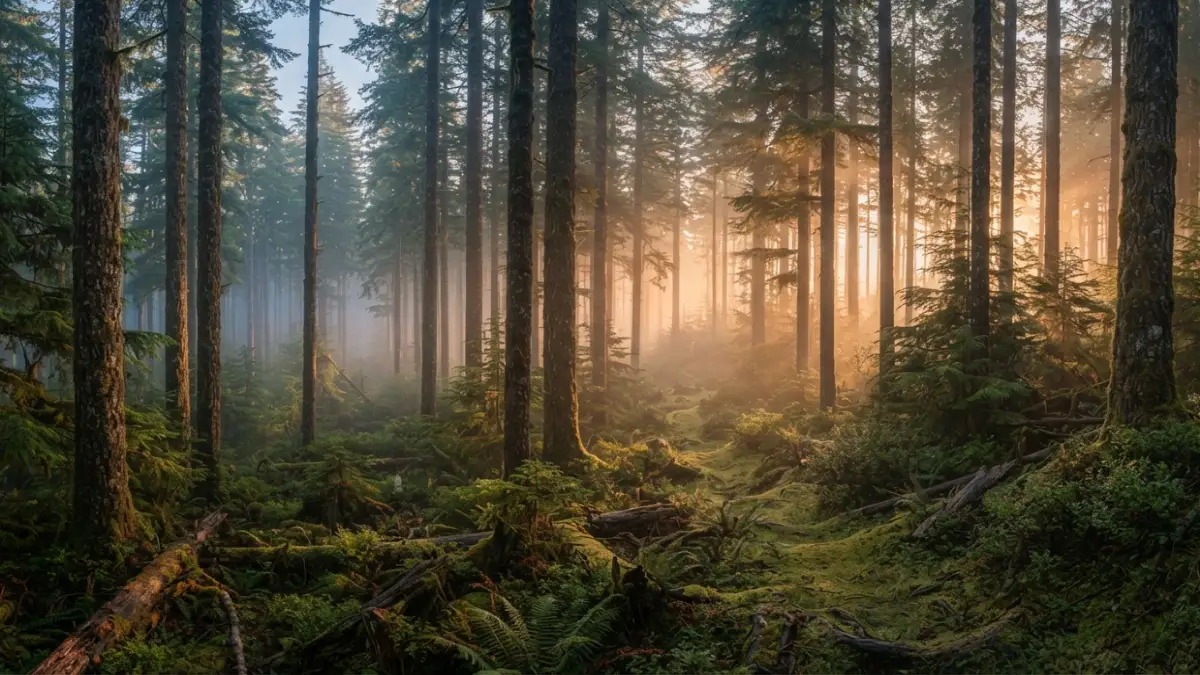
Two other common names for a coniferous forest are evergreen forest and boreal forest (also called taiga). These terms describe forests dominated by cone bearing trees such as pine, spruce, and fir, which stay green year round.
Emotional Introduction
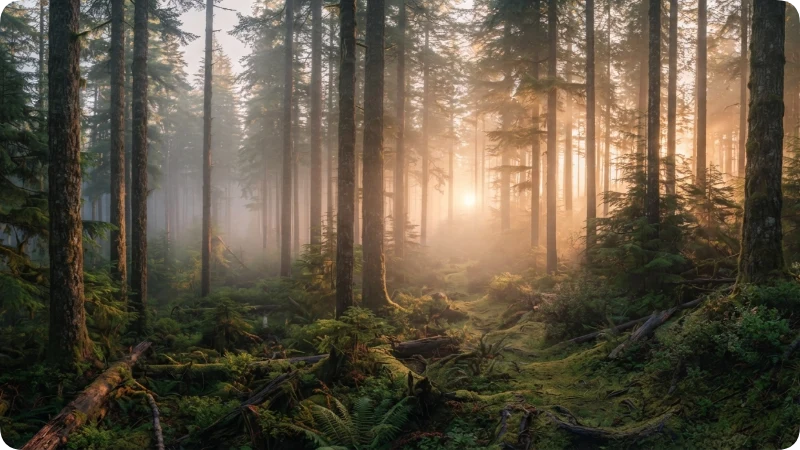
There’s something quietly powerful about coniferous forests the deep green stillness, the scent of pine in the air, and the way evergreen trees seem to hold time in place. But when you look beyond the poetic imagery, you’ll notice something interesting: this forest type isn’t always called a “coniferous forest.”
In ecology, geography, and even casual conversation, people use different names depending on region, tone, and scientific context. If you’ve ever searched “what are two other names for a coniferous forest”, you’re likely trying to understand not just terminology but the identity behind the landscape.
Let’s decode it in a simple, human way.
Quick Overview: Coniferous Forest Names
| Term | Meaning | Where It’s Commonly Used | Core Idea |
| Evergreen Forest | Forest with trees that stay green all year | General/global usage | Focus on year round foliage |
| Boreal Forest (Taiga) | Northern cold region conifer forest | Science, geography | Focus on climate zone |
| Coniferous Forest | Scientific umbrella term | Biology/ecology | Focus on tree type (cone bearing) |
Evergreen Forest: The Most Natural Alternative Name
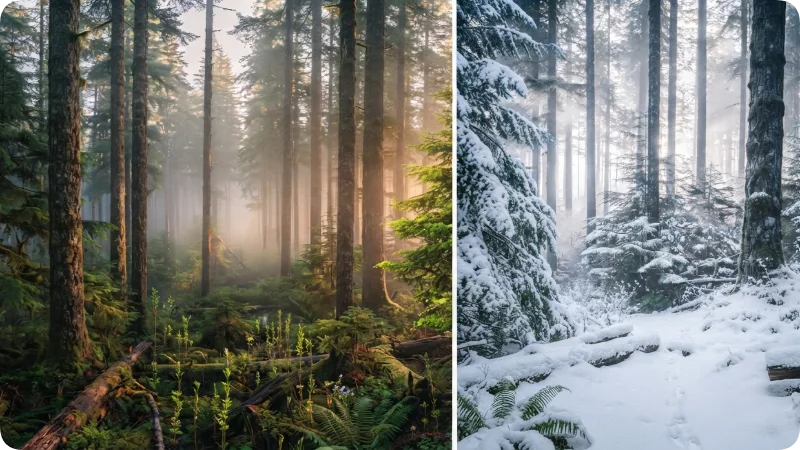
Evergreen forest is the most intuitive and widely understood alternative name for a coniferous forest.
It describes forests made up of trees that don’t shed all their leaves at once, staying green through all seasons. Think pine, cedar, fir, and spruce landscapes that feel alive even in winter.
Key Identity Snapshot
- Meaning: Forest dominated by trees that remain green year round
- Origin: Descriptive ecological English term
- Core Tree Types: Pine, spruce, fir, cedar
- Scientific Accuracy: Semi accurate (broader than coniferous forests)
- Aesthetic Vibe: Calm, eternal, peaceful, nature immersive
- Visual Impression: Dense green canopy, misty forests, soft sunlight filtering through needles
- Symbolic Feel: Longevity, resilience, timeless nature
Emotional & Cultural Vibe
Evergreen forests often appear in:
- Nature documentaries
- Meditation visuals
- Fantasy landscapes (especially in games and anime inspired worlds)
- Winter aesthetic Pinterest boards
They feel unchanging, almost like nature’s version of memory.
Boreal Forest (Taiga): The Scientific Northern Identity
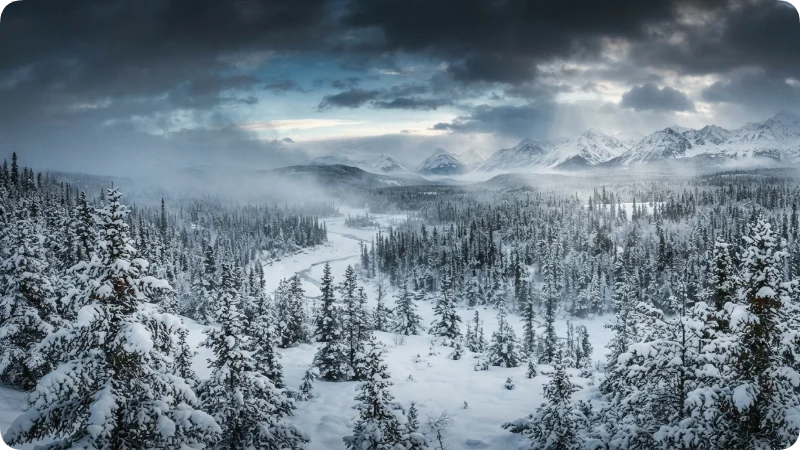
The second major name is boreal forest, commonly known as the taiga.
This term shifts the focus from tree type to geography and climate. Boreal forests stretch across the cold northern regions of the world, forming one of Earth’s largest land biomes.
Key Identity Snapshot
- Meaning: Cold climate forest biome dominated by conifers
- Origin: “Boreal” comes from the northern regions (Latin influence)
- Alternate Name: Taiga (widely used in ecology)
- Location: Canada, Russia, Scandinavia
- Climate: Long winters, short summers
- Aesthetic Vibe: Wild, vast, untouched, survival driven nature
- Symbolism: Strength, endurance, isolation, raw wilderness
Emotional & Visual Identity
Unlike the soft poetic feel of “evergreen forest,” the boreal forest feels:
- Vast and almost endless
- Quiet in a powerful, intimidating way
- Deeply natural and untouched by human presence
It’s the kind of landscape you imagine in survival stories or cinematic wilderness scenes.
Evergreen Forest vs Boreal Forest: The Real Difference
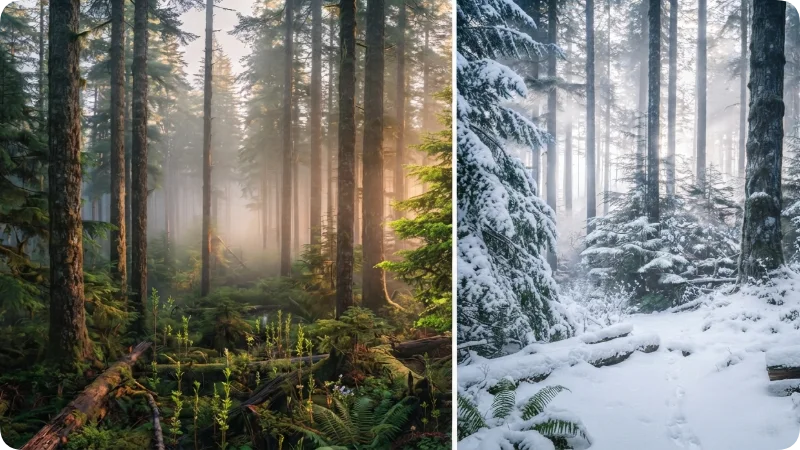
While both terms can refer to coniferous forests, they are not identical.
- Evergreen forest → focuses on tree behavior (always green)
- Boreal forest/taiga → focuses on location and climate zone
In simple terms:
- All boreal forests are evergreen or coniferous
- But not all evergreen forests are boreal
Related Naming Categories You Might Also Hear
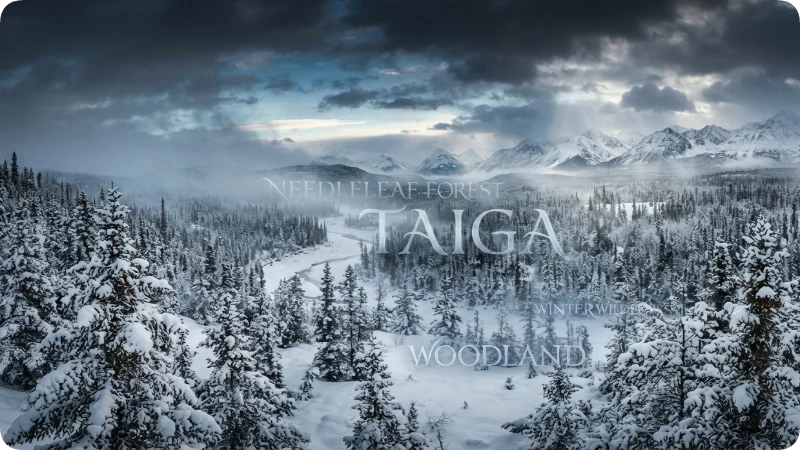
If you’re exploring terminology, these related names often appear in academic or creative contexts:
1. Needleleaf Forest
A descriptive term highlighting the shape of conifer leaves.
2. Conifer Woodland
A lighter, less dense version often used in landscape descriptions.
3. Subarctic Forest
Another climate based term closely aligned with boreal regions.
Why These Names Matter (Beyond Biology)
These alternative names are not just scientific labels they shape how we emotionally perceive forests.
- Evergreen forest feels poetic and calming
- Boreal forest feels vast and powerful
- Taiga feels wild and cinematic
Writers, game designers, and filmmakers often choose one term over another to instantly set tone and mood.
FAQs
What is another name for a coniferous forest?
The two most common alternative names are evergreen forest and boreal forest (taiga).
Are coniferous forests and evergreen forests the same?
Not exactly. Evergreen forests describe trees that stay green year round, while coniferous forests specifically refer to cone bearing trees.
Why is the boreal forest called taiga?
“Taiga” is a widely used ecological term for the northern coniferous forest biome, especially in Russia and Canada.
Where are coniferous forests found?
They are mainly found in colder regions of the Northern Hemisphere, including Canada, Northern Europe, and parts of Asia.
Conclusion
So, when someone asks “what are two other names for a coniferous forest”, the answer is simple but layered:
- Evergreen forest captures its year round green identity
- Boreal forest (taiga) captures its cold northern geography
Together, they show how one ecosystem can have multiple identities scientific, poetic, and geographical each revealing a different emotional side of the same natural world.

Amara uncovers the hidden history, origins, and meanings behind names. She curates Namestylo’s historical, cultural, and baby naming guides to ensure every suggestion carries deep significance. In her free time, she devours historical fiction and mythology.