A prestigious last name has a certain presence. It might sound like it belongs on the door of a historic estate, beneath the signature of a celebrated author, or at the top of a family tree preserved for generations.
Some surnames feel aristocratic and traditional. Others sound quietly wealthy, polished, mysterious, or unmistakably powerful. And sometimes, the most distinguished name is not the rarest one but the one with the right balance of history, rhythm, and character.
If you’re choosing a surname for a fictional character, developing a pen name, exploring your family heritage, or searching for an elegant name for a creative project, this guide brings together prestigious last names from different naming traditions.
You’ll find classic aristocratic surnames, European inspired names, refined English surnames, powerful family names, and distinctive choices with a modern luxury feel.
Featured Snippet:
Prestigious last names are surnames that convey elegance, distinction, heritage, or authority through their sound, historical associations, or cultural recognition. Examples include Windsor, Montgomery, Sinclair, Astor, Vanderbilt, Beaumont, Kensington, and Rothschild. A surname can sound refined without belonging to an aristocratic family, so style and verified family history should be considered separately.
What Makes a Last Name Sound Prestigious?
A prestigious sounding surname often combines a memorable rhythm, a sense of heritage, and a distinctive sound. Names associated with historic estates, noble titles, influential families, or established literary traditions may carry additional recognition. However, prestige is a social impression, not an inherent quality of a surname or the people who bear it.
Several features can contribute to that impression:
- Historical associations: Connections to documented noble houses, prominent families, or significant historical figures.
- Elegant sound: Names with balanced syllables, smooth consonants, or a distinctive cadence.
- Heritage and place: Surnames linked to historic regions, estates, or ancestral locations.
- Distinctiveness: Names that are recognizable without feeling overly complicated.
- Cultural familiarity: Surnames that appear in literature, history, public life, or popular culture.
It’s important to remember that surnames have many origins. They may derive from places, occupations, ancestors, nicknames, or older words. A name that sounds aristocratic today may have begun as an ordinary descriptive surname. Its sound alone cannot establish a family’s ancestry.
Overview: Prestigious Last Names by Style
| Last name | Style | Overall impression | Best suited for |
| Windsor | Royal and historic | Formal, recognizable | Royal inspired fiction |
| Montgomery | Traditional and grand | Established, dignified | Classic characters |
| Sinclair | Refined and understated | Sophisticated, composed | Modern luxury |
| Beaumont | French inspired elegance | Romantic, polished | Literary characters |
| Astor | Old money aesthetic | Concise, confident | Wealthy fictional families |
| Vanderbilt | American legacy | Grand, influential | Dynasty storytelling |
| Kensington | Place inspired elegance | Urban, polished | Contemporary fiction |
| Rothschild | Historically prominent | Formal, distinctive | Historical research |
| Harrington | Classic English | Respectable, versatile | Traditional characters |
| Cavendish | Aristocratic associations | Distinguished, dramatic | Period fiction |
| Fairfax | Crisp and traditional | Confident, balanced | Professional pen names |
| Pembroke | Heritage inspired | Reserved, stately | Historical settings |
| Laurent | French elegance | Smooth, understated | Contemporary characters |
| Moreau | French heritage | Artistic, memorable | Literary fiction |
| Fitzroy | Historic British associations | Dramatic, regal | Period drama |
The impressions in this table describe naming style rather than a guarantee of noble ancestry.
Classic Aristocratic Last Names
These surnames are especially useful when you want a name to suggest tradition, formal elegance, or the atmosphere of an established family.
1. Windsor
Style: Royal, historic, unmistakable.
Windsor is strongly associated with the British royal family, which adopted the name in 1917. That documented connection gives it a different historical profile from surnames that merely sound regal.
For fiction, Windsor suits a character connected to public life, a formal dynasty, or a story involving monarchy and legacy.
Best for: Royal inspired fiction, historical settings, distinguished character names.
2. Cavendish
Style: Aristocratic, stately, traditional.
Cavendish has established historical associations with British aristocratic families. Its four syllable rhythm feels formal and elaborate, making it a natural fit for period drama or a multigenerational family saga.
It is particularly effective when paired with a short first name, such as James Cavendish or Clara Cavendish.
Best for: Historical fiction, noble house storytelling, classic character names.
3. Montgomery
Style: Grand, polished, traditional.
Montgomery has a substantial, measured sound. Its length gives it presence, while its familiar spelling makes it practical for everyday use.
It works equally well for a dignified older character, a modern professional persona, or a fictional family with a long history.
Best for: Traditional elegance, established family characters, pen names.
4. Sinclair
Style: Refined, understated, quietly confident.
Sinclair feels less ornate than many aristocratic sounding surnames. Its appeal lies in its clean rhythm and understated sophistication.
It can suggest a composed, intelligent, or independent character without sounding excessively formal.
Best for: Contemporary luxury, elegant fictional identities, understated prestige.
5. Pembroke
Style: Formal, heritage rich, stately.
Pembroke has strong British historical and place name associations, including a connection to the historic town in Wales. It feels traditional and structured, with a particularly convincing period drama quality.
Best for: Historical fiction, heritage inspired names, distinguished family names.
6. Fitzroy
Style: Regal, dramatic, distinctive.
Fitzroy has historical associations with British naming traditions and royal connections. The element Fitz appears in several surnames with historical links to filiation, although individual surnames must be researched separately.
Its crisp ending makes it especially memorable.
Best for: Historical characters, dramatic family dynasties, literary fiction.
7. Fairfax
Style: Crisp, dignified, classic.
Fairfax combines a clean sound with a traditional English surname aesthetic. It feels less ornate than Cavendish but more distinctive than many everyday surnames.
Best for: Professional pen names, classic characters, understated elegance.
Old Money Last Names With a Quiet Luxury Feel
The old money aesthetic is associated with restraint, heritage, craftsmanship, and understated confidence rather than obvious displays of wealth. In naming, that often translates into surnames that sound established, familiar, and effortless.
The following names are style choices, not proof of wealth or social rank.
8. Astor
Astor is concise and immediately recognizable in American social and economic history because of the prominent Astor family.
Its short form gives it a different appeal from elaborate aristocratic surnames: it feels confident without needing many syllables.
Impression: Restrained wealth, historical recognition, polished simplicity.
9. Vanderbilt
Vanderbilt is associated with the prominent American family whose fortune became closely connected with nineteenth century business and railroad history.
The surname feels substantial and unmistakably linked to American legacy culture. For fiction, it works especially well when the family itself is a central part of the story.
Impression: Industrial era wealth, family influence, grand American history.
10. Harrington
Harrington has a traditional English sound that feels polished without being theatrical.
It is versatile enough for a contemporary professional, a historical character, or a fictional family with a long established reputation.
Impression: Established, composed, traditional.
11. Pemberton
Pemberton has a measured rhythm and a formal, heritage inspired sound.
It works well for fictional family businesses, country house settings, and characters whose identities are connected to tradition rather than flamboyance.
Impression: Quiet affluence, formality, classic refinement.
12. Kensington
Kensington is a place associated surname with a distinctly polished, metropolitan feel. Its connection with a well known London district gives it a recognizable British atmosphere.
It is particularly effective in contemporary fiction where setting and social identity matter.
Impression: Urban sophistication, British inspired elegance, modern luxury.
13. Ashford
Ashford feels clean, balanced, and adaptable. It can suit a character in a contemporary novel just as comfortably as someone in a historical setting.
Its appeal comes from its simplicity rather than any automatic association with nobility.
Impression: Understated, professional, versatile.
14. Langley
Langley has a smooth, understated sound that works across several genres. It feels traditional without being overly formal.
It is a good option if you want an elegant surname that is easy to spell and pronounce.
Impression: Reserved sophistication, contemporary classic.
15. Whitmore
Whitmore has a traditional, composed quality. It sounds substantial without the dramatic flourish of a name such as Vanderbilt.
Impression: Heritage, stability, quiet confidence.
French Inspired Prestigious Last Names
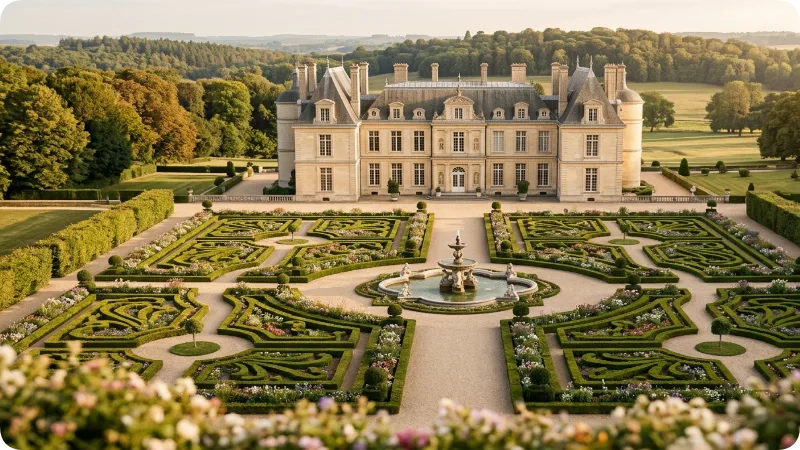
French surnames can create an impression of refinement, romance, or artistic sophistication. Their appeal may come from their sound, their cultural associations, or the familiarity of French language and literature.
A French looking surname does not automatically indicate aristocratic ancestry. Many originated as ordinary family, occupational, descriptive, or place associated names.
16. Beaumont
Beaumont is often associated with French place name elements traditionally interpreted as beau, meaning beautiful or fine, and mont, meaning hill or mountain.
Its sound is romantic and balanced, making it a strong choice for literary characters and elegant fictional identities.
Impression: Romantic refinement, heritage, classic elegance.
17. Laurent
Laurent derives from the French form of a personal name ultimately related to Latin Laurentius. It has a smooth, contemporary sound that feels sophisticated without being ornate.
Impression: Minimalist elegance, French inspired style, modern polish.
18. Moreau
Moreau is a recognizable French surname with historical roots. Its sound is compact, distinctive, and slightly artistic.
It works particularly well for characters in literary fiction, European settings, or contemporary stories with a creative atmosphere.
Impression: Artistic, understated, distinctive.
19. Duval
Duval is a French surname formed from du and val, with the latter meaning valley. The name has a concise, balanced sound.
Impression: Refined simplicity, European atmosphere, contemporary elegance.
20. Delacroix
Delacroix has a dramatic, unmistakably French appearance. Its historical and cultural associations include the celebrated French painter Eugène Delacroix.
It is more elaborate than Laurent or Duval, making it especially suitable for artistic or period characters.
Impression: Artistic grandeur, expressive style, cultural sophistication.
21. Beaumontier
Beaumontier has a French looking, elaborate sound, but it should not be treated as an established aristocratic surname or assigned a definitive meaning without reliable evidence for the specific family name.
For creative naming, a name like this may appeal when a fictional identity calls for a French inspired atmosphere. If historical realism matters, verify its use and origin before adopting it.
Impression: Ornate, continental, fictional world elegance.
Italian Last Names With Elegance and Character
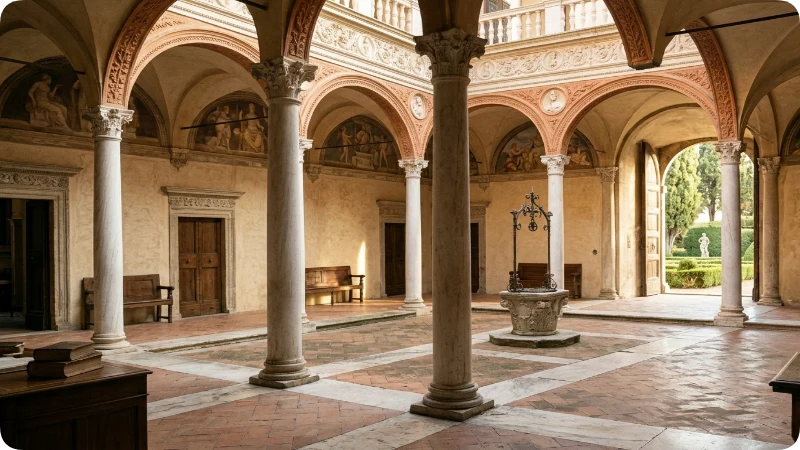
Italian surnames can bring warmth, musicality, and a strong sense of regional heritage to a name. Some are associated with celebrated artistic, political, or historical families, while others are valued for their sound and cultural familiarity.
22. Medici
The Medici family became prominent in Florence and played an influential role in Renaissance politics, banking, and patronage of the arts.
The surname therefore has specific historical associations rather than merely an elegant sound.
Impression: Renaissance history, artistic patronage, political influence.
23. Visconti
Visconti is associated with a historically significant family that ruled Milan during the Middle Ages and Renaissance.
Its distinctive rhythm suits historical fiction, especially stories set in northern Italy.
Impression: Dynastic history, formal elegance, dramatic heritage.
24. Sforza
Sforza is associated with the ruling family of Milan whose history is closely tied to Renaissance Italy.
The name is compact and forceful, offering a more commanding sound than softer Italian surnames.
Impression: Power, ambition, historical drama.
25. Moretti
Moretti is a widely recognizable Italian surname with a warm, approachable sound.
Unlike Medici or Visconti, its main appeal for many naming purposes is its cultural identity and natural rhythm rather than an inherent aristocratic association.
Impression: Warmth, Mediterranean character, versatility.
26. Bellini
Bellini has an expressive, melodic quality and associations with Italian artistic and cultural history, including the painter Giovanni Bellini and composer Vincenzo Bellini.
Impression: Artistic refinement, musicality, classic Italian style.
27. Conti
Conti is an Italian surname related to conte, the Italian word for count. That linguistic relationship does not establish that every family bearing the surname descends from a count or noble house.
Its brevity makes it stylish and memorable.
Impression: Concise elegance, Italian heritage, formal simplicity.
Powerful and Distinguished Last Names
Some surnames sound authoritative because of their rhythm, consonants, or familiarity in public life. They can work particularly well for leaders, ambitious protagonists, political characters, and fictional family dynasties.
| Surname | Naming impression | Best creative use |
| Sterling | Polished and confident | Contemporary protagonist |
| Kingsley | Formal and assured | Literary character |
| Blackwood | Dark and traditional | Gothic fiction |
| Hawthorne | Literary and thoughtful | Author persona or novel |
| Archer | Crisp and energetic | Modern character |
| Sinclair | Composed and refined | Understated luxury |
| Kensington | Urban and polished | Contemporary drama |
| Ashbourne | Heritage inspired | Historical fiction |
| Westbrook | Balanced and established | Family saga |
| Lockwood | Strong and atmospheric | Mystery or gothic fiction |
These are aesthetic interpretations. They should not be confused with claims that every surname has noble origins or a documented association with power.
Which Surnames Sound the Most Powerful?
For a bold, commanding character, Sforza, Vanderbilt, Kingsley, and Blackwood each create a different kind of strength.
- Sforza: Compact, forceful, historically dramatic.
- Vanderbilt: Grand, substantial, associated with American business history.
- Kingsley: Traditional and composed.
- Blackwood: Dark, atmospheric, and particularly effective in fiction.
Choose the name that matches the character’s personality, not simply the one that sounds most imposing.
Rare and Distinctive Prestigious Sounding Surnames
If you want something more unusual, look for a surname with a distinctive rhythm rather than an invented claim of rarity. The actual frequency of a surname varies by country, and a name that feels uncommon in one region may be familiar in another.
Here are options with strong individual personalities:
| Surname | Style | Overall vibe |
| Ainsworth | Traditional English | Established and reserved |
| Ellington | Literary and musical | Creative and polished |
| Wetherby | Heritage inspired | Quietly formal |
| Ashbourne | Old world atmosphere | Stately and refined |
| Pembroke | Historic and structured | Formal elegance |
| Fairfax | Crisp and classic | Confident and composed |
| Hargrove | Strong and grounded | Traditional authority |
| Langford | Balanced and understated | Quiet luxury |
| Sinclair | Sleek and refined | Modern classic |
| Whitmore | Traditional and adaptable | Established elegance |
These names are particularly useful for fiction, pen names, and creative projects. For real family history research, documentary evidence is more meaningful than a surname’s perceived rarity.
Prestigious Last Names From Different Cultural Traditions
Prestige is not exclusive to European aristocratic naming traditions. Family names across the world carry histories of ancestry, place, language, scholarship, leadership, and community.
The following examples illustrate different cultural associations. None should be treated as a universal indicator of wealth or social standing.
| Surname | Cultural or linguistic context | Important distinction |
| Fitzroy | British naming history | Has specific historical associations; individual family histories vary |
| O’Connell | Irish | The O’ prefix reflects a Gaelic family name tradition |
| MacLeod | Scottish and Gaelic | Mac is a traditional element meaning son of |
| Rothschild | German Jewish surname | Associated with a historically prominent banking family |
| Medici | Italian | Associated with Florence’s influential historical family |
| Patel | South Asian, especially Gujarati | A common surname with occupational and regional histories |
| Singh | Used across South Asian communities, especially Sikh communities | Has important religious and cultural significance |
| Khan | Used across several Asian and Muslim majority cultural contexts | A title derived name with varied regional histories |
| Nakamura | Japanese | A Japanese surname with place name elements |
| Park | Korean | A common Korean family name with multiple historical lineages |
| Dubois | French | Traditionally associated with the French words for woods |
| Rosenberg | German and Jewish naming traditions | Has multiple possible historical and linguistic pathways |
Cultural context matters. A surname may have multiple origins, spellings, or lineages, and the same written form can appear in unrelated families. Research the specific tradition and family history rather than assuming a single meaning.
How to Choose a Prestigious Last Name for Your Purpose
The right surname depends on what you want it to communicate. A name that works beautifully for a nineteenth century aristocrat may sound unnatural for a contemporary romance protagonist or a professional pen name.
For a fictional wealthy family
Consider Astor, Vanderbilt, Sinclair, Harrington, or Pemberton.
These names offer different tones, from recognizable American legacy associations to understated traditional elegance. For a believable story, also consider the family’s region, generation, and history.
For a royal or aristocratic character
Consider Windsor, Cavendish, Pembroke, Fitzroy, or Visconti.
These names have useful historical associations, but research the relevant period and country before presenting a fictional family as part of a real noble lineage.
For a modern luxury brand or pen name
Consider Sinclair, Laurent, Fairfax, Ashford, or Beaumont.
Look for easy pronunciation, clean typography, a memorable rhythm, and a name that pairs naturally with your first name. If you plan to use it commercially, check trademarks, domain availability, and existing brands before committing.
For a gothic or mysterious character
Consider Blackwood, Lockwood, Hawthorne, or Ashbourne.
These surnames have an atmospheric quality that can complement mystery, gothic romance, fantasy, or historical fiction without requiring a supernatural origin.
For a culturally authentic character
Start with the character’s family background, language, region, and generation. A culturally appropriate surname with a credible history is usually more convincing than a name selected solely because it sounds elite.
How to Make a Prestigious Last Name Sound Natural
The strongest surname is not always the longest or most elaborate. It is the one that fits the full name and the person who bears it.
Test the name in three ways:
- Say the full name aloud. Check its rhythm, stress, and ease of pronunciation.
- Write it in context. Imagine it on a business card, book cover, invitation, or character introduction.
- Check cultural and historical fit. Confirm the spelling, origin, and any claimed family association.
For example, Clara Sinclair feels restrained and contemporary, while Eleanor Cavendish feels more traditional and formal. Both can sound distinguished, but they create different impressions.
Also consider initials, common misspellings, potential unwanted associations, and If the name is easy for your intended audience to remember.
Frequently Asked Questions
What is the most prestigious last name?
There is no universally most prestigious surname. Windsor has a documented British royal association, while Astor and Vanderbilt are associated with prominent American families. For fictional naming, Sinclair, Cavendish, and Beaumont can also create an elegant impression without making a claim about ancestry.
What are the best old money last names?
Names often used for an old money aesthetic include Astor, Vanderbilt, Harrington, Sinclair, Pemberton, and Whitmore. Their appeal comes from different combinations of historical recognition, traditional sound, and restrained styling. The phrase describes an aesthetic rather than a reliable measure of wealth.
What last names sound rich and elegant?
Beaumont, Sinclair, Laurent, Kensington, Montgomery, and Fairfax are strong choices if you want a refined, polished sound. Beaumont feels romantic, Sinclair feels understated, and Montgomery feels more traditional and formal.
What are some rare prestigious last names?
Ainsworth, Wetherby, Langford, Ashbourne, and Ellington may feel distinctive to some audiences. However, rarity depends on the country and population being considered. Verify actual surname frequency if uncommonness is important to your project.
Are aristocratic sounding surnames necessarily noble?
No. A surname’s sound does not establish nobility, inherited wealth, or a connection to a titled family. Even historically prominent surnames may be shared by unrelated families. Reliable genealogical claims require evidence about a particular family line.
How can I find the real meaning of my last name?
Start with reputable surname dictionaries, historical records, regional archives, and genealogical sources. The Society for Name Studies in Britain and Ireland explains why surname interpretation can be difficult and why early spellings and linguistic context matter. For family specific conclusions, trace the name through documented records rather than relying on a general online meaning.
Final Thoughts
The most memorable prestigious last names do more than sound expensive. They create an impression of history, character, and identity.
A name like Cavendish feels formal and historic. Sinclair offers understated refinement. Beaumont brings a romantic quality, while Vanderbilt carries a recognizable association with American economic history.
The best choice depends on your purpose: a fictional dynasty, an elegant pen name, a luxury inspired creative identity, or a genuine exploration of family heritage.
Choose a surname for its sound and personality if you’re creating a character. Choose it for its documented history if you’re researching ancestry. And when a name offers both, take the time to understand the story behind it.
Because true distinction is not just about how a name sounds. It’s also about the history, meaning, and identity that give it depth.

Amara uncovers the hidden history, origins, and meanings behind names. She curates Namestylo’s historical, cultural, and baby naming guides to ensure every suggestion carries deep significance. In her free time, she devours historical fiction and mythology.