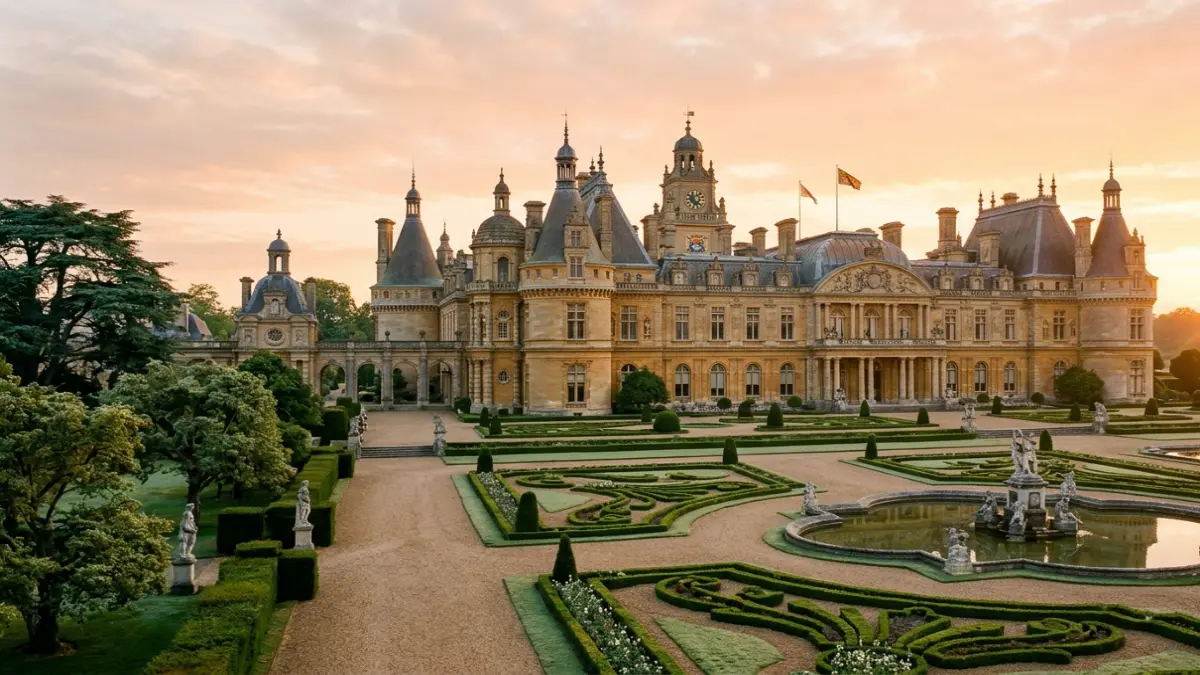
European noble surnames carry centuries of history, royal connections, ancestral estates, and aristocratic traditions.
Some sound elegant and romantic, like Medici and Montmorency. Others feel powerful and imperial, like Habsburg, Romanov, and Hohenzollern.
What makes these surnames fascinating is that many belonged to families who shaped European politics, culture, architecture, and society.
If you’re researching noble ancestry, naming a fictional royal character, building a fantasy dynasty, or exploring elegant European last names, this guide brings together historic aristocratic surnames and their distinctive styles.
Featured Snippet
European noble surnames include Habsburg, Windsor, Bourbon, Tudor, Plantagenet, Medici, Romanov, Hohenzollern, Montmorency, Savoy, and Orsini. These surnames are associated with royal dynasties, aristocratic families, historic estates, and influential European lineages. Their origins span England, France, Germany, Italy, Spain, Russia, and other European regions.
Overview Table: Famous European Noble Surnames
| Surname | Historical Association | Origin | Style |
| Habsburg | Imperial dynasty | Austria | Imperial |
| Windsor | British royal house | Britain | Regal |
| Bourbon | Royal dynasty | France | Classic |
| Medici | Banking and ruling family | Italy | Renaissance |
| Romanov | Russian imperial dynasty | Russia | Majestic |
| Hohenzollern | Prussian royal dynasty | Germany | Powerful |
| Montmorency | Historic noble house | France | Elegant |
| Savoy | European ruling dynasty | Savoy region | Aristocratic |
| Tudor | English royal dynasty | Wales/England | Historic |
| Orsini | Roman noble family | Italy | Ancient |
Why European Noble Surnames Feel So Prestigious
Unlike ordinary aesthetic name choices, historically noble surnames are associated with documented family lineages, political influence, inherited titles, and regional traditions.
Their appeal often comes from their connection to castles, heraldry, royal courts, and generations of recorded history.
A surname such as Habsburg evokes imperial Europe. Medici suggests Renaissance Florence, art patronage, and political influence. Montmorency carries the elegance of French aristocratic history.
However, a noble sounding surname does not automatically establish noble ancestry. Historical status depends on a particular family line, jurisdiction, and supporting genealogical records.
Royal European Surnames With Historic Power
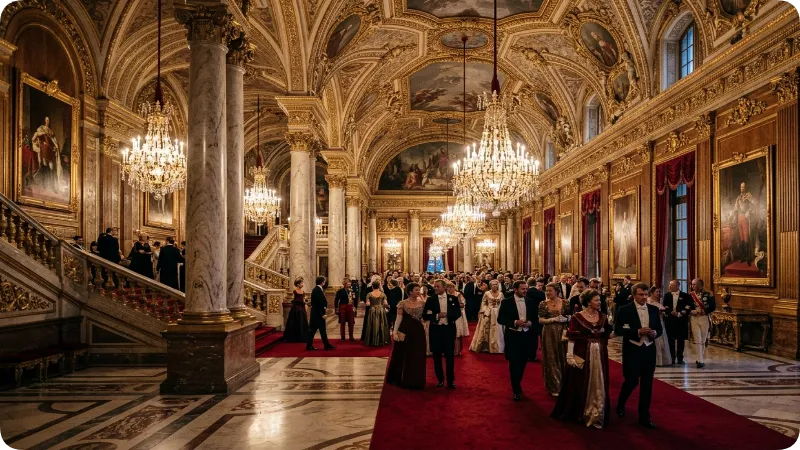
Royal surnames are especially memorable because they are connected to dynasties that ruled kingdoms, principalities, and empires.
Famous Royal and Imperial Surnames
| Surname | Country or Region | Historical Significance |
| Windsor | United Kingdom | Name adopted by Britain’s royal house in 1917 |
| Habsburg | Austria | Dynasty of Holy Roman emperors and Austrian rulers |
| Bourbon | France | Royal house that also produced Spanish monarchs |
| Romanov | Russia | Dynasty that ruled Russia from 1613 to 1917 |
| Hohenzollern | Germany | Dynasty of Prussian kings and German emperors |
| Tudor | England | Royal dynasty from 1485 to 1603 |
| Stuart | Scotland | Dynasty that ruled Scotland and later England and Ireland |
| Plantagenet | England | Medieval English royal dynasty |
| Valois | France | Branch of the Capetian royal dynasty |
| Capet | France | Founding surname of the Capetian dynasty |
| Hanover | Germany/Britain | Dynasty that ruled Britain from 1714 to 1901 |
| Wettin | Germany | Saxon dynasty with several European royal branches |
| Oldenburg | Denmark/Germany | Dynasty associated with multiple European monarchies |
| Savoy | Italy | Dynasty that eventually ruled unified Italy |
| Grimaldi | Monaco | Princely family historically associated with Monaco |
The Imperial Elegance of Habsburg
The Habsburg name carries one of the strongest imperial associations in European history.
The dynasty ruled extensive territories across Central Europe and beyond. Its influence also reached Spain and the Spanish Empire through a separate branch.
Origin: German speaking Europe, associated with Habsburg Castle in present day Switzerland.
Historical association: Imperial power, dynastic marriages, court culture, and European diplomacy.
Aesthetic impression: Commanding, traditional, formal, and unmistakably aristocratic.
Habsburg is particularly effective as historical inspiration for a fictional ruling dynasty because its sound feels weighty and established.
The Romantic Royalty of Bourbon
Bourbon is a French dynastic name associated with kings, royal courts, and grand palaces.
Its name derives from the Bourbon lordship, associated with Bourbon l’Archambault in central France.
Historical association: French monarchy and the continuing Spanish royal dynasty.
Aesthetic impression: Luxurious, polished, classical, and refined.
For fictional characters, Bourbon suggests courtly intrigue, inherited wealth, and traditional aristocratic society.
French Noble Surnames With Elegant Old Money Charm
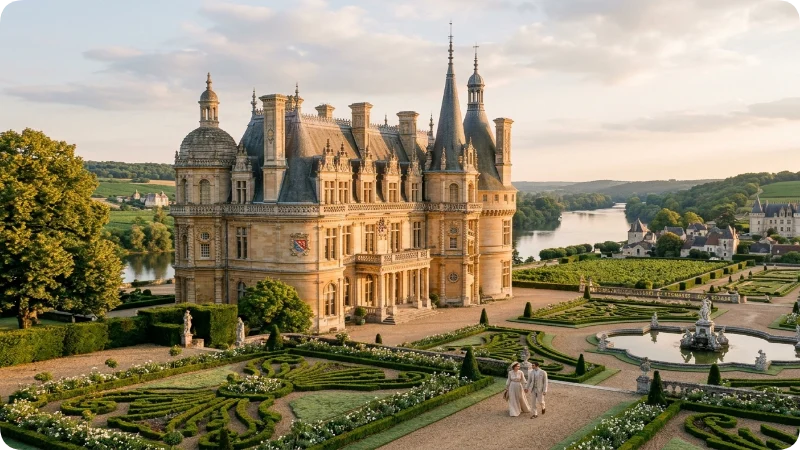
French aristocratic surnames often have a graceful, sophisticated sound.
Many are associated with ancestral lands or estates. Some include particles such as de or d’, but these particles alone do not prove nobility.
Beautiful French Aristocratic Last Names
| Surname | Historical Connection | Aesthetic Vibe |
| Montmorency | Prominent medieval and early modern noble family | Grand and elegant |
| Rochefoucauld | Historic French noble house | Literary and refined |
| Rohan | Influential Breton and French noble house | Romantic and regal |
| Noailles | Ducal and aristocratic family | Polished and luxurious |
| Talleyrand | Noble family associated with French diplomacy | Intellectual and sophisticated |
| La Trémoille | Prominent historic noble family | Medieval and graceful |
| Clermont Tonnerre | French noble lineage | Grand and commanding |
| Polignac | Ducal family associated with the French court | Delicate and fashionable |
| Crussol | Family associated with the dukedom of Uzès | Distinguished and classic |
| Gramont | Historic ducal family | Soft and elegant |
| d’Albret | Noble lineage connected to Navarre | Romantic and historic |
| Choiseul | Aristocratic family prominent in French politics | Refined and diplomatic |
| Harcourt | Noble family with Norman roots | Traditional and strong |
| Lévis | Historic noble family | Minimalist and graceful |
| d’Orléans | Branch of the French royal family | Royal and sophisticated |
Montmorency: A Surname With Castle Like Grandeur
Montmorency is among the most recognizable names of the old French nobility.
The family held important positions in medieval and early modern France, including high military and court offices.
Its flowing syllables make it appealing for aristocratic fiction, particularly characters associated with ancestral estates and political influence.
Pronunciation: Approximately mon moh rahn SEE in French.
Style: Grand, romantic, historical.
Best creative use: A French duchess, diplomat, or heir to an ancient estate.
Rochefoucauld: Literary Aristocracy
La Rochefoucauld is associated with the French noble family that produced the seventeenth century writer François de La Rochefoucauld, celebrated for his Maximes.
The surname has a distinctly literary character.
Style: Intellectual, understated, philosophical.
Best creative use: An aristocratic scholar, mysterious count, or sophisticated historical character.
British Noble Surnames With Timeless Prestige
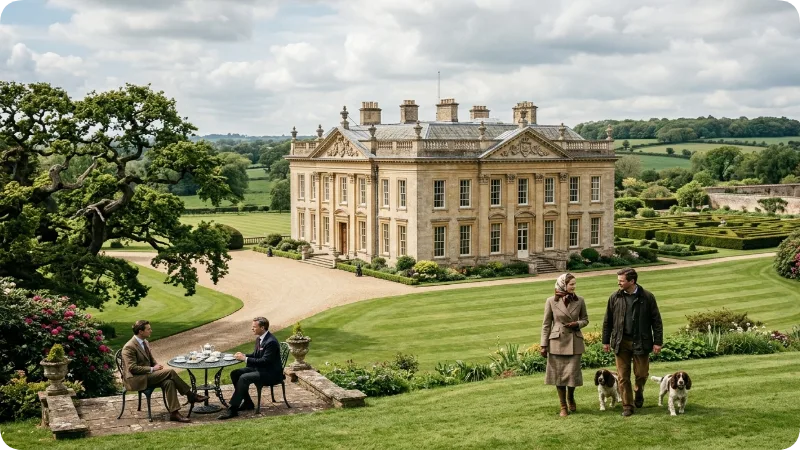
British noble surnames frequently appear in histories of dukedoms, earldoms, landed estates, and parliamentary politics.
Some remain widely used ordinary surnames, even though particular family branches have held hereditary titles.
Classic British Aristocratic Surnames
| Surname | Historical Association | Style |
| Cavendish | Dukes of Devonshire | Elegant and intellectual |
| Howard | Dukes of Norfolk | Ancient and commanding |
| Percy | Earls and dukes of Northumberland | Medieval and romantic |
| Spencer | Earls Spencer and other titled branches | Polished and familiar |
| Churchill | Dukes of Marlborough | Statesmanlike and powerful |
| Russell | Dukes of Bedford | Classic and dignified |
| Somerset | Dukes of Beaufort and other noble branches | Pastoral and aristocratic |
| Grosvenor | Dukes of Westminster | Wealthy and distinguished |
| Fitzalan | Historic earls of Arundel | Medieval and refined |
| Talbot | Earls of Shrewsbury | Strong and traditional |
| Cecil | Marquesses of Salisbury and Exeter | Scholarly and stately |
| Manners | Dukes of Rutland | Gentle and distinguished |
| Montagu | Several historic titled families | Romantic and literary |
| Berkeley | Historic baronial family | Soft and sophisticated |
| Wentworth | Historic aristocratic families | Grand and formal |
Cavendish: Quiet Luxury and Heritage
Cavendish is associated with the Dukes of Devonshire and historic estates such as Chatsworth House.
The surname sounds sophisticated without being overly dramatic.
Aesthetic impression: Country estates, libraries, fine art, and understated luxury.
Best creative use: A reserved English aristocrat or a wealthy family in a period novel.
Percy: Medieval Romance
Percy is deeply associated with the history of Northumberland and the English nobility.
It has a softer sound than many imposing aristocratic surnames, making it especially versatile.
Aesthetic impression: Medieval castles, old manuscripts, family loyalty, and romantic history.
Best creative use: Historical romance, fantasy nobility, or an elegant fictional surname.
German and Austrian Noble Surnames
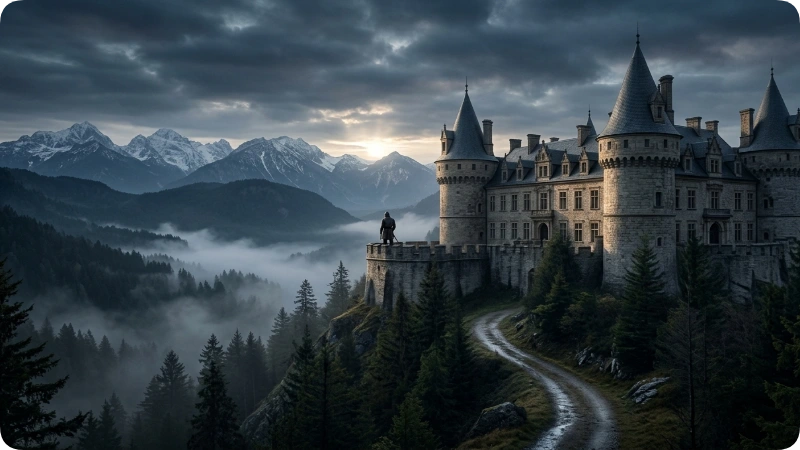
German and Austrian aristocratic surnames often sound formal, powerful, and historic.
Many are associated with principalities, castles, military leadership, and imperial administration.
The particle von often indicates a geographic association, but it does not universally establish noble status.
Powerful German Noble Surnames
| Surname | Historical Association | Impression |
| Hohenzollern | Prussian and German ruling dynasty | Imperial |
| Habsburg | Imperial dynasty | Majestic |
| Wittelsbach | Bavarian ruling dynasty | Regal |
| Wettin | Saxon ruling dynasty | Ancient |
| Liechtenstein | Princely dynasty | Exclusive |
| Thurn und Taxis | Princely family and postal history | Grand |
| Schwarzenberg | Princely family | Dark and commanding |
| Fürstenberg | Princely and comital families | Distinguished |
| Metternich | Diplomatic and princely family | Intellectual |
| Bismarck | Noble family associated with German unification | Powerful |
| Eulenburg | Prussian noble family | Mysterious |
| Schönburg | Historic noble house | Romantic |
| Stolberg | Historic comital and princely houses | Strong |
| Reuss | German princely dynasty | Minimalist |
| Waldburg | Historic noble house | Medieval |
Hohenzollern: A Name Built for Royal Power
Hohenzollern is closely associated with Prussia and the German Empire.
Its strong consonants and imposing rhythm give it a commanding character.
Style: Formal, powerful, militaristic, and imperial.
Best creative use: A royal house in alternate history fiction or a powerful fantasy empire.
Liechtenstein: Noble Elegance and European Heritage
Liechtenstein is both the name of a princely family and a European principality.
The surname is associated with a long aristocratic history and the family’s acquisition of territories that formed the principality.
Style: Exclusive, refined, continental.
Best creative use: A fictional diplomatic family, royal court, or prestigious dynasty.
Italian Noble Surnames With Renaissance Beauty
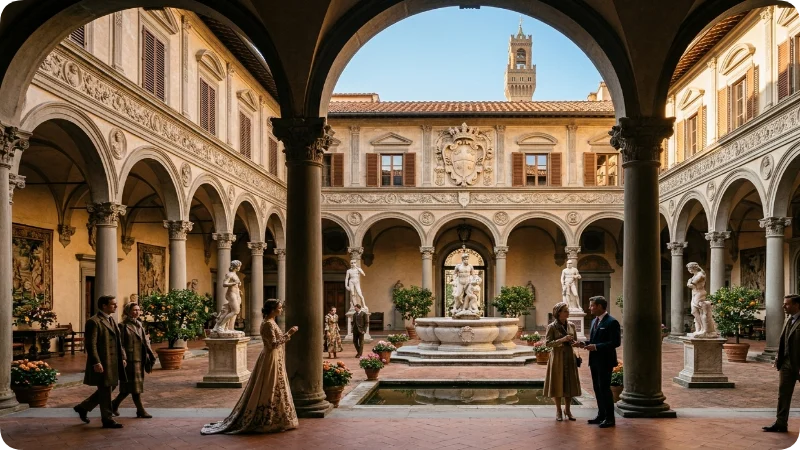
Italian noble surnames are especially attractive for their connections to Renaissance art, merchant wealth, papal politics, and regional ruling families.
They can feel artistic, dramatic, romantic, or intensely powerful.
Elegant Italian Aristocratic Surnames
| Surname | Historical Connection | Aesthetic Style |
| Medici | Florentine banking and ruling dynasty | Renaissance luxury |
| Sforza | Dukes of Milan | Powerful |
| Visconti | Ruling dynasty of Milan | Gothic and regal |
| Orsini | Historic Roman noble house | Ancient |
| Colonna | Prominent Roman noble family | Monumental |
| Borghese | Papal and princely family | Artistic |
| Doria | Genoese noble family | Maritime and grand |
| Este | Ruling dynasty of Ferrara and Modena | Romantic |
| Gonzaga | Rulers of Mantua | Refined |
| Farnese | Ducal and papal family | Imperial |
| Barberini | Roman princely family | Baroque |
| Chigi | Banking and papal family | Elegant |
| Pallavicini | Historic Italian noble house | Sophisticated |
| Malatesta | Ruling family of Rimini | Dramatic |
| Brancaccio | Historic Neapolitan noble family | Classical |
Medici: The Artistic Power of a Noble Name
Medici is one of the most evocative surnames in European history.
The family rose through banking and politics to become rulers of Florence and grand dukes of Tuscany. It also produced popes and important patrons of Renaissance culture.
Historical origin: Florence, Italy.
Aesthetic impression: Art galleries, marble palaces, scholarship, and political ambition.
Best creative use: An influential Renaissance family, artistic dynasty, or sophisticated fictional protagonist.
The precise original etymology of Medici is debated; its modern Italian resemblance to medici, meaning doctors, should not be treated as proof of its original occupational meaning.
Spanish and Portuguese Noble Surnames
The Iberian Peninsula has a rich aristocratic tradition shaped by medieval kingdoms, dynastic marriages, regional lordships, and overseas empires.
Many Spanish and Portuguese noble surnames are also widespread among families without aristocratic ancestry.
Historic Iberian Noble Family Names
| Surname | Country | Historical Association |
| Alba | Spain | Dukedom of Alba |
| Mendoza | Spain | Powerful Castilian noble lineage |
| Guzmán | Spain | House associated with Medina Sidonia |
| Enríquez | Spain | Several prominent noble branches |
| Pimentel | Spain | Counts and dukes of Benavente |
| Osorio | Spain | Historic noble lineages |
| Velasco | Spain | Constables of Castile |
| Álvarez de Toledo | Spain | House associated with Alba |
| Bragança | Portugal | Portuguese royal dynasty |
| Avis | Portugal | Historic royal dynasty |
| Meneses | Portugal/Spain | Medieval aristocratic lineages |
| Sousa | Portugal | Several historic noble branches |
| Noronha | Portugal | Noble family with royal connections |
| Távora | Portugal | Influential aristocratic family |
| Castro | Iberia | Numerous historic noble branches |
Bragança: Portuguese Royal Heritage
Bragança is the Portuguese form of Braganza, a royal house that ruled Portugal beginning in 1640.
The surname has a warm, flowing sound and a distinguished dynastic history.
Style: Romantic, regal, historical.
Best creative use: A Portuguese royal character or a fictional maritime dynasty.
Russian and Eastern European Noble Surnames
Eastern European aristocratic surnames often carry dramatic consonants, distinctive endings, and associations with imperial courts or noble estates.
Russian family names may have masculine and feminine forms, while Polish surnames ending in ski often have corresponding feminine forms ending in ska.
Historic Eastern European Noble Names
| Surname | Region | Historical Association |
| Romanov | Russia | Imperial dynasty |
| Golitsyn | Russia | Princely family |
| Yusupov | Russia | Princely family |
| Sheremetev | Russia | Noble and comital family |
| Dolgorukov | Russia | Princely lineage |
| Obolensky | Russia | Princely family |
| Volkonsky | Russia | Princely lineage |
| Trubetskoy | Russia | Princely family |
| Radziwiłł | Lithuania/Poland | Powerful magnate family |
| Czartoryski | Poland/Lithuania | Princely family |
| Potocki | Poland | Prominent magnate family |
| Zamoyski | Poland | Aristocratic family |
| Lubomirski | Poland | Princely family |
| Esterházy | Hungary | Princely family |
| Pálffy | Hungary | Noble and princely family |
Romanov: Imperial Mystery and Grandeur
Romanov is associated with the Russian imperial dynasty, which ruled from 1613 until the monarchy’s fall in 1917.
Its sound carries an unmistakable historical weight.
Style: Imperial, dramatic, elegant, and historic.
Best creative use: A fictional imperial family, historical mystery, or alternate history novel.
Radziwiłł: The Grandeur of Eastern European Nobility
The Radziwiłł family held major political and social influence in the Grand Duchy of Lithuania and the Polish–Lithuanian Commonwealth.
The name has a distinctive visual identity, particularly because of its Polish spelling.
Style: Ancient, grand, culturally distinctive.
Best creative use: A powerful noble family in historical fiction.
Scandinavian Noble Surnames With Nordic Heritage
Northern European aristocratic surnames often feel restrained, historic, and distinctive. Their associations include royal courts, military service, landed estates, and regional politics.
| Surname | Country | Historical Connection |
| Bernadotte | Sweden | Swedish royal dynasty |
| Vasa | Sweden | Historic royal dynasty |
| Oxenstierna | Sweden | Noble family prominent in government |
| Stenbock | Sweden | Historic comital family |
| Brahe | Sweden/Denmark | Historic noble families |
| Bonde | Sweden | Noble family with royal connections |
| Rosenkrantz | Denmark/Norway | Historic noble family |
| Ahlefeldt | Denmark/Germany | Noble lineage |
| Danneskiold Samsøe | Denmark | Comital family |
| Gyldenløve | Denmark/Norway | Name associated with royal descendants |
Style insight: Scandinavian noble names are especially effective for historical fiction and Nordic inspired fantasy because they combine regional character with an established aristocratic heritage.
European Noble Surnames by Aesthetic Style
Different surnames communicate different impressions. These categories describe their modern creative appeal, not their literal meanings or historical rank.
Elegant and Romantic
Montmorency, Rohan, Cavendish, Gramont, Savoy, Bragança
Best for historical romance, refined fictional characters, and graceful aristocratic identities.
Dark and Gothic
Schwarzenberg, Visconti, Malatesta, Hohenzollern, Dolgorukov
Best for gothic fantasy, mysterious noble houses, and dramatic medieval storytelling.
Luxurious and Old Money
Grosvenor, Medici, Borghese, Noailles, Liechtenstein
Best for luxury fiction, wealthy family characters, and sophisticated social settings.
Powerful and Imperial
Habsburg, Romanov, Bourbon, Hohenzollern, Tudor, Wittelsbach
Best for royal dynasties, imperial fantasy, and political drama.
Rare and Unusual European Noble Surnames
Some historically aristocratic surnames are less familiar to international audiences, making them especially interesting for creative naming.
| Surname | Region | Creative Impression |
| La Trémoille | France | Romantic and medieval |
| Clermont Tonnerre | France | Grand and dramatic |
| Pallavicini | Italy | Artistic and sophisticated |
| Brancaccio | Italy | Classical and distinctive |
| Eulenburg | Germany | Mysterious and formal |
| Waldburg | Germany | Forest like and medieval |
| Obolensky | Russia | Graceful and imperial |
| Czartoryski | Poland | Distinguished and historic |
| Danneskiold Samsøe | Denmark | Exclusive and traditional |
| Távora | Portugal | Elegant and concise |
These names may be uncommon in general international usage, but that does not necessarily mean they are rare within their original regions.
How to Choose the Perfect European Noble Surname
A compelling surname should match the character, cultural background, and historical setting you want to create.
Consider four important factors:
- Historical authenticity: Choose a surname associated with the correct country and period.
- Pronunciation: Make sure the name works naturally in dialogue and narration.
- Emotional impression: Decide If you want elegance, mystery, romance, or authority.
- Cultural accuracy: Respect regional spelling, naming conventions, and historical context.
a fictional French aristocrat, Montmorency or Rohan creates a different impression from a German imperial surname such as Hohenzollern.
For a Renaissance setting, Medici, Sforza, and Gonzaga are historically appropriate sources of inspiration.
original fantasy writing, consider inventing a surname inspired by a region’s linguistic patterns rather than assigning a real noble family’s name to a fictional bloodline.
European Noble Surnames vs. Ordinary European Last Names
A surname’s aristocratic sound and its documented historical status are two different things.
| Feature | Historic Noble Surname | Ordinary Surname |
| Family history | May include documented noble branches | May have many different origins |
| Heraldry | Some lineages possess historic arms | Arms cannot be assumed from a shared name |
| Titles | Some families held hereditary titles | No title implied |
| Geographic origin | Often associated with ancestral territories | May also derive from locations |
| Modern usage | Can be shared by unrelated families | Widely varied |
| Proof of nobility | Requires genealogical evidence | Surname alone is insufficient |
A surname such as Howard, Spencer, or Castro may appear in a historic noble lineage, but that does not mean everyone carrying it descends from that lineage.
Frequently Asked Questions
What are the most famous European noble surnames?
Some of the most famous include Habsburg, Bourbon, Windsor, Romanov, Hohenzollern, Medici, Tudor, Plantagenet, and Savoy. They are associated with influential royal dynasties or aristocratic families.
What are the most elegant French noble surnames?
Montmorency, Rohan, Rochefoucauld, Noailles, Gramont, and Polignac are especially elegant choices. Their appeal comes from their flowing French pronunciation and historic aristocratic associations.
What European surnames sound like old money?
Cavendish, Grosvenor, Spencer, Medici, Borghese, and Liechtenstein can evoke old money aesthetics. This is a stylistic impression rather than a reliable indicator of an individual’s wealth.
Does ‘von’ or ‘de’ mean someone is noble?
Not necessarily. Both particles can indicate geographic origin or historical family naming conventions. Although they appear in many aristocratic names, neither independently proves noble ancestry.
Can anyone use a European noble surname?
In many countries, surnames can be used in fiction or adopted through legally established name change procedures. Actual naming laws vary by jurisdiction, and some countries regulate noble titles or name changes more strictly.
Which noble surnames are best for fantasy characters?
Hohenzollern, Schwarzenberg, Montmorency, Visconti, Romanov, and Orsini provide strong historical inspiration for fantasy settings. For an original fictional dynasty, a newly invented surname may offer greater creative freedom.
How can I find out If my surname has noble origins?
Begin with birth, marriage, and death records, then trace your documented family line through archives, parish registers, and historical genealogical collections. A matching surname or commercial coat of arms product is not sufficient evidence of noble descent.
Final Thoughts
European noble surnames are more than elegant collections of letters. They are connected to centuries of political history, family identity, cultural heritage, and social change.
Some, like Montmorency and Cavendish, feel graceful and understated. Others, like Habsburg and Romanov, carry powerful imperial associations. Names such as Medici and Visconti evoke the creativity and ambition of Renaissance Italy.
If you’re exploring your ancestry or searching for an unforgettable fictional surname, the most meaningful choice is one that combines beautiful sound with historical and cultural understanding.
A truly memorable noble surname does not simply sound prestigious. It has a story behind it.

Amara uncovers the hidden history, origins, and meanings behind names. She curates Namestylo’s historical, cultural, and baby naming guides to ensure every suggestion carries deep significance. In her free time, she devours historical fiction and mythology.