The 99 Names of Allah are more than a list of sacred words they are descriptions of divine mercy, power, wisdom, beauty, forgiveness, protection, and love. For many Muslims, these names become part of daily prayer, baby naming inspiration, spiritual healing, Islamic wall art, journaling, and emotional connection with faith.
Some names feel soft and comforting. Others carry majesty, strength, and awe. Together, they create a complete spiritual portrait of Allah’s attributes in Islam.
If you are learning the Asma ul Husna for the first time, searching for meaningful Islamic names, deepening your spiritual practice, or simply curious about the meanings behind these beautiful Arabic names, this guide is designed to feel clear, emotional, and easy to explore.
Featured Snippet
The 99 Names of Allah, also called Asma ul Husna (The Most Beautiful Names), are divine attributes of Allah mentioned in the Quran and Hadith. Each name reflects a unique quality such as mercy, wisdom, power, forgiveness, justice, and love. Muslims often recite these names for spiritual connection, prayer, reflection, and inspiration when choosing Islamic baby names.
Quick Overview of the 99 Names of Allah
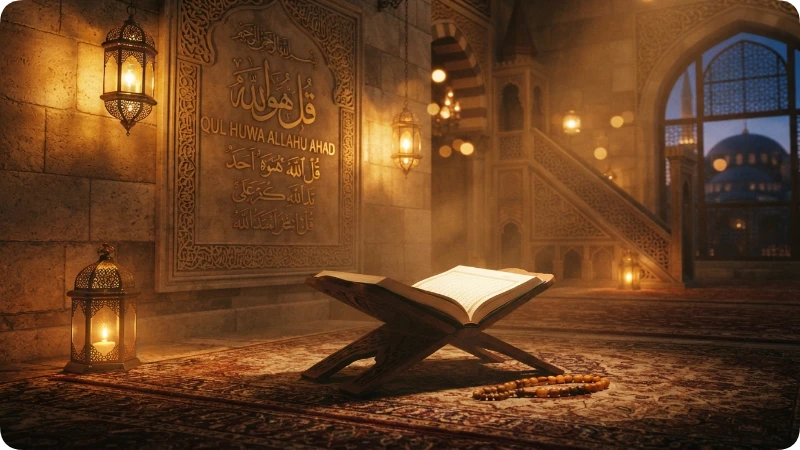
| Arabic | Transliteration | Meaning |
| ٱلرَّحْمَـانُ | Ar Rahman | The Most Compassionate |
| ٱلرَّحِيمُ | Ar Raheem | The Most Merciful |
| ٱلْمَلِكُ | Al Malik | The King |
| ٱلْقُدُّوسُ | Al Quddus | The Most Holy |
| ٱلسَّلَامُ | As Salam | The Source of Peace |
| ٱلْمُؤْمِنُ | Al Mu’min | The Giver of Security |
| ٱلْمُهَيْمِنُ | Al Muhaymin | The Protector |
| ٱلْعَزِيزُ | Al Aziz | The Almighty |
| ٱلْجَبَّارُ | Al Jabbar | The Restorer |
| ٱلْمُتَكَبِّرُ | Al Mutakabbir | The Supreme |
The Complete 99 Names of Allah With Meaning
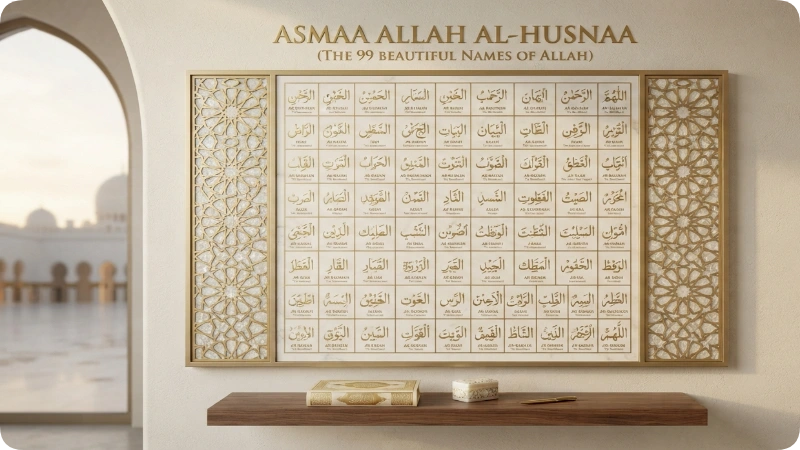
1–20
- Ar Rahman The Most Compassionate
- Ar Raheem The Most Merciful
- Al Malik The King
- Al Quddus The Most Holy
- As Salam The Source of Peace
- Al Mu’min The Giver of Faith and Security
- Al Muhaymin The Guardian
- Al Aziz The Almighty
- Al Jabbar The Compeller, The Restorer
- Al Mutakabbir The Supreme
- Al Khaliq The Creator
- Al Bari’ The Originator
- Al Musawwir The Fashioner
- Al Ghaffar The Constant Forgiver
- Al Qahhar The All Subduer
- Al Wahhab The Supreme Bestower
- Ar Razzaq The Provider
- Al Fattah The Opener
- Al ‘Aleem The All Knowing
- Al Qabid The Withholder
21–40
- Al Basit The Extender
- Al Khafid The Reducer
- Ar Rafi’ The Exalter
- Al Mu’izz The Honourer
- Al Mudhill The Humiliator
- As Sami’ The All Hearing
- Al Basir The All Seeing
- Al Hakam The Judge
- Al ‘Adl The Utterly Just
- Al Latif The Most Gentle
- Al Khabir The All Aware
- Al Halim The Most Forbearing
- Al Azim The Magnificent
- Al Ghafur The Most Forgiving
- Ash Shakur The Most Appreciative
- Al ‘Aliyy The Most High
- Al Kabir The Most Great
- Al Hafiz The Preserver
- Al Muqit The Sustainer
- Al Hasib The Reckoner
41–60
- Al Jalil The Majestic
- Al Karim The Most Generous
- Ar Raqib The Watchful
- Al Mujib The Responsive One
- Al Wasi’ The All Encompassing
- Al Hakim The All Wise
- Al Wadud The Most Loving
- Al Majid The Glorious
- Al Ba’ith The Resurrector
- Ash Shahid The Witness
- Al Haqq The Absolute Truth
- Al Wakil The Trustee
- Al Qawiyy The All Strong
- Al Matin The Firm One
- Al Waliyy The Protecting Friend
- Al Hamid The Praiseworthy
- Al Muhsi The Accounter
- Al Mubdi’ The Originator
- Al Mu’id The Restorer
- Al Muhyi The Giver of Life
61–80
- Al Mumit The Creator of Death
- Al Hayy The Ever Living
- Al Qayyum The Self Subsisting
- Al Wajid The Finder
- Al Majid The Noble
- Al Wahid The One
- Al Ahad The Unique One
- As Samad The Eternal Refuge
- Al Qadir The All Powerful
- Al Muqtadir The Creator of All Power
- Al Muqaddim The Expediter
- Al Mu’akhkhir The Delayer
- Al Awwal The First
- Al Akhir The Last
- Az Zahir The Manifest
- Al Batin The Hidden One
- Al Wali The Sole Governor
- Al Muta’ali The Self Exalted
- Al Barr The Source of Goodness
- At Tawwab The Accepter of Repentance
81–99
- Al Muntaqim The Avenger
- Al ‘Afuww The Pardoner
- Ar Ra’uf The Most Kind
- Malik ul Mulk Master of the Kingdom
- Dhul Jalali wal Ikram Lord of Glory and Honour
- Al Muqsit The Just One
- Al Jami’ The Gatherer
- Al Ghaniyy The Self Sufficient
- Al Mughni The Enricher
- Al Mani’ The Preventer
- Ad Darr The Creator of Harm
- An Nafi’ The Bestower of Benefit
- An Nur The Light
- Al Hadi The Guide
- Al Badi’ The Incomparable Originator
- Al Baqi The Everlasting
- Al Warith The Inheritor
- Ar Rashid The Guide to the Right Path
- As Sabur The Most Patient
The Most Emotionally Loved Names of Allah
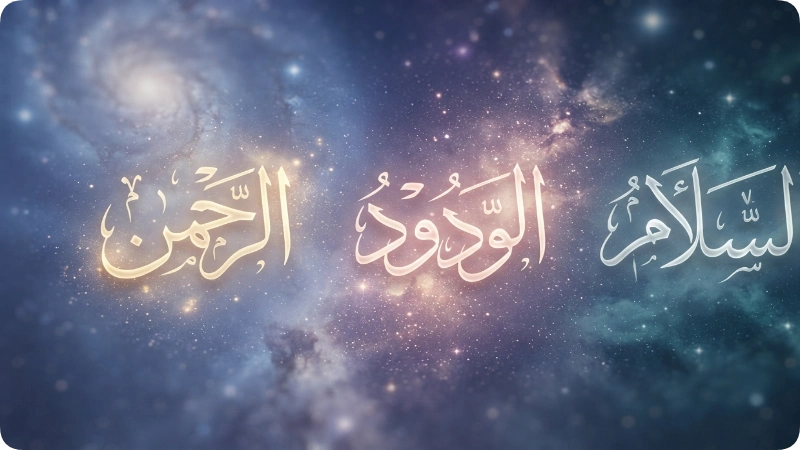
Some names resonate deeply because they speak directly to human emotion, healing, fear, hope, and comfort.
Ar Rahman The Most Compassionate
This name carries warmth, softness, and unconditional mercy. It is often associated with emotional healing and spiritual peace. Many Muslims repeat this name during hardship because it feels comforting and protective.
Al Wadud The Most Loving
One of the most emotionally powerful names. It reflects divine love, affection, and closeness. This name has become especially popular in Islamic aesthetic content, spiritual journaling, and modern Muslim self care spaces online.
As Salam The Source of Peace
Minimalist, calming, and spiritually elegant. This name is often connected with inner peace, anxiety relief, and emotional grounding.
Al Ghafur The Most Forgiving
A deeply hopeful name that reminds believers that mistakes are never greater than Allah’s mercy.
An Nur The Light
This name has a celestial and poetic energy. It symbolizes guidance, clarity, beauty, and spiritual illumination.
Beautiful Names of Allah by Spiritual Vibe
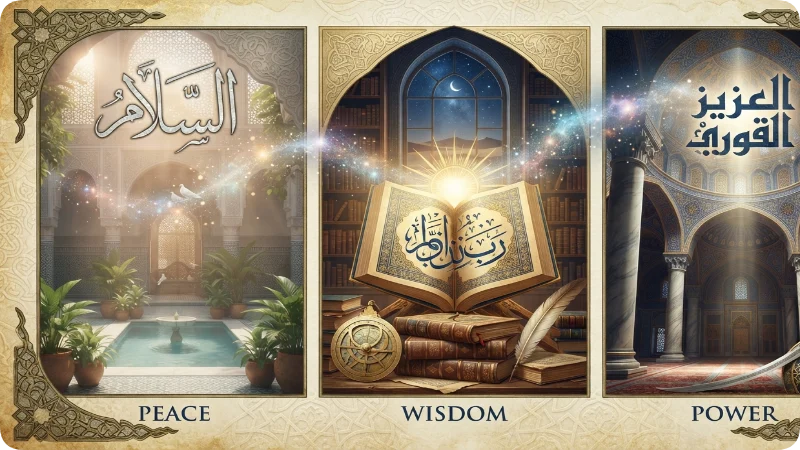
Soft & Peaceful Names
- Ar Raheem
- As Salam
- Al Latif
- Ar Ra’uf
- Al Wadud
These names feel gentle, emotionally safe, and comforting. They are especially loved in Islamic calligraphy art and calming Quran journaling aesthetics.
Powerful & Majestic Names
- Al Aziz
- Al Jabbar
- Al Qahhar
- Malik ul Mulk
- Al Qawiyy
These names carry authority, royal energy, strength, and grandeur.
Wisdom & Knowledge Inspired Names
- Al ‘Aleem
- Al Hakim
- Ar Rashid
- Al Khabir
Perfect for those drawn toward learning, reflection, scholarship, and spiritual growth.
Light & Celestial Names
- An Nur
- Az Zahir
- Al Hadi
- Al Badi’
These names often appear in modern Islamic Pinterest aesthetics because they evoke stars, light, cosmic beauty, and divine guidance.
Why Muslims Memorize the 99 Names of Allah
Memorizing the 99 Names of Allah is considered spiritually rewarding in Islam. Many Muslims use them in:
- Daily dhikr (remembrance of Allah)
- Prayer and dua
- Quran study
- Islamic baby naming inspiration
- Meditation and reflection
- Islamic wall decor and calligraphy
- Healing during emotional hardship
For many people, learning these names becomes a deeply personal spiritual journey rather than simple memorization.
Using the 99 Names of Allah in Baby Names
Many Muslim names are created using “Abdul” (servant of) combined with one of Allah’s names.
Examples include:
| Name | Meaning |
| Abdul Rahman | Servant of The Most Compassionate |
| Abdul Aziz | Servant of The Almighty |
| Abdul Malik | Servant of The King |
| Abdul Qadir | Servant of The Powerful |
| Abdul Hadi | Servant of The Guide |
These names remain timeless because they feel spiritually grounded, elegant, and meaningful across generations.
Pronunciation Tips for Beginners
Arabic pronunciation can feel intimidating at first, but most names become easier with repetition.
A few beginner friendly tips:
- “Al” usually means “The”
- “Ar” appears when pronunciation blends softly with certain Arabic letters
- Long vowels matter in Arabic pronunciation
- Listening to Quran recitation helps naturally improve pronunciation rhythm
Many learners today use audio apps, TikTok pronunciation clips, and YouTube recitations to practice the names daily.
Modern Interest in the 99 Names of Allah
The 99 Names of Allah have seen renewed popularity among younger Muslims online, especially through:
- Islamic aesthetic TikTok videos
- Pinterest spiritual wallpapers
- Minimalist Arabic calligraphy art
- Quran journaling culture
- Digital dhikr counters
- Islamic self improvement communities
Names like An Nur, Al Wadud, and As Salam are especially popular in modern visual Islamic culture because they combine spirituality with emotional beauty and minimalist elegance.
FAQs
What are the 99 Names of Allah called?
They are called Asma ul Husna, which means “The Most Beautiful Names.”
Are the 99 Names of Allah mentioned in the Quran?
Many of them are mentioned throughout the Quran and Hadith, though the complete compiled list comes from Islamic scholarly tradition.
Why are the 99 Names important?
They help Muslims understand Allah’s attributes, strengthen faith, and deepen spiritual connection.
Can Muslims use the 99 Names for baby names?
The names of Allah themselves are unique to Allah, but Muslims commonly use combinations like “Abdul Rahman” or “Abdul Aziz.”
Which is the most powerful name of Allah?
Different scholars and believers emphasize different names depending on spiritual context, but names like Allah, Al Hayy, Al Qayyum, and Ar Rahman are often considered especially profound.
How can beginners memorize the 99 Names?
Most people memorize them gradually through repetition, daily dhikr, apps, audio recitations, flashcards, and Quran study.
Final Thoughts
The 99 Names of Allah are not just sacred titles they are emotional doors into understanding mercy, love, justice, patience, wisdom, strength, and peace.
Some names comfort the heart during sadness. Others inspire courage, gratitude, discipline, or hope. Over time, many Muslims form personal emotional connections with certain names depending on where they are in life spiritually and emotionally.
If you are studying Islam, searching for meaningful Muslim names, building a deeper spiritual routine, or simply exploring the beauty of Arabic meanings, the Asma ul Husna remain timeless, powerful, and deeply moving.

Amara uncovers the hidden history, origins, and meanings behind names. She curates Namestylo’s historical, cultural, and baby naming guides to ensure every suggestion carries deep significance. In her free time, she devours historical fiction and mythology.