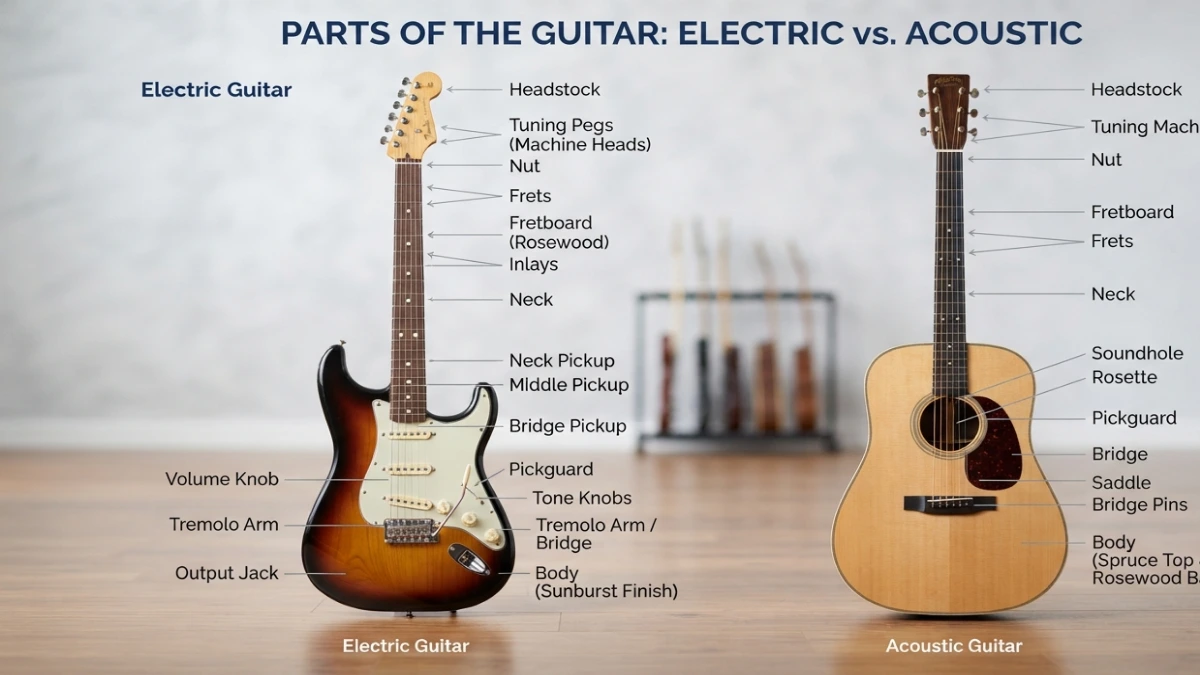
If you’ve ever held a guitar and wondered what each piece is called or how those parts actually shape the sound you hear you’re not alone. If you’re a beginner learning your first chords, a guitarist upgrading gear, or simply curious about instrument anatomy, understanding guitar part names unlocks a deeper connection with the instrument.
This guide breaks everything down in a clear, human way so you don’t just memorize parts you actually understand what they do, how they feel, and why they matter.
Featured Snippet
A guitar is mainly made up of three core sections: the body, neck, and headstock, along with hardware and electronics like strings, frets, pickups, bridge, tuning pegs, and knobs. Each part plays a role in sound, tuning stability, and playability working together to shape tone, comfort, and performance.
Guitar Parts at a Glance
| Section | Main Parts | Function |
| Headstock | Tuning pegs, nut | Tunes strings and holds tension |
| Neck | Frets, fretboard, truss rod | Controls pitch and playability |
| Body | Bridge, pickups, sound hole (acoustic) | Produces and amplifies sound |
| Hardware | Strap buttons, bridge pins | Structural support |
| Electronics | Volume/tone knobs, selector switch | Shapes electric tone |
Headstock Parts: The Tuning Control Center
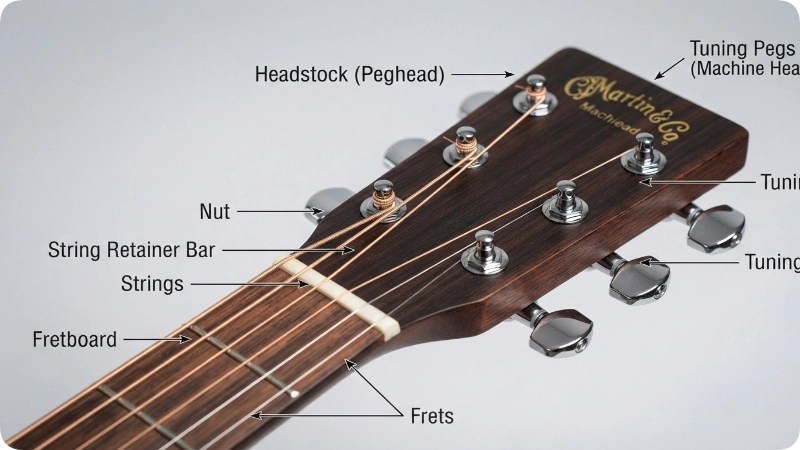
The headstock is where everything begins. It controls tuning stability and keeps your guitar voice in harmony.
Tuning Pegs (Machine Heads)
These small but powerful gears adjust string tension.
- Function: Tune each string
- Vibe: Precision control, mechanical reliability
- Modern vs Classic: Locking tuners (modern stability) vs vintage open gear tuners
- Social impression: Clean tuning = professional readiness
Nut
A small but critical strip where strings rest before entering the fretboard.
- Material: Bone, plastic, graphite, brass
- Function: Guides string spacing and height
- Tone influence: Subtle but noticeable sustain and brightness differences
- Aesthetic feel: Quietly essential, often overlooked
Neck Components: Where Music Becomes Expression

The neck is where your fingers interact with emotion, rhythm, and melody.
Fretboard (Fingerboard)
The smooth surface where notes are formed.
- Materials: Rosewood, maple, ebony
- Feel: Smooth, fast, or warm depending on wood
- Genre association: Maple (bright tones, rock); rosewood (warm blues/jazz)
Frets
Metal strips dividing notes along the neck.
- Function: Define pitch intervals
- Player vibe: Precision and control
- Modern trend: Medium jumbo frets for faster playing styles
Truss Rod
Hidden inside the neck.
- Function: Adjusts neck curvature
- Importance: Prevents buzzing and warping
- Aesthetic reality: Invisible but essential stability core
Guitar Body Parts: The Sound Engine
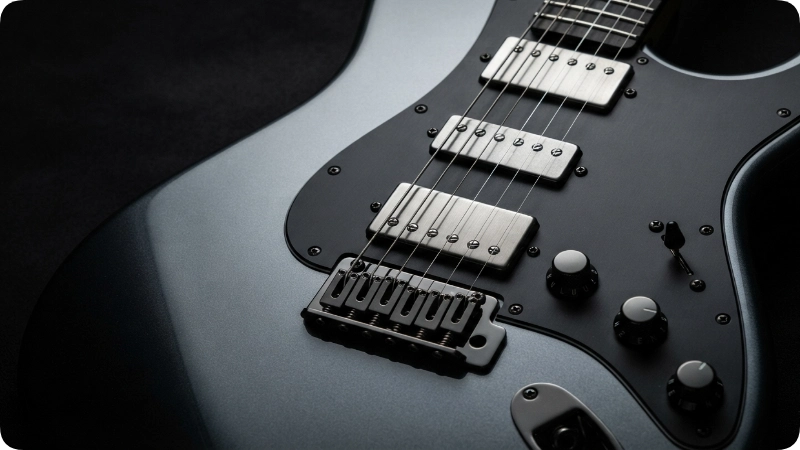
The body is where tone becomes reality. This is the emotional heart of the guitar.
Sound Hole (Acoustic Guitars)
The circular opening on acoustic guitars.
- Function: Projects sound outward
- Vibe: Organic, warm, natural resonance
- Cultural association: Folk, unplugged sessions, campfire music
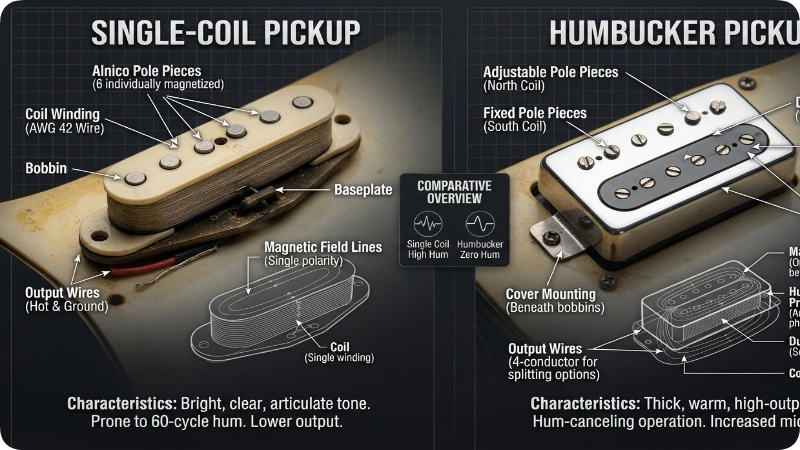
Pickups (Electric Guitars)
Magnetic devices that capture string vibration.
- Types: Single coil, humbucker
- Tone identity:
- Single coil → bright, sharp, clean
- Humbucker → thick, warm, powerful
- Genre influence: Rock, blues, metal identity marker
Bridge
Anchors strings to the body.
- Function: Transfers vibration into the guitar body
- Types: Fixed bridge, tremolo (whammy bar systems)
- Player vibe: Stability vs expressive pitch movement
Pickguard
Protective plate under the strings.
- Function: Prevent scratches
- Style factor: Vintage tortoiseshell, modern minimalist black/white
- Aesthetic role: Subtle design personality
Hardware & Electronics: The Hidden Control System

Volume & Tone Knobs
Small dials that shape sound output.
- Function: Adjust loudness and tone brightness
- Feel: Real time sonic control
- Musical impact: Essential for expressive playing dynamics
Pickup Selector Switch
Switches between different pickups.
- Function: Changes tone character instantly
- Vibe: Versatile, performance driven control
- Modern use: Live tonal switching in genres like rock and jazz fusion
Strap Buttons
Attachment points for guitar straps.
- Function: Balance and comfort while playing standing
- Importance: Prevents accidental drops
Guitar Part Categories by Function & Feel
Tone Shaping Components
- Pickups
- Bridge
- Tone knobs
These define your guitar’s emotional voice.
Playability Components
- Neck
- Frets
- Fretboard
These determine comfort, speed, and technique.
Stability Components
- Truss rod
- Tuners
- Nut
These ensure tuning accuracy and structural health.
Aesthetic Components
- Pickguard
- Finish
- Hardware color
These shape visual identity and stage presence.
FAQs
What are the main parts of a guitar called?
The main parts are the headstock, neck, body, strings, bridge, pickups (electric), and sound hole (acoustic).
What is the most important part of a guitar?
All parts matter, but the neck and body have the biggest impact on playability and tone.
What are guitar frets used for?
Frets divide the neck into fixed notes, allowing accurate pitch control when pressing strings.
What is the difference between pickups?
Single coil pickups sound brighter and clearer, while humbuckers sound thicker and warmer.
Why does guitar hardware matter?
Hardware affects tuning stability, sustain, tone transfer, and overall playing comfort.
Conclusion
Understanding guitar part names isn’t just technical knowledge it’s a way of connecting more deeply with your instrument. Every screw, wire, fret, and pickup plays a role in shaping the sound that becomes your musical identity. Once you know the anatomy, you don’t just play guitar you speak its language.

Amara uncovers the hidden history, origins, and meanings behind names. She curates Namestylo’s historical, cultural, and baby naming guides to ensure every suggestion carries deep significance. In her free time, she devours historical fiction and mythology.