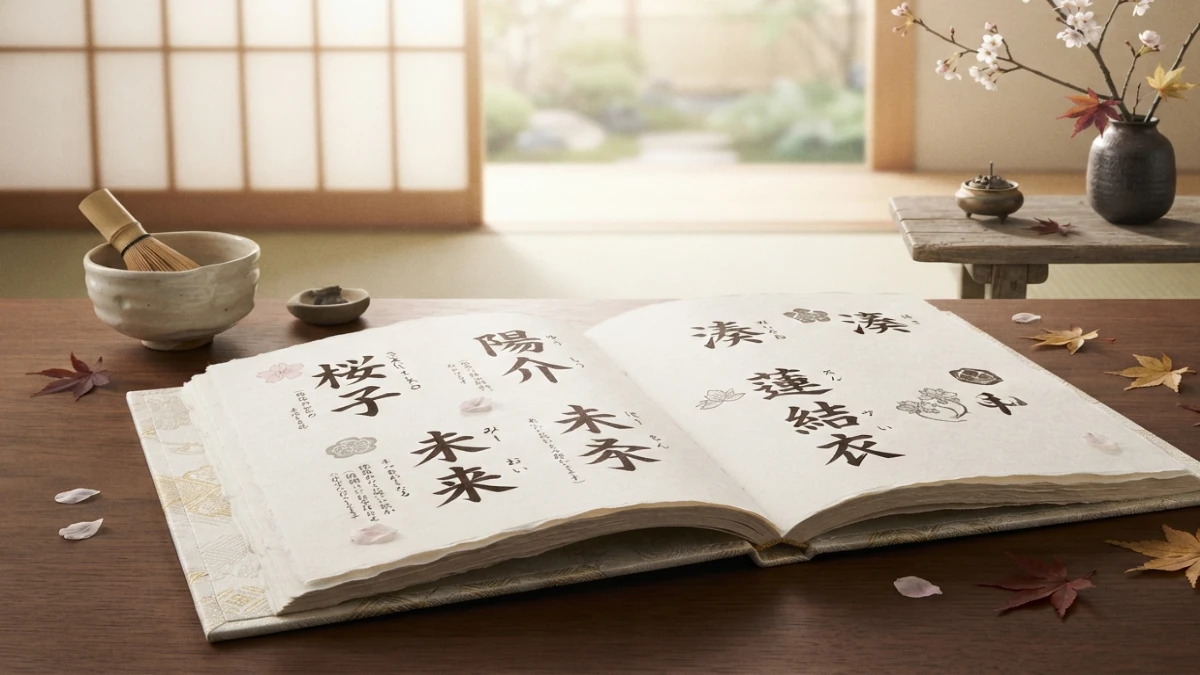
Japanese names can feel effortlessly beautiful: a single kanji may evoke the sea, a flower, dawn, calm water, a season, or a quality such as kindness. But choosing a Japanese name is more than finding a pretty translation.
The same spoken name can be written with different kanji, and the kanji can change its meaning and visual character. Some names feel unmistakably traditional; others are minimalist, nature inspired, modern, or familiar far beyond Japan.
If you are naming a baby, creating a character, choosing a pen name, or simply exploring Japanese naming culture, this guide focuses on what makes a name meaningful, beautiful, usable, and culturally grounded.
Japanese names at a glance
Japanese names combine sound, written meaning, cultural familiarity, and personal symbolism. A name such as Sakura evokes cherry blossoms, while names such as Minato, Nagi, Ren, and Aoi draw on imagery associated with water, nature, plants, or the landscape. For real world naming, the exact kanji and reading matter just as much as the English translation.
| Name | Common meaning/image | Feel | Typical use |
| Aoi (葵) | Hollyhock / aoi plant | Fresh, elegant | Often feminine; also used across genders |
| Akari (明里 etc.) | Brightness/light, depending on kanji | Warm, gentle | Feminine |
| Haru (春 etc.) | Spring, depending on kanji | Soft, optimistic | Unisex |
| Haruto (陽翔 etc.) | Meaning varies by kanji | Bright, energetic | Masculine |
| Iori (伊織) | Kanji based; established given name | Refined, literary | Often masculine; can be unisex |
| Kaede (楓) | Maple | Natural, graceful | Unisex |
| Kaito (海斗 etc.) | Sea + kanji meaning varies | Adventurous, modern | Masculine |
| Minato (湊) | Harbor/port | Calm, contemporary | Masculine; increasingly familiar |
| Mio (澪 etc.) | Waterway/channel, depending on kanji | Delicate, serene | Feminine; other kanji readings exist |
| Nagi (凪) | Calm, especially calm sea/wind | Minimalist, peaceful | Unisex |
| Ren (蓮) | Lotus | Clean, elegant | Often masculine; can be unisex |
| Rin (凛) | Dignified, severe/strong in nuance | Crisp, poised | Often feminine; also used more broadly |
| Sakura (桜) | Cherry blossom | Romantic, distinctly Japanese | Feminine |
| Sora (空) | Sky | Open, youthful | Unisex |
| Tsubaki (椿) | Camellia | Classic, artistic | Feminine |
| Yui (結 etc.) | Connection/bond, depending on kanji | Gentle, intimate | Feminine |
| Yuki (雪 etc.) | Snow, depending on kanji | Quiet, pure | Unisex |
| Rei (礼/玲/怜 etc.) | Varies substantially by kanji | Polished, restrained | Unisex |
| Mei | Meaning depends on kanji | Bright, international | Feminine |
| Hinata (日向 etc.) | Sunny place / toward the sun | Warm, friendly | Unisex |
Important: Japanese names cannot always be translated into one fixed English meaning. A romanized name may have several possible kanji spellings, each carrying different meanings.
How Japanese names actually work
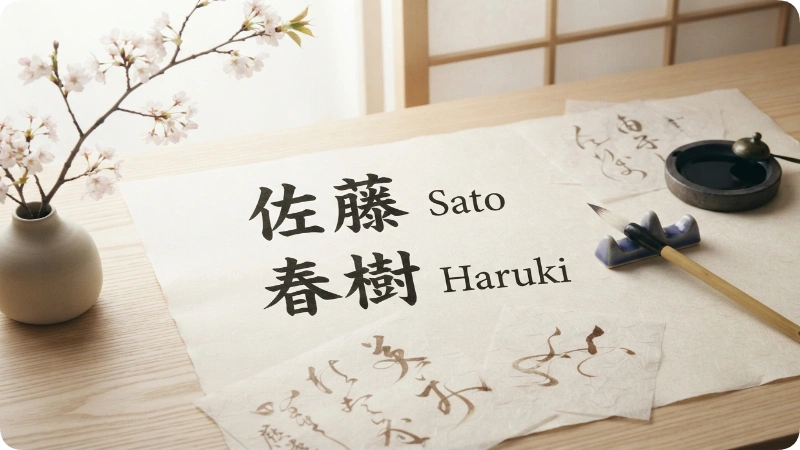
Japanese names traditionally place the family name before the given name in Japanese contexts. The Japan Foundation and Japanese government materials use this family name first order when presenting Japanese names. In everyday Japanese, people are also commonly addressed by family name plus san, particularly in formal or professional settings.
For example:
Sato Haruka
- Sato = family name
- Haruka = given name
In English language contexts, the order is sometimes reversed to given name + family name, depending on the setting.
Kanji matters more than a simple translation
A major feature of Japanese naming is that the same pronunciation can be represented by different kanji.
For example, Yuki might be written with 雪, meaning “snow,” while another spelling could convey a completely different idea. Likewise, Akari and Mei have numerous possible kanji combinations.
That means:
Sound tells you how a Japanese name is spoken; kanji tells you much of what the written name communicates.
For a real Japanese birth name, the choice of kanji also has legal considerations. Japan’s Ministry of Justice states that children’s names may use kanji contained in the Jōyō Kanji or Jinmeiyō Kanji lists.
The most beautiful Japanese names by aesthetic
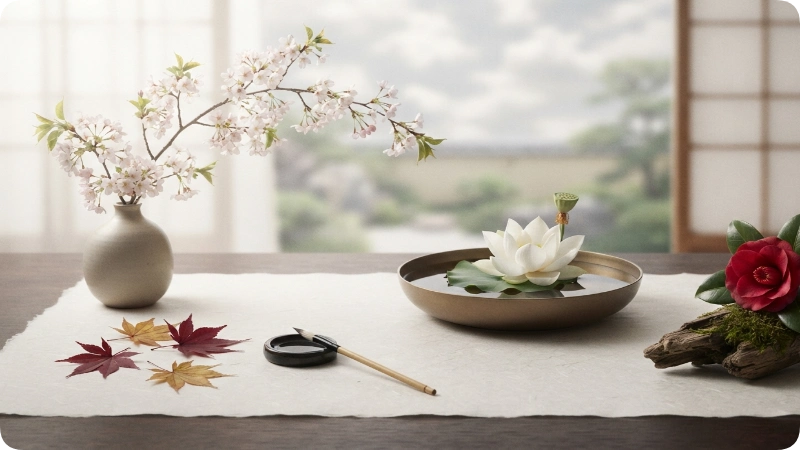
There is no objectively “most beautiful” Japanese name. Beauty depends on the feeling you want the name to create.
Here are useful aesthetic families for narrowing your choices.
Soft and delicate Japanese names
These names tend to have gentle sounds, natural imagery, or an understated emotional quality.
- Yui
- Mio
- Mei
- Sakura
- Hina
- Aoi
- Rin
- Yuki
- Kaede
- Akari
Best for: a graceful, feminine, romantic, or quietly modern feeling.
Nature inspired Japanese names
Nature is one of the richest sources of Japanese naming imagery.
- Sakura (桜) cherry blossom
- Kaede (楓) maple
- Tsubaki (椿) camellia
- Aoi (葵) hollyhock/aoi plant
- Ren (蓮) lotus
- Sora (空) sky
- Nagi (凪) calm
- Minato (湊) harbor
- Yuki (雪) snow
- Haru (春) spring
These names work especially well if you want something that feels connected to landscape rather than an abstract virtue.
Elegant and refined Japanese names
For a more sophisticated or literary atmosphere:
- Iori
- Rei
- Rin
- Kaede
- Tsubaki
- Shiori
- Ayame
- Sumire
- Mio
- Akira
Their appeal often comes less from literal translation and more from sound, kanji appearance, cultural familiarity, and association.
Strong Japanese names
For names with a firmer, more commanding impression:
- Ren
- Haruto
- Kaito
- Riku
- Akira
- Kenji
- Daichi
- Takeshi
- Hayato
- Rei
“Strong” here describes the aesthetic impression, not a guaranteed personality trait.
Calm and minimalist Japanese names
Short names can have an especially contemporary visual quality.
- Nagi
- Ren
- Rei
- Rin
- Aoi
- Haru
- Sora
- Yuki
- Kai
- Mei
One kanji names are particularly notable in recent Japanese naming trends. In Meiji Yasuda’s 2025 survey, one kanji names appeared frequently among both boys and girls, including Minato (湊) for boys and Midori/Sui (翠) as the top written form for girls in that survey.
20 Japanese names worth knowing
1. Aoi 葵
Meaning: 葵 refers to the aoi plant, traditionally identified with hollyhock in many name references.
Vibe: Fresh, artistic, natural, quietly stylish.
Why it works: Aoi is short, memorable, and visually beautiful in kanji. It also has a distinctly Japanese feel without sounding excessively formal.
Style: Nature inspired, minimalist, modern classic.
Gender: Used for more than one gender.
Nicknames: Aoi is already short, so nicknames are less necessary.
Similar names: Ao, Nagi, Kaede, Rin.
Sibling pairing: Nagi, Ren, Sora, Yui.
2. Akari 明里 and other spellings
Meaning: The exact meaning depends on the kanji. Spellings containing 明 can convey brightness or light, while the complete name meaning depends on the characters selected.
Vibe: Warm sunlight, friendliness, optimism.
Style: Soft modern Japanese.
Gender: Commonly feminine.
Social impression: Gentle and approachable rather than dramatic.
Similar names: Hikari, Akira, Hinata, Haru.
Naming note: Do not assume every Akari has the same written meaning. The kanji is essential.
3. Haru 春 and other spellings
Meaning: 春 means “spring.”
Vibe: Fresh beginnings, warmth, renewal.
Style: Minimalist, nature inspired, contemporary.
Gender: Can be used across genders, depending on the name and kanji.
Why it stands out: Haru has a simple international sound while retaining a strong Japanese identity.
Similar names: Sora, Nagi, Ren, Yuki.
4. Haruto 陽翔 and other spellings
Meaning: There is no single meaning for Haruto because multiple kanji combinations are used.
Vibe: Bright, energetic, youthful.
Current relevance: Haruto has been one of the strongest Japanese name readings for years. Meiji Yasuda’s 2025 survey placed Haruto first among boys’ name readings for the 17th consecutive year. The reading appeared in many different kanji combinations.
Style: Modern and highly familiar.
Similar names: Hinata, Haruki, Yuto, Sota.
Naming consideration: Choose Haruto if familiarity matters more than rarity.
5. Iori 伊織
Meaning: The meaning and nuance of Japanese names written with established kanji can be more complex than a single English gloss.
Vibe: Refined, literary, quietly sophisticated.
Style: Traditional modern.
Gender: Often associated with boys historically, although naming usage is not always strictly gender exclusive.
Why people like it: Iori has an elegant sound without being overly ornate.
Similar names: Rei, Kaoru, Itsuki, Ren.
6. Kaede 楓
Meaning: Maple.
Vibe: Autumn leaves, artistry, quiet beauty.
Style: Nature inspired classic.
Gender: Can be used for more than one gender.
Social impression: Graceful and cultured.
Similar names: Sakura, Tsubaki, Aoi, Momiji.
7. Kaito 海斗 and other spellings
Meaning: Depends on kanji. 海 means “sea,” while 斗 has its own historical character meaning and naming usage.
Vibe: Adventurous, youthful, energetic.
Style: Modern Japanese.
Gender: Masculine.
Similar names: Minato, Riku, Haruto, Sora.
Naming note: Kaito is a good example of why translating only one character can give an incomplete picture of the whole name.
8. Minato 湊
Meaning: Harbor or port.
Vibe: Coastal, calm, welcoming, quietly strong.
Current trend: Minato was the #1 written boys’ name in Meiji Yasuda’s 2025 survey, rising from #15 the previous year. The same survey also placed the reading Minato second among boys’ readings.
Style: Contemporary nature name.
Gender: Primarily masculine in current Japanese baby name usage.
Similar names: Kaito, Ren, Nagi, Sora.
Social impression: Modern without feeling invented.
9. Mio 澪 and other spellings
Meaning: 澪 can refer to a waterway or navigable channel.
Vibe: Serene, delicate, watery, elegant.
Style: Feminine, minimalist, nature inspired.
Similar names: Miu, Mio, Nao, Rina.
Naming note: Mio has multiple possible kanji, so the exact meaning should always be checked against the selected spelling.
10. Nagi 凪
Meaning: Calm or calm conditions, especially referring to a lull in wind or waves.
Vibe: Peace, still water, quiet confidence.
Style: Minimalist and distinctly contemporary.
Gender: Unisex usage is possible.
Why it feels modern: Nagi has the compact, atmospheric quality that has become popular in contemporary nature inspired naming.
Similar names: Sora, Ren, Aoi, Minato.
11. Ren 蓮
Meaning: Lotus.
Vibe: Pure, serene, elegant, quietly powerful.
Style: Nature inspired, minimalist.
Gender: Commonly masculine in Japan, though naming usage can vary.
Current relevance: Ren remains highly visible in contemporary Japanese naming. Meiji Yasuda placed 蓮 fifth among boys’ written names in its 2025 survey.
Similar names: Rei, Rin, Riku, Nagi.
12. Rin 凛
Meaning: 凛 carries a sense of dignity, firmness, or imposing composure.
Vibe: Poised, intelligent, crisp, self possessed.
Style: Elegant modern.
Gender: Often feminine in contemporary usage, though the sound itself is not exclusively feminine.
Social impression: More polished and strong than sweet.
Similar names: Rei, Ren, Rina, Yui.
13. Sakura 桜
Meaning: Cherry blossom.
Vibe: Romantic, seasonal, unmistakably Japanese.
Style: Classic nature name.
Gender: Feminine.
Cultural resonance: Cherry blossoms have a major place in Japanese seasonal imagery, making Sakura culturally recognizable far beyond Japan.
Similar names: Hana, Kaede, Tsubaki, Sumire.
Naming consideration: Sakura is culturally recognizable internationally, which can be an advantage if you want a name that is clearly Japanese to non Japanese speakers.
14. Sora 空
Meaning: Sky.
Vibe: Open, free, youthful, expansive.
Style: Minimalist, modern, nature inspired.
Gender: Unisex.
Why it works internationally: It is short and relatively easy for many non Japanese speakers to pronounce.
Similar names: Haru, Nagi, Aoi, Ren.
15. Tsubaki 椿
Meaning: Camellia.
Vibe: Botanical, elegant, artistic, slightly mysterious.
Style: Traditional nature name.
Gender: Usually feminine.
Why choose it: Tsubaki feels more distinctive than very familiar floral choices such as Sakura.
Similar names: Kaede, Sumire, Ayame, Sakura.
16. Yui 結 and other spellings
Meaning: Depends on kanji. 結 is associated with tying, connecting, or forming a bond.
Vibe: Warm, intimate, gentle.
Style: Soft contemporary.
Gender: Feminine.
Emotional appeal: Among names built around the idea of connection, Yui can feel especially affectionate.
Similar names: Yuna, Yua, Mei, Mio.
17. Yuki 雪 and other spellings
Meaning: 雪 means “snow,” while other kanji spellings can create completely different meanings.
Vibe: Quiet, clean, wintery, understated.
Style: Nature inspired and versatile.
Gender: Unisex possibilities exist.
Similar names: Fuyu, Sora, Haru, Rin.
18. Rei 礼, 玲, 怜 and other spellings
Meaning: Highly dependent on kanji. 礼 can relate to courtesy or ritual; 玲 and 怜 have different character meanings and associations.
Vibe: Polished, intelligent, restrained.
Style: Minimalist, sophisticated.
Gender: Unisex potential.
Naming note: Rei is an excellent example of why “the meaning of a Japanese name” cannot be separated from its kanji.
19. Mei multiple spellings
Meaning: Not fixed. Different kanji combinations can produce different meanings.
Vibe: Bright, youthful, delicate, internationally accessible.
Style: Modern and cross cultural.
Why it works: Mei is compact and easy to remember, while still fitting comfortably into Japanese naming.
Similar names: Mei, Mio, Yui, Aoi.
20. Hinata 日向 and other spellingsMeaning: 日向 can refer to a sunny place or a place facing the sun.
Vibe: Warmth, optimism, sunlight.
Style: Contemporary nature inspired.
Gender: Used across genders.
Similar names: Haru, Akari, Sora, Asahi.
Japanese names by personality vibe
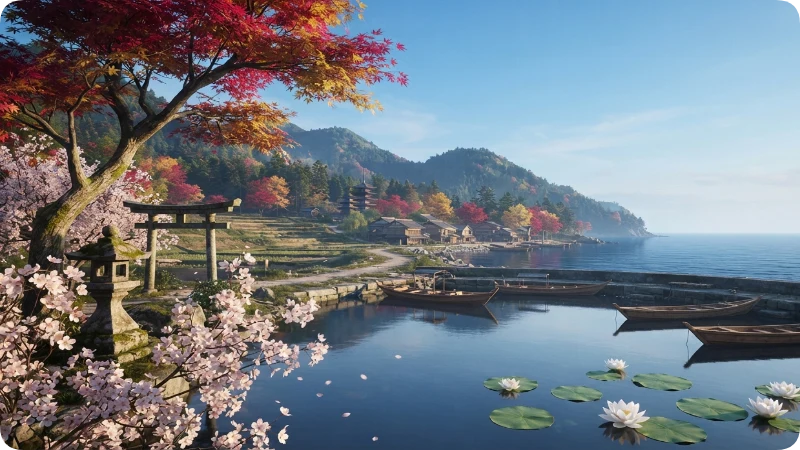
If you are choosing a name based on the feeling it creates rather than its dictionary definition, this is a useful shortcut.
| If you want… | Consider |
| Soft and gentle | Yui, Mio, Mei, Hina |
| Calm and peaceful | Nagi, Ren, Yuki |
| Bright and sunny | Akari, Hinata, Haru |
| Elegant | Rin, Rei, Kaede, Tsubaki |
| Nature inspired | Sakura, Aoi, Kaede, Ren |
| Strong but refined | Ren, Rin, Rei, Iori |
| Modern and minimalist | Nagi, Aoi, Sora, Ren |
| Ocean/coastal | Minato, Kaito, Nagi |
| Seasonal | Haru, Sakura, Kaede, Yuki |
| Internationally accessible | Mei, Rei, Aoi, Sora, Ren |
These are aesthetic interpretations, not predictions about personality.
Popular Japanese baby names: what is trending now?
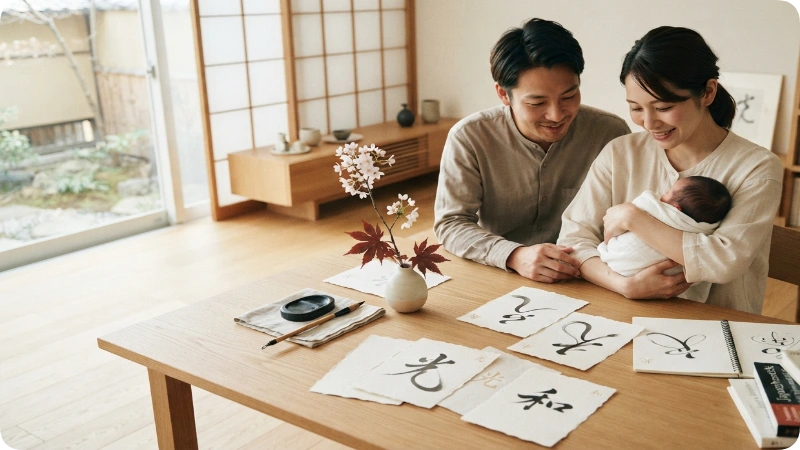
Current Japanese naming data shows a noticeable appetite for short names, natural imagery, and visually strong single kanji names.
Meiji Yasuda’s 2025 survey covered 6,312 boys and 6,193 girls born in 2025 among its insurance policy data. It found Minato (湊) as the top written boys’ name and Midori/Sui (翠) as the top written girls’ name in that dataset. Girls’ names Himari (陽葵) and Tsumugi (紬) followed.
The same survey highlighted the continued popularity of one kanji names. Among boys, 38 one kanji names appeared in the top 100, while nature, color, and traditional Japanese imagery were prominent.
For girls, names connected with colors and botanical imagery were also conspicuous. Examples included 翠, 葵, 桜, 茜, 菫, 藍, and 椿.
The sound trend matters too
A name can be popular as a reading even when its kanji spelling varies.
In Meiji Yasuda’s 2025 data, the most common boys’ readings were:
- Haruto
- Minato
- Aoto
- Sena
- Hinata
Haruto has remained the leading boys’ reading in this survey for 17 consecutive years.
This distinction is important: “popular name” and “popular reading” are not necessarily the same thing.
Classic vs modern Japanese names
One of the easiest ways to choose is to decide If you want a name that feels rooted in tradition, unmistakably contemporary, or somewhere between the two.
| Style | Examples | Overall impression |
| Classic | Sakura, Tsubaki, Kaede, Yuki | Timeless, cultural, natural |
| Traditional modern | Iori, Rei, Ren, Aoi | Refined, familiar, adaptable |
| Contemporary | Nagi, Minato, Hinata, Haruto | Current, energetic, youthful |
| Minimalist | Rin, Ren, Rei, Sora | Clean, memorable, stylish |
| International friendly | Mei, Rei, Sora, Aoi | Easy to recognize and remember |
The best choice depends on the use case. A baby name intended for life in Japan has different practical considerations from a fantasy character name or an online pseudonym.
Japanese names for girls
For a feminine, elegant Japanese name, consider:
- Sakura 桜
- Rin 凛
- Yui 結 and other spellings
- Mio 澪 and other spellings
- Akari multiple spellings
- Kaede 楓
- Tsubaki 椿
- Sumire 菫
- Hina multiple spellings
- Ayame 菖蒲 and other spellings
- Shiori multiple spellings
- Mei multiple spellings
Particularly soft choices
Yui, Mio, Mei, Hina, and Akari have a lighter, gentler sound.
More sophisticated choices
Rin, Rei, Kaede, Tsubaki, and Shiori create a more polished or literary impression.
Japanese names for boys
For masculine Japanese names with contemporary appeal:
- Minato 湊
- Ren 蓮
- Haruto multiple spellings
- Kaito multiple spellings
- Riku multiple spellings
- Sota multiple spellings
- Hayato multiple spellings
- Daichi 大地 and other spellings
- Itsuki 樹 and other spellings
- Iori 伊織
Modern and energetic
Haruto, Kaito, Riku, and Sota feel youthful and contemporary.
Quietly strong
Ren, Minato, Iori, and Itsuki have a more restrained aesthetic.
Gender neutral Japanese names
If you want flexibility, these are worth exploring:
- Aoi
- Haru
- Nagi
- Sora
- Yuki
- Rei
- Hinata
- Kaede
- Akira
- Itsuki
Gender usage can change with generation, region, and kanji, so a name should not be treated as permanently belonging to only one gender.
Japanese names inspired by nature
Nature based names are especially appealing because they create an immediate image without requiring an elaborate explanation.
Flowers and plants
Sakura (桜) cherry blossom
Kaede (楓) maple
Tsubaki (椿) camellia
Aoi (葵) aoi/hollyhock
Ren (蓮) lotus
Sumire (菫) violet
Water and sky
Minato (湊) harbor
Nagi (凪) calm
Sora (空) sky
Mio (澪) waterway/channel
Kaito (海斗) includes 海, “sea,” in this common spelling
Seasons
Haru (春) spring
Yuki (雪) snow, in the 雪 spelling
Sakura (桜) strongly associated with spring
Nature names are particularly effective for character naming because the imagery can subtly reinforce setting, personality, or atmosphere.
Japanese names for characters, anime, games, and fiction
For fictional characters, you have more freedom than with a real child’s legal name.
A good approach is to match name atmosphere to character atmosphere.
| Character archetype | Names to explore |
| Quiet hero | Ren, Rei, Nagi |
| Cheerful protagonist | Haru, Hinata, Sora |
| Elegant heroine | Rin, Kaede, Tsubaki |
| Mysterious character | Rei, Iori, Nagi |
| Nature connected character | Aoi, Sakura, Kaede, Ren |
| Ocean character | Minato, Kaito, Nagi |
| Gentle healer | Yui, Mio, Akari |
| Strong female character | Rin, Rei, Tsubaki |
| Free spirited character | Sora, Haru, Aoi |
Anime and gaming culture have made many Japanese names familiar to global audiences, but a name appearing in fiction does not automatically mean it is unusual, archaic, or invented. When creating a Japanese character, it is better to research the name’s actual Japanese usage rather than selecting a name simply because it “sounds Japanese.”
How to choose the right Japanese name
The strongest name is usually the one that survives several practical tests.
1. Decide If the sound or meaning comes first
If you already love Nagi, start with the kanji.
If you love the idea of snow, explore names and kanji associated with 雪.
These are two different naming journeys.
2. Check the exact kanji
Never stop at an English language meaning.
For example:
Yuki does not automatically mean “snow.”
Yuki + 雪 gives you the snow association, but another kanji spelling can communicate something entirely different.
3. Say the complete name aloud
A beautiful given name may sound very different alongside the family name.
Check:
- rhythm
- repeated sounds
- difficult consonant combinations
- length
- how easily people can remember it
4. Think about the name outside childhood
A cute baby name should still work on:
- a school roster
- a university application
- a résumé
- an email signature
- a professional introduction
5. Consider recognition vs uniqueness
Names such as Haruto offer familiarity.
Names such as Tsubaki or Nagi can feel more distinctive.
Neither is inherently better. The choice depends on If you value familiarity or individuality.
6. Check the reading carefully
This has become particularly important in Japan because the legal system now records name readings in family registers.
Japan’s Ministry of Justice states that the family register furigana system began on May 26, 2025, and that name readings must generally be readings recognized as appropriate for use as a person’s name.
For a real Japanese legal name, unusual kanji readings should therefore be checked rather than assumed to be acceptable.
A closer comparison of standout names
| Name | Core image | Emotional tone | Elegance | Uniqueness feel | Modern feel |
| Aoi | Plant/nature | Fresh | High | Medium | High |
| Haru | Spring | Warm | High | Medium | High |
| Iori | Kanji dependent | Refined | High | Medium high | Medium |
| Kaede | Maple | Serene | High | Medium | Medium |
| Minato | Harbor | Calm, strong | High | Medium | High |
| Nagi | Calm sea/wind | Peaceful | High | High | High |
| Ren | Lotus | Serene, strong | High | Medium | High |
| Rei | Kanji dependent | Cool, poised | High | Medium | High |
| Rin | Dignity | Crisp, confident | High | Medium | High |
| Sakura | Cherry blossom | Romantic | High | Lower | Classic |
| Sora | Sky | Free, youthful | Medium high | Medium | High |
| Tsubaki | Camellia | Artistic | Very high | High | Classic |
These ratings describe naming aesthetics, not objective qualities or personality.
Japanese name attributes: what is traditional and what is not?
Naming websites often attach “lucky numbers,” gemstones, colors, days, or zodiac signs to names. These can be enjoyable as modern naming extras, but they should not be presented as established Japanese etymology.
| Attribute | How to interpret it |
| Meaning | Usually connected to the chosen kanji |
| Origin | Japanese language name usage, but exact history varies |
| Language | Japanese |
| Gender | Based on usage patterns, not an absolute rule |
| Pronunciation | Depends on the specific reading |
| Kanji | Crucial to written meaning |
| Religion | Japanese names are not automatically religious names |
| Lucky number | Numerology tradition, not inherent to the name |
| Lucky color | Modern symbolic association, not fixed Japanese etymology |
| Lucky stone | Modern naming/numerology association |
| Lucky day | Not an inherent property of a Japanese name |
| Zodiac | A person’s birth year/sign, not normally encoded by the name |
| Personality | Aesthetic interpretation, not a prediction |
| Social impression | Depends on generation, context, kanji, and familiarity |
This distinction matters because a premium naming guide should help readers understand what a name actually means rather than turning modern internet naming traditions into historical facts.
Japanese names and numerology
Numerology can be included as a personal naming exercise, but there is no single universally accepted “Japanese lucky number” for each Japanese given name.
Some Japanese naming practices do involve stroke count analysis of kanji, but systems vary and can produce different interpretations depending on which characters, counting conventions, and schools are used.
For that reason, a name such as Nagi should not be advertised as inherently carrying a particular lucky number or gemstone.
If numerology matters to you, treat it as a separate interpretive layer after confirming the actual kanji, reading, and cultural meaning.
Best Japanese names for different naming goals
If you want something unmistakably Japanese
Choose from names such as:
- Sakura
- Tsubaki
- Kaede
- Minato
- Aoi
- Nagi
If you want something easy internationally
Consider:
- Mei
- Rei
- Aoi
- Sora
- Ren
- Yuki
If you want something modern
Consider:
- Nagi
- Minato
- Haruto
- Hinata
- Aoi
- Sora
If you want something timeless
Consider:
- Sakura
- Kaede
- Yuki
- Ren
- Tsubaki
- Haru
If you want a rare feeling aesthetic
Consider:
- Tsubaki
- Nagi
- Iori
- Mio
- Kaede
“Rare feeling” here means aesthetically distinctive, not a verified national rarity ranking.
Japanese sibling name ideas
Sibling names usually work best when they share an aesthetic language, rather than forcing identical sounds.
Nature inspired siblings
- Sakura & Kaede
- Aoi & Ren
- Nagi & Sora
- Minato & Kaede
Soft modern siblings
- Yui & Mio
- Mei & Rin
- Haru & Yuki
- Akari & Hinata
Minimalist siblings
- Rei & Rin
- Ren & Aoi
- Nagi & Rei
- Sora & Haru
A useful rule is to coordinate style, length, or imagery, rather than making sibling names rhyme.
Japanese names with a luxury or high fashion feel
If you are searching for names that feel polished, editorial, or quietly expensive, look for names with:
- concise pronunciation
- visually elegant kanji
- nature imagery
- restrained rather than overly elaborate sounds
- strong vowel balance
Names such as Rei, Rin, Kaede, Iori, Tsubaki, and Aoi can create this impression.
The “luxury” quality is an aesthetic interpretation not an etymological property.
Japanese names that feel mysterious
For a darker, quieter, or more enigmatic character:
- Nagi
- Rei
- Iori
- Rin
- Yuki
- Ren
- Tsubaki
These names work particularly well in fantasy, literary fiction, anime inspired character design, and atmospheric usernames because their meanings can suggest an image without spelling out a personality.
FAQs
What are the most popular Japanese names right now?
In Meiji Yasuda’s 2025 survey, Minato (湊) ranked first among boys’ written names, while 翠 ranked first among girls’ written names. Haruto was the leading boys’ reading for the 17th consecutive year in that survey.
What is the prettiest Japanese name?
There is no objective prettiest Japanese name. For different aesthetics, Sakura feels floral and romantic, Nagi peaceful and minimalist, Rin poised, Aoi natural, and Kaede elegant and seasonal.
What Japanese name means “beautiful”?
There is no single universal Japanese given name that simply equals “beautiful.” Names containing kanji associated with beauty, flowers, elegance, or radiance can express that idea, but the exact meaning depends on the characters selected.
What Japanese name means “love”?
Ai (愛) directly uses the kanji for “love.” Names containing 愛 can incorporate that meaning, although the complete meaning of a multi kanji name depends on all of its characters.
What Japanese name means “flower”?
Hana (花) directly means “flower” and is also used in Japanese names. Other flower names include Sakura, Tsubaki, Sumire, and Ayame.
Is Sakura a Japanese name?
Yes. Sakura (桜) is a Japanese given name associated directly with the cherry blossom. It is one of the most recognizable Japanese nature inspired names internationally.
Is Aoi a boy or girl name?
Aoi can be used for more than one gender. Its exact gender impression depends partly on generation, context, and kanji.
Is Nagi a real Japanese name?
Yes. Nagi (凪) is an established Japanese name and uses a kanji associated with calm conditions, especially a lull in wind or waves.
Why do Japanese names have different meanings with the same pronunciation?
Because Japanese names can use different kanji for the same reading. The spoken form can remain the same while the written characters and therefore the semantic associations change.
Can I use a Japanese name if I am not Japanese?
That depends on your purpose and context. For fiction, gaming, creative work, or personal use, research and respectful presentation matter. For a real legal name, you should also consider the naming rules of the country where the name will be registered and If the chosen Japanese spelling and reading are appropriate.
Final thoughts
The most memorable Japanese names are often the simplest: a blossom, a harbor, the sky, a maple leaf, a lotus, a quiet sea.
But the beauty is not only in the English translation.
It is in the relationship between sound, kanji, imagery, cultural familiarity, and the feeling the name creates when spoken aloud.
If you want a name that feels peaceful, start with Nagi or Ren.
Most importantly, choose the exact kanji and reading, not just the romanized name. That is where a Japanese name becomes much more than a beautiful sound it becomes a written idea.

Amara uncovers the hidden history, origins, and meanings behind names. She curates Namestylo’s historical, cultural, and baby naming guides to ensure every suggestion carries deep significance. In her free time, she devours historical fiction and mythology.